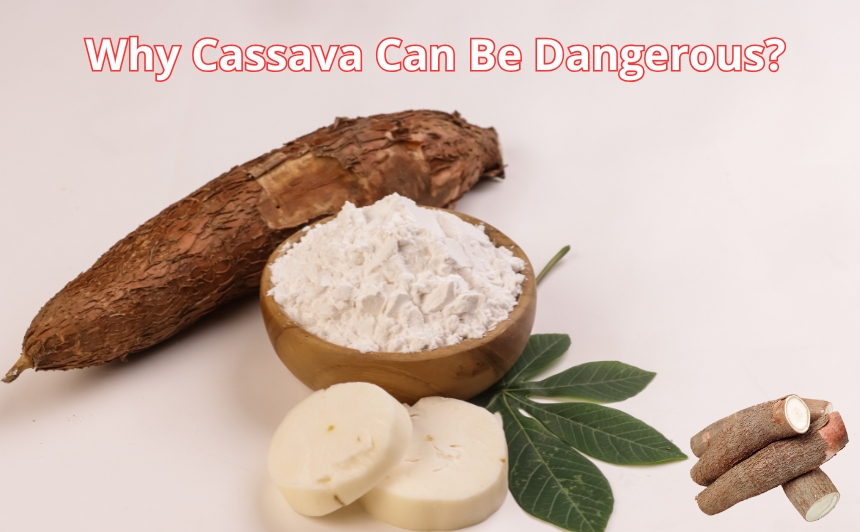
While cassava is a widely consumed root vegetable and a staple food in many parts of the world, there’s a serious danger of eating cassava if it’s not handled or prepared properly. Beneath its starchy surface lies a naturally occurring compound that can turn toxic and pose severe health risks. In this blog, we dive into the potential dangers, symptoms of toxicity, and safe methods for preparing cassava to keep you and your family protected.
⚠️ What Is Cassava?
Cassava, also known as yuca or manioc, is a tropical root crop that serves as a vital source of carbohydrates in Africa, Asia, and South America. It’s used in various forms—boiled, fried, or ground into flour. Despite its versatility and affordability, cassava can be extremely harmful if consumed raw or processed incorrectly.
☠️ Why Cassava Can Be Dangerous
The primary danger of eating cassava comes from cyanogenic glycosides, naturally occurring chemicals that convert into hydrogen cyanide when the cassava is crushed or chewed.
Two types of cassava:
- Sweet cassava – Lower in toxins, safe after boiling.
- Bitter cassava – Contains higher levels of cyanide, must be thoroughly soaked, fermented, or cooked.
🚨 Symptoms of Cassava Poisoning
Eating poorly prepared cassava can lead to cyanide poisoning. Watch out for:
- Headache
- Dizziness
- Vomiting
- Stomach cramps
- Difficulty breathing
- In extreme cases: paralysis or death
Children are especially vulnerable to these effects.
🧠 Long-Term Effects of Cassava Toxicity
Frequent consumption of improperly processed cassava may lead to:
- Tropical ataxic neuropathy: Neurological disorder causing unsteady gait and vision issues
- Konzo: A disease leading to irreversible paralysis
- Goiter and thyroid dysfunction
This makes the danger of eating cassava a public health concern in some developing regions.
✅ How to Eat Cassava Safely
To avoid the danger of eating cassava, follow these safety tips:
- Peel it thoroughly: Toxins are concentrated in the skin.
- Soak it for 12–48 hours: Reduces cyanide levels.
- Boil or bake it well: High heat helps break down harmful compounds.
- Avoid raw cassava or cassava juice.
- Fermentation: Traditional fermentation methods greatly reduce cyanide content.
🍽️ Nutritional Benefits When Prepared Properly
When handled correctly, cassava can provide:
- Carbohydrates for energy
- Small amounts of fiber
- Vitamin C
- Low fat and gluten-free alternative
But remember, the danger of eating cassava lies not in the plant itself, but in how it’s prepared.
🌍 Countries Where Cassava is Common
Cassava is a daily dietary staple in:
- Nigeria
- Brazil
- Indonesia
- Thailand
- Democratic Republic of Congo
- Ghana
Unfortunately, these regions are also where cyanide poisoning incidents are most often reported.
🧾 Final Thoughts
Though it’s a lifesaving crop in many areas, the danger of eating cassava should not be overlooked. With proper preparation, cassava can be both safe and nutritious. However, ignorance or haste in cooking this root vegetable can lead to dangerous—even deadly—results. Always err on the side of caution and educate others about the risks and safe methods of consumption.