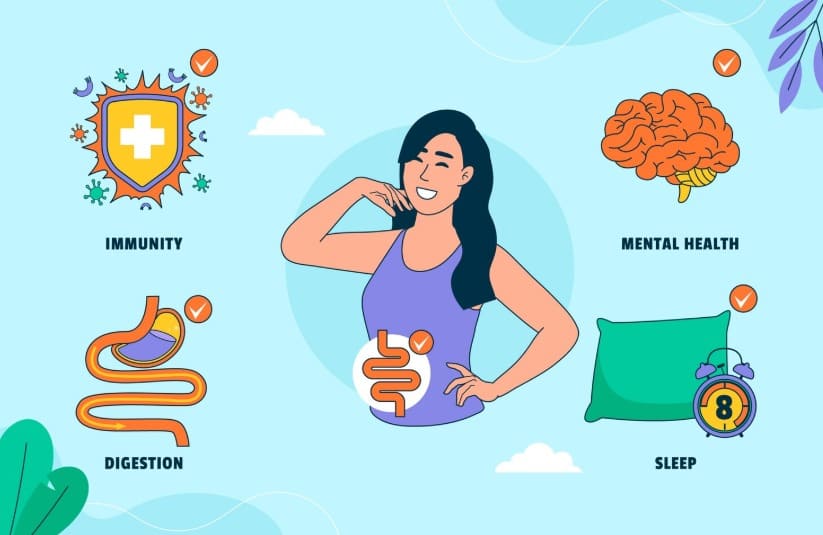
Your gut is more than just a digestive organ—it’s a key player in your emotional well-being. Research shows that the gut and brain are closely connected through the gut-brain axis, meaning your digestive health can significantly impact your mood, stress levels, and overall happiness. A healthy gut supports the production of neurotransmitters like serotonin, regulates inflammation, and communicates directly with your brain. Understanding the secret link between gut health and happiness can empower you to make lifestyle and dietary choices that nurture both body and mind.
1. Gut Microbiome Produces Serotonin
Description:
About 90% of your body’s serotonin is produced in the gut. A healthy microbiome directly supports mood regulation, calmness, and overall happiness.
Example:
Eating fiber-rich foods and fermented foods like yogurt promotes serotonin-producing bacteria, helping you feel more balanced emotionally.
2. Gut Health Reduces Anxiety
Description:
Certain gut bacteria influence stress hormone regulation. A balanced gut helps lower cortisol levels and reduces feelings of anxiety.
Example:
Probiotic-rich foods like kimchi or kefir can improve gut flora and promote emotional calmness.
3. Digestion Influences Energy Levels
Description:
Efficient digestion ensures nutrients are absorbed optimally. When your gut is healthy, your body gets the fuel it needs, supporting energy and mental clarity.
Example:
Eating balanced meals with prebiotics and probiotics helps maintain steady energy, reducing irritability.
4. Inflammation Impacts Mood
Description:
Gut dysbiosis can lead to systemic inflammation, which affects brain function. Healthy gut flora reduces inflammation and enhances emotional well-being.
Example:
Including anti-inflammatory foods like leafy greens, turmeric, and omega-3s supports both gut and brain health.
5. Gut-Brain Axis Communication
Description:
The vagus nerve connects the gut and brain, transmitting signals that affect emotion. A well-functioning gut positively influences mood and resilience.
Example:
Practicing mindful eating improves digestion and strengthens gut-brain signaling, helping you feel calmer.
6. Microbiome Diversity Supports Happiness
Description:
Greater diversity of gut bacteria is linked to better mental health. A varied diet supports microbial diversity and emotional stability.
Example:
Incorporate colorful vegetables, fruits, whole grains, and fermented foods daily.
7. Stress Affects Gut Flora
Description:
Chronic stress negatively alters gut microbiota, reducing beneficial bacteria. Maintaining a healthy gut protects your happiness during stressful times.
Example:
Relaxation techniques like deep breathing or meditation promote both gut and mental health.
8. Fiber Feeds Beneficial Bacteria
Description:
Dietary fiber serves as food for probiotics. A fiber-rich diet nourishes good bacteria that produce mood-enhancing compounds.
Example:
Eating oats, beans, and vegetables daily can boost beneficial gut microbes and mood.
9. Gut Produces Neurotransmitters
Description:
Beyond serotonin, the gut produces GABA, dopamine, and other neurotransmitters. Healthy bacteria support emotional balance and happiness.
Example:
Probiotic supplements or fermented foods may improve emotional resilience by enhancing neurotransmitter production.
10. Fermented Foods Enhance Mood
Description:
Fermented foods like kimchi, kefir, sauerkraut, and miso contain live bacteria. Consuming them supports gut microbiota and emotional well-being.
Example:
Including a small portion of fermented food daily can help reduce anxiety and boost mood.
11. Gut Health Reduces Brain Fog
Description:
Poor digestion can impair nutrient absorption and neurotransmitter production. A healthy gut enhances focus, clarity, and emotional stability.
Example:
Eating prebiotic-rich foods like garlic, onions, and bananas supports gut function and mental clarity.
12. Short-Chain Fatty Acids (SCFAs) Boost Mood
Description:
Gut bacteria produce SCFAs from fiber, which support brain function. These compounds reduce stress and improve emotional resilience.
Example:
Include whole grains, legumes, and leafy greens to support SCFA production.
13. Healthy Gut Reduces Sugar Cravings
Description:
Imbalanced gut flora often drives sugar cravings, which can negatively affect mood. Maintaining gut health helps regulate cravings and emotional stability.
Example:
Eating probiotic foods and reducing processed sugar can balance gut bacteria and mood.
14. Gut Health Improves Sleep
Description:
Gut bacteria influence melatonin production. Better gut health supports restorative sleep, which is critical for happiness.
Example:
Include tryptophan-rich foods like eggs, turkey, and nuts to enhance sleep quality.
15. Omega-3s Feed Good Bacteria
Description:
Omega-3 fatty acids improve gut microbial balance. A healthy gut improves emotional regulation and overall happiness.
Example:
Incorporate fatty fish, chia seeds, and flaxseeds for gut and brain support.
16. Hydration Supports Gut Function
Description:
Adequate water intake ensures smooth digestion. A hydrated gut absorbs nutrients efficiently, supporting energy and mood.
Example:
Drinking 8–10 glasses of water daily keeps your gut happy and mind clear.
17. Gut Health Reduces Depression Risk
Description:
Studies link gut dysbiosis to higher depression rates. Maintaining balanced gut flora supports emotional stability.
Example:
Regular probiotic consumption and fiber-rich diets promote mental health resilience.
18. Exercise Supports Gut Flora
Description:
Physical activity enhances microbial diversity. A fit gut improves mood, happiness, and cognitive function.
Example:
Daily walks, yoga, or strength training boost gut and brain health simultaneously.
19. Mindful Eating Improves Mood
Description:
Eating slowly and attentively supports digestion. Mindful meals nurture gut bacteria and reduce emotional stress.
Example:
Chew thoroughly, savor flavors, and avoid distractions while eating.
20. Avoiding Overuse of Antibiotics
Description:
Frequent antibiotics harm beneficial gut bacteria. Protecting gut health preserves emotional balance.
Example:
Use antibiotics only when necessary and replenish probiotics after treatment.
21. Polyphenols Feed Good Bacteria
Description:
Polyphenols, found in foods like berries, dark chocolate, and green tea, act as prebiotics for beneficial gut bacteria. A diet rich in polyphenols enhances gut health, which in turn supports mood regulation and happiness.
Example:
Adding a handful of blueberries or a piece of dark chocolate daily can boost both gut function and emotional well-being.
22. Gut Health Reduces Stress Reactivity
Description:
A healthy gut improves your body’s ability to handle stress. Balanced gut bacteria help regulate cortisol, reducing anxiety and improving emotional resilience.
Example:
Regular consumption of fermented foods and fiber-rich meals can lower stress responses during hectic days.
23. Prebiotics Promote Positive Emotions
Description:
Prebiotics like onions, garlic, and asparagus feed good bacteria that produce mood-enhancing neurotransmitters. Supporting gut flora through prebiotics directly influences happiness.
Example:
Include prebiotics in daily meals to nurture beneficial microbes and emotional balance.
24. Gut Microbes Reduce Inflammatory Cytokines
Description:
Certain gut bacteria lower inflammation in the body. Reducing inflammation is crucial for mental health and happiness.
Example:
Eating fermented foods and leafy greens can help decrease systemic inflammation, lifting mood.
25. Balanced Gut Enhances Social Behavior
Description:
Healthy gut flora positively affects oxytocin and other social hormones. Good gut health encourages social bonding, empathy, and emotional satisfaction.
Example:
A diet rich in prebiotics and probiotics can make social interactions feel more enjoyable and rewarding.
26. Gut Health Influences Motivation
Description:
Gut bacteria impact dopamine levels, which regulate reward and motivation. Healthy gut flora can improve drive, focus, and happiness.
Example:
Including fermented foods, fiber, and omega-3s supports dopamine production and mental clarity.
27. Microbial Diversity Reduces Irritability
Description:
A varied gut microbiome supports neurotransmitter balance, reducing mood swings and irritability. Diverse gut bacteria foster emotional stability.
Example:
Eating a wide variety of fruits, vegetables, and fermented foods enhances microbial diversity and mood.
28. Gut Health Supports Emotional Memory
Description:
Gut bacteria influence hippocampus function, affecting emotional memory. A balanced gut helps you process and regulate emotions better.
Example:
Consuming prebiotics, probiotics, and omega-3s strengthens memory and emotional resilience.
29. Gut Health Impacts Appetite and Mood
Description:
Gut bacteria regulate hunger hormones like ghrelin and leptin. A healthy gut ensures stable energy and prevents mood dips from overeating or cravings.
Example:
Eating fiber-rich foods and fermented meals stabilizes blood sugar and supports emotional equilibrium.
30. Probiotics Reduce Symptoms of Depression
Description:
Studies show probiotics can help alleviate mild depressive symptoms. Supporting gut health can directly boost mood and overall happiness.
Example:
Daily yogurt, kefir, or probiotic supplements can enhance gut flora and emotional well-being.
31. Gut Health Influences Motivation to Exercise
Description:
A balanced gut improves energy and dopamine regulation. Healthy gut flora encourages regular activity, indirectly boosting happiness.
Example:
Eating prebiotic and probiotic foods keeps energy steady, making workouts feel easier and more rewarding.
32. Microbes Help Manage Cravings
Description:
Certain gut bacteria influence food preferences. A balanced gut reduces sugar and junk food cravings, which stabilizes mood and emotional health.
Example:
Include prebiotics and fermented foods to favor beneficial bacteria and balanced cravings.
33. Gut Health Enhances Sleep Quality
Description:
Gut bacteria affect melatonin production. Better sleep supports mood, stress regulation, and overall happiness.
Example:
Eat tryptophan-rich foods like nuts, eggs, or turkey to improve sleep and mood.
34. Fermented Foods Reduce Anxiety
Description:
Fermented foods increase beneficial bacteria that produce GABA, a neurotransmitter that calms the nervous system. A healthy gut can decrease anxiety and promote happiness.
Example:
Daily miso soup, kimchi, or kefir consumption supports emotional balance.
35. Gut Health Supports Cognitive Function
Description:
The gut-brain axis influences memory, focus, and decision-making. A healthy gut improves mental clarity and emotional stability.
Example:
A diet rich in fiber, fermented foods, and omega-3s boosts cognition and mood.
36. Gut Microbes Influence Emotional Resilience
Description:
Balanced gut bacteria improve the brain’s stress response. Gut health helps you bounce back emotionally from challenges.
Example:
Include prebiotics, probiotics, and anti-inflammatory foods to support resilience.
37. Short-Chain Fatty Acids Promote Happiness
Description:
SCFAs like butyrate, produced by gut bacteria, reduce inflammation and improve mood. Eating fiber-rich foods enhances SCFA production, supporting emotional well-being.
Example:
Legumes, whole grains, and leafy greens feed SCFA-producing bacteria.
38. Gut Health Reduces Risk of Mood Disorders
Description:
A balanced microbiome lowers the risk of depression and anxiety. Healthy gut bacteria protect both physical and mental health.
Example:
Regular consumption of prebiotic and probiotic foods supports microbial diversity and stability.
39. Fiber-Rich Foods Promote Calmness
Description:
Fiber nourishes good bacteria, which produce neurotransmitters that regulate mood. Gut health improves calmness, reduces irritability, and promotes happiness.
Example:
Daily servings of fruits, vegetables, oats, and beans help maintain a balanced gut and mood.
40. Gut Health Enhances Motivation for Social Connection
Description:
Healthy gut flora influences oxytocin levels. Strong gut health supports social bonding, empathy, and relational happiness.
Example:
Eating probiotics and prebiotics can indirectly improve social confidence and emotional connection.
41. Polyphenol-Rich Foods Reduce Stress
Description:
Foods like berries, nuts, and green tea feed beneficial bacteria and reduce cortisol. Gut health contributes to emotional regulation and happiness.
Example:
A daily cup of green tea or a handful of berries supports your gut and mood.
42. Gut Bacteria Regulate Cortisol
Description:
Balanced gut flora moderates stress hormone release. A healthy gut reduces stress responses and promotes emotional stability.
Example:
Daily probiotic and prebiotic intake can help maintain healthy cortisol levels.
43. Gut Health Enhances Learning
Description:
Gut-brain communication affects neuroplasticity. A balanced gut improves learning, memory, and emotional adaptability.
Example:
Incorporate fermented foods, fiber, and omega-3s to support gut-brain function.
44. Gut Health Influences Decision Making
Description:
Microbes affect neurotransmitters that shape judgment and reward perception. A healthy gut supports emotional clarity and happiness in choices.
Example:
Eating prebiotic and probiotic foods consistently can enhance cognitive function.
45. Gut Health Improves Emotional Regulation
Description:
Balanced gut flora influences mood stability and impulse control. Gut health directly supports emotional balance and happiness.
Example:
Fiber, fermented foods, and anti-inflammatory nutrients help regulate emotions.
46. Healthy Gut Encourages Mindful Eating
Description:
A functional gut motivates you to eat mindfully, which improves mood and digestion. Mindful meals nurture happiness and digestive health simultaneously.
Example:
Focus on chewing slowly, savoring flavors, and eating in a calm environment.
47. Prebiotics and Probiotics Reduce Stress-Induced Gut Issues
Description:
Stress often triggers digestive discomfort. A healthy gut reduces stress-related bloating, discomfort, and emotional irritability.
Example:
Daily fermented foods, fiber, and hydration support gut resilience under stress.
48. Gut Health Supports Self-Esteem
Description:
Feeling physically well impacts emotional confidence. A healthy gut improves overall wellness, indirectly boosting happiness and self-esteem.
Example:
Balanced nutrition with fiber, fermented foods, and healthy fats enhances vitality and confidence.
49. Gut Health Influences Motivation for Self-Care
Description:
Healthy digestion encourages energy and focus for self-care activities. A strong gut promotes holistic well-being, happiness, and life satisfaction.
Example:
When your gut is balanced, you’re more likely to exercise, cook healthy meals, and maintain routines.
50. Gut Health Shapes Long-Term Emotional Well-Being
Description:
Long-term gut balance supports brain function, mood stability, and stress resilience. Consistently nurturing your gut is a foundational step toward sustained happiness.
Example:
Maintain a diverse, fiber-rich diet, regular probiotics, hydration, and mindful lifestyle choices to ensure ongoing emotional well-being.