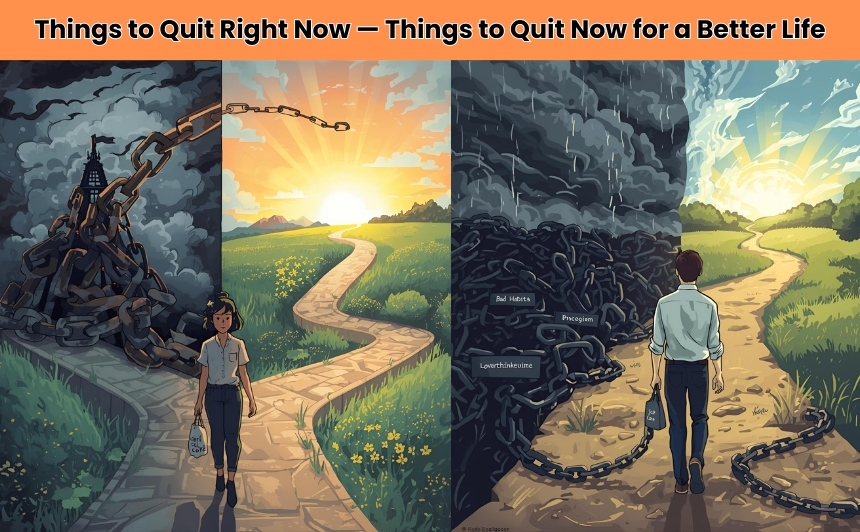
Things to Quit Right Now, we all have habits and routines that hold us back, whether we realize it or not. Identifying and letting go of them can open the door to improved health, productivity, and happiness. This article highlights 10 crucial things to quit now and offers practical guidance on how to make lasting changes. Making these adjustments may feel challenging at first, but the long-term benefits are worth the effort.
1. Procrastination
Delaying tasks only adds stress and reduces productivity. Quitting procrastination means prioritizing tasks, setting deadlines, and tackling responsibilities as soon as possible. Use tools like to-do lists, planners, or time-blocking techniques to stay on track.
2. Negative Self-Talk
The way you speak to yourself shapes your mindset and confidence. Quitting negative self-talk involves replacing self-criticism with encouraging and constructive statements. This shift improves mental health, boosts self-esteem, and fosters a positive outlook on life.
3. Excessive Social Media Use
Scrolling endlessly can waste hours and drain energy. Quitting or limiting social media allows you to focus on meaningful activities, build real-life connections, and reduce anxiety caused by comparison and online noise.
4. Unhealthy Eating Habits
Processed foods, excessive sugar, and late-night snacking harm your body over time. Quitting unhealthy eating doesn’t mean eliminating all indulgence but prioritizing balanced meals rich in vegetables, fruits, proteins, and whole grains.
5. Holding Grudges
Carrying resentment toward others affects your mental and physical health. Quitting grudges involves practicing forgiveness and letting go of negative emotions, allowing you to experience peace, improved relationships, and emotional freedom.
6. Overthinking
Constantly analyzing situations can lead to stress, indecision, and wasted energy. Quitting overthinking means trusting your instincts, making timely decisions, and focusing on solutions rather than problems. Mindfulness and meditation practices can help you break this habit.
7. Comparing Yourself to Others
Comparison fosters jealousy, low self-esteem, and dissatisfaction. Quitting this habit means appreciating your unique journey, celebrating personal achievements, and focusing on self-growth rather than measuring yourself against others.
8. Toxic Relationships
Being around people who drain your energy or create negativity can hinder your personal development. Quitting toxic relationships involves setting boundaries, communicating needs, and sometimes walking away for your well-being.
9. Multitasking Ineffectively
Trying to do everything at once reduces efficiency and quality of work. Quitting ineffective multitasking means focusing on one task at a time, improving attention, productivity, and outcomes. Prioritize tasks and use strategies like the Pomodoro technique.
10. Ignoring Self-Care
Neglecting your physical and mental health can lead to burnout and chronic stress. Quitting the habit of ignoring self-care means scheduling downtime, exercising, eating nutritiously, practicing relaxation techniques, and prioritizing activities that nurture your mind and body.
How to Quit These Habits Successfully
- Start small: Focus on one habit at a time to prevent overwhelm.
- Set clear goals: Write down what you want to change and why.
- Track progress: Use journals, apps, or checklists to monitor improvements.
- Seek support: Share your journey with friends, family, or online communities.
- Reward yourself: Celebrate milestones to reinforce positive behavior.
Conclusion
Recognizing things to quit now is the first step toward a healthier, happier, and more fulfilling life. From letting go of procrastination and negative self-talk to limiting social media and toxic relationships, small but consistent changes create significant transformations. By taking action today, you empower yourself to live with more focus, positivity, and joy.