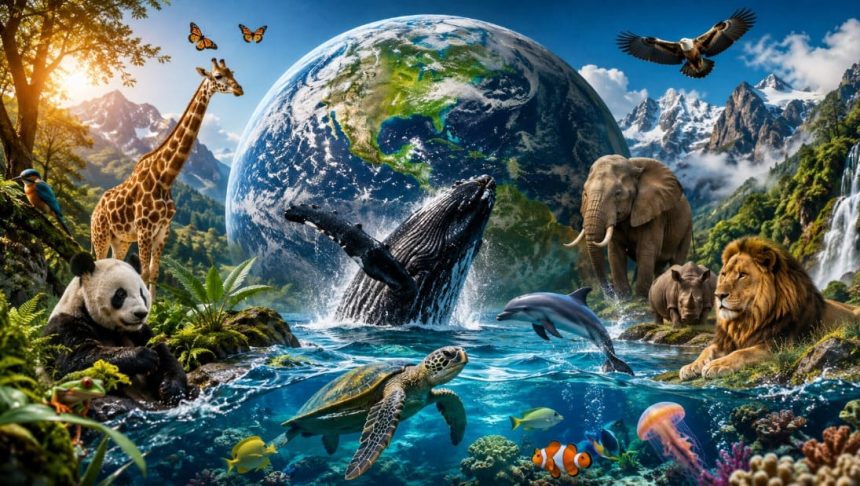
Life on Earth is far more remarkable than most people realize. From microscopic organisms thriving in extreme environments to massive ecosystems that support millions of species, our planet is filled with wonders that challenge imagination. Every living thing, from the smallest bacterium to the largest animal, plays a role in a complex web of existence that has evolved over billions of years. Exploring these Extraordinary Facts About Life reveals just how interconnected, resilient, and astonishing life on Earth truly is. Beneath everyday experiences lies a world of incredible adaptations, hidden relationships, and natural phenomena that continue to surprise scientists and inspire curiosity about the planet we call home.
1. Life Exists in Places Once Thought Impossible
For a long time, scientists believed that life could only survive in environments similar to those found on the Earth’s surface. However, discoveries over the past few decades have completely changed that understanding. Tiny organisms known as extremophiles have been found living in boiling hot springs, deep-sea volcanic vents, highly acidic lakes, frozen Antarctic ice, and even miles beneath the Earth’s crust. Some of these organisms thrive in temperatures that would instantly kill most forms of life. Others survive without sunlight, relying instead on chemical reactions for energy. These discoveries have expanded our understanding of what life is capable of and have increased the possibility that life may exist elsewhere in the universe. The fact that life can flourish under such extreme conditions remains one of the most Extraordinary Facts About Life.
2. Every Human Body Contains Trillions of Microorganisms
Although people often think of themselves as individual organisms, each human body is actually home to a vast ecosystem of microscopic life. Trillions of bacteria, fungi, and other microorganisms live on the skin, in the mouth, and throughout the digestive system. Many of these organisms are not harmful; in fact, they are essential for survival. They help digest food, produce important nutrients, strengthen the immune system, and protect against harmful microbes. Scientists continue to discover how deeply these microscopic communities influence physical and mental health. Without them, human life would function very differently. This invisible partnership between humans and microorganisms highlights the extraordinary complexity of life on Earth.
3. Trees Can Communicate With Each Other
Trees may appear silent and stationary, but research has revealed that forests are far more connected than they seem. Through underground networks of fungi attached to their roots, trees can exchange nutrients, water, and chemical signals. This hidden system is sometimes referred to as the “wood wide web.” Older and larger trees can support younger trees by sharing resources, while trees under attack from insects may send warning signals to neighboring plants. These discoveries challenge traditional ideas about plant life and demonstrate that cooperation exists in nature in unexpected ways. The ability of forests to function as interconnected communities is one of the most Extraordinary Facts About Life.
4. Life Has Survived Multiple Mass Extinctions
Earth’s history has not been a smooth journey for living organisms. Over billions of years, life has endured several mass extinction events that wiped out huge percentages of species. The most famous extinction occurred around 66 million years ago when an asteroid impact contributed to the disappearance of the dinosaurs. Yet despite these catastrophic events, life repeatedly recovered and diversified. New species evolved, ecosystems rebuilt themselves, and biological diversity returned. The resilience of life in the face of global disasters demonstrates an extraordinary ability to adapt and endure. This remarkable persistence is one of the defining characteristics of life on Earth.
5. Some Organisms Can Live for Thousands of Years
While humans measure life in decades, some living organisms operate on entirely different timescales. Certain tree species have survived for thousands of years, witnessing the rise and fall of civilizations. Some colonies of plants and fungi are believed to be even older, continuing to grow and reproduce over immense periods of time. These organisms challenge common perceptions of aging and longevity. Their ability to survive changing climates, natural disasters, and environmental shifts reveals the incredible endurance that life can achieve under the right conditions. The existence of such ancient living beings is among the most Extraordinary Facts About Life.
6. The Ocean Holds Most of Earth’s Living Space
When people think about life on Earth, they often focus on land. However, the vast majority of the planet’s living space exists beneath the ocean’s surface. Oceans cover more than two-thirds of Earth and contain ecosystems ranging from shallow coral reefs to dark abyssal plains thousands of meters deep. Scientists estimate that many marine species remain undiscovered because so much of the ocean has yet to be explored. Strange fish, glowing organisms, giant squid, and countless microscopic creatures inhabit this hidden world. The sheer scale and diversity of ocean life make it one of the greatest wonders of the natural world.
7. Every Living Thing Is Related
Despite the enormous diversity of life on Earth, all living organisms share a common ancestry. Humans, trees, whales, insects, mushrooms, and bacteria can all trace their origins back to ancient life forms that existed billions of years ago. Evidence for this connection can be found in DNA, cellular structures, and basic biological processes shared across species. This means that every living thing is part of one vast family tree stretching back to the earliest days of life on the planet. The idea that all organisms are connected through evolution is one of the most profound and Extraordinary Facts About Life.
8. Some Animals Can Change Their Entire Bodies
Nature has produced remarkable adaptations that seem almost unbelievable. Certain animals can completely transform themselves during their lives. Caterpillars become butterflies, tadpoles become frogs, and many marine creatures undergo dramatic physical changes as they mature. During these transformations, body structures, behaviors, and even habitats can change significantly. These processes demonstrate the incredible flexibility of life and its ability to adapt to different stages of survival. Such transformations reveal how dynamic and creative evolution can be.
9. Life Depends on Tiny Organisms Most People Never Notice
Many of the most important forms of life on Earth are invisible to the naked eye. Microscopic organisms in soil, water, and the atmosphere perform essential functions that keep ecosystems running. They recycle nutrients, break down dead matter, produce oxygen, and support food chains. Without these tiny life forms, forests, oceans, and even human societies could not survive. Their importance often goes unnoticed because of their size, yet they are among the most influential living things on the planet. This hidden foundation of life is one of the most fascinating Extraordinary Facts About Life.
10. Earth Is Constantly Creating New Forms of Life
Evolution is not a process confined to the distant past. It continues today as species adapt to changing environments and new challenges. Genetic variations occur constantly, and over long periods these changes can lead to the development of entirely new species. Scientists have observed evolution occurring in bacteria, insects, plants, and many other organisms. Life is not static—it is continuously changing, responding, and innovating. The fact that Earth remains a living laboratory of biological creativity reminds us that the story of life is still being written. This ongoing process is perhaps one of the most extraordinary facts of all, showing that life on Earth is constantly evolving and reinventing itself.
11. A Single Teaspoon of Soil Contains More Living Organisms Than There Are People on Earth
Soil may look like ordinary dirt, but it is actually one of the most biologically active environments on the planet. A single teaspoon of healthy soil can contain billions of microorganisms, including bacteria, fungi, protozoa, and microscopic animals. These tiny organisms work together to break down organic matter, recycle nutrients, and support plant growth. Without them, ecosystems would collapse because nutrients would no longer circulate effectively. What makes this fact truly astonishing is the sheer scale of life hidden beneath our feet. Every step we take is over a thriving world that most people never see. This invisible ecosystem is one of the most Extraordinary Facts About Life because it reveals how much living activity exists in places we often overlook.
12. Some Creatures Can Survive Being Frozen
Most living organisms cannot survive when their cells freeze, yet certain species have evolved incredible ways to withstand extreme cold. Some frogs, insects, and microscopic animals can partially freeze during winter and then return to normal when temperatures rise. They achieve this by producing special chemicals that protect their cells from damage. During this frozen state, vital processes slow dramatically, allowing survival in conditions that seem impossible. These adaptations demonstrate the remarkable creativity of evolution and show how life continually finds solutions to environmental challenges. The ability to survive freezing temperatures is one of the most extraordinary survival strategies found in nature.
13. Coral Reefs Support Entire Underwater Cities of Life
Coral reefs cover a tiny fraction of the ocean floor, yet they support an enormous percentage of marine biodiversity. Thousands of fish species, crustaceans, mollusks, and other organisms depend on coral reefs for shelter, food, and reproduction. These ecosystems function like bustling underwater cities where countless forms of life interact every day. Despite their beauty, coral reefs are built by tiny coral animals working together over generations. The complexity and diversity packed into these vibrant ecosystems make them one of the most Extraordinary Facts About Life on Earth.
14. Some Plants Can Recognize Their Relatives
For many years, scientists believed plants simply reacted to their environment without any form of recognition. Research has shown, however, that some plants can distinguish between related and unrelated plants growing nearby. They may alter root growth patterns and resource competition depending on whether neighboring plants are family members. This ability allows them to cooperate more effectively with genetically related individuals. Such behavior challenges traditional assumptions about plant intelligence and demonstrates that life can be far more sophisticated than it appears. The existence of family recognition in plants remains one of nature’s most surprising discoveries.
15. There Are More Insects Than Any Other Animal Group
Insects dominate life on Earth in terms of diversity and abundance. Scientists estimate that millions of insect species exist, with many still undiscovered. At any given moment, billions upon billions of insects are flying, crawling, feeding, and reproducing across the planet. They pollinate plants, recycle organic material, control pests, and serve as food for countless other animals. Despite their small size, insects play enormous roles in maintaining ecosystems. Their overwhelming success is one of the most Extraordinary Facts About Life because it shows how evolution can favor adaptability over size.
16. Some Animals Glow Naturally in the Dark
Bioluminescence is the ability of living organisms to produce light through chemical reactions within their bodies. This extraordinary adaptation is found in various species, including jellyfish, squid, fish, insects, and microorganisms. In the deep ocean, where sunlight never reaches, glowing organisms use light to attract prey, communicate, camouflage themselves, or scare predators. Entire sections of the ocean can shimmer with natural light created by living creatures. The existence of animals that generate their own illumination feels almost magical and remains one of the most fascinating Extraordinary Facts About Life.
17. The Human Brain Is One of the Most Complex Objects Known
The human brain contains approximately 86 billion neurons connected through trillions of pathways. These connections allow humans to think, remember, imagine, learn, and create. Despite centuries of study, scientists still do not fully understand how consciousness emerges from these neural networks. The brain can process enormous amounts of information, adapt through experience, and continuously reshape itself through learning. It is both the tool humans use to understand the universe and one of the universe’s greatest mysteries. Its complexity represents one of the most Extraordinary Facts About Life.
18. Life Shapes the Planet It Lives On
Life does not merely exist on Earth—it actively changes the planet itself. Plants produce oxygen, microorganisms influence climate systems, and countless species contribute to the formation of soils and ecosystems. Billions of years ago, early life forms dramatically altered Earth’s atmosphere, making it suitable for more complex organisms. Even today, living things continue to shape landscapes, oceans, and atmospheric conditions. This powerful relationship between life and the environment highlights how deeply connected biological and planetary processes truly are.
19. Some Species Have Hardly Changed for Millions of Years
While evolution constantly produces new adaptations, some organisms have remained remarkably similar for immense periods of time. Species such as horseshoe crabs, certain sharks, and some deep-sea creatures closely resemble ancient ancestors preserved in the fossil record. These organisms are often called “living fossils” because they have survived major environmental changes with relatively little alteration. Their long-term success suggests that certain biological designs were so effective that they required few modifications. The existence of these ancient survivors is one of the most Extraordinary Facts About Life.
20. Life Continues to Surprise Scientists Every Year
Despite centuries of scientific exploration, new discoveries about life are made constantly. Previously unknown species are identified, unexpected animal behaviors are documented, and entirely new ecosystems are uncovered. Scientists regularly find organisms living in places once considered uninhabitable and reveal biological abilities that seem almost unbelievable. Every discovery reminds us that much of life on Earth remains unexplored. The fact that our planet still holds countless mysteries is one of the most exciting Extraordinary Facts About Life, proving that there is always more to learn about the living world around us.
21. Every Breath You Take Connects You to Ancient Life
The oxygen humans breathe today has an extraordinary history stretching back billions of years. Early Earth had very little oxygen in its atmosphere until ancient microorganisms began producing it through photosynthesis. Over immense periods of time, these tiny organisms transformed the planet’s atmosphere, making complex life possible. Every breath taken today contains molecules that have circulated through countless living organisms, oceans, and ecosystems throughout Earth’s history. In a sense, each breath is a connection to the ancient story of life itself. This remarkable continuity makes it one of the most Extraordinary Facts About Life.
22. Some Animals Can Regrow Lost Body Parts
Nature has evolved incredible repair systems that far exceed human healing abilities. Certain animals can regenerate entire limbs, tails, organs, and even parts of their nervous systems after injury. Starfish can regrow arms, salamanders can regenerate legs, and some species can replace damaged tissues repeatedly throughout their lives. Scientists study these organisms in hopes of understanding how similar regenerative abilities might one day benefit human medicine. The fact that some creatures can rebuild parts of themselves remains one of the most astonishing Extraordinary Facts About Life.
23. Life Exists in Nearly Every Corner of the Planet
From scorching deserts to frozen polar regions, life has found a way to survive almost everywhere on Earth. Organisms inhabit mountain peaks, underground caves, ocean trenches, dense forests, and volcanic environments. Some species have adapted to survive with very little water, while others thrive in complete darkness. The ability of life to occupy such a vast range of habitats demonstrates its incredible flexibility and resilience. Few phenomena illustrate the power of evolution better than life’s ability to flourish in seemingly impossible places.
24. The Majority of Earth’s Species Are Still Undiscovered
Although scientists have identified millions of species, experts estimate that many more remain unknown. Deep oceans, tropical rainforests, underground ecosystems, and remote environments continue to reveal new forms of life every year. Some researchers believe that a large percentage of species have yet to be scientifically documented. This means humanity’s understanding of Earth’s biodiversity remains incomplete. The idea that countless organisms are still waiting to be discovered makes the natural world even more fascinating and mysterious.
25. Migrating Animals Travel Distances Beyond Imagination
Many species undertake journeys that seem almost impossible for their size and strength. Birds migrate across continents, whales travel thousands of kilometers through oceans, and insects such as monarch butterflies complete migrations spanning multiple generations. These journeys often occur with remarkable accuracy despite obstacles, changing weather, and vast distances. Scientists are still uncovering how many species navigate so precisely. The endurance and navigational abilities displayed during migration are among the most Extraordinary Facts About Life.
26. Some Organisms Can Enter a State Close to Suspended Animation
Certain microscopic animals and other organisms can survive extreme conditions by entering a state where biological activity nearly stops. During this period, they can endure dehydration, freezing temperatures, radiation, and long periods without food. Once conditions improve, they resume normal life processes. This extraordinary survival strategy allows life to persist through challenges that would destroy most living things. It demonstrates just how adaptable biological systems can become through evolution.
27. Forests Produce Much of the World’s Oxygen
Forests are often called the lungs of the planet because they play a crucial role in producing oxygen and absorbing carbon dioxide. Through photosynthesis, trees and other plants convert sunlight into energy while releasing oxygen into the atmosphere. Beyond this, forests regulate climate, support biodiversity, and influence rainfall patterns across entire regions. Their contribution to sustaining life extends far beyond what most people realize. The immense ecological importance of forests makes them one of the greatest natural wonders on Earth.
28. Every Living Organism Shares the Same Basic Genetic Language
One of the most profound discoveries in biology is that nearly all life uses the same genetic code. Whether examining a human, a whale, a flower, or a bacterium, scientists find DNA functioning according to remarkably similar principles. This shared biological language provides powerful evidence that all life descended from common ancestors. Despite the vast diversity seen across species, the fundamental instructions for life remain surprisingly universal. This unity beneath diversity is one of the most Extraordinary Facts About Life.
29. Tiny Plankton Help Keep the Planet Alive
Plankton may be small, but their impact on Earth is enormous. These microscopic organisms form the foundation of many marine food chains and contribute significantly to global oxygen production. Some estimates suggest that marine plankton generate a large portion of the oxygen found in Earth’s atmosphere. They also play important roles in regulating climate and supporting ocean ecosystems. Despite their tiny size, plankton are among the most important living organisms on the planet, proving that influence is not determined by size.
30. Life on Earth Is Part of an Unbroken Chain Billions of Years Old
Every living organism alive today is connected to a continuous chain of life that stretches back billions of years. From the earliest single-celled organisms to the immense diversity of modern species, life has persisted through environmental upheavals, mass extinctions, climate shifts, and countless evolutionary changes. Every plant, animal, fungus, and microorganism represents a branch of this ancient and ongoing story. The fact that life has endured for such an immense span of time while constantly adapting and evolving is perhaps the greatest of all Extraordinary Facts About Life. It reminds us that every living thing is part of one extraordinary journey that began long before humanity and continues into the future.