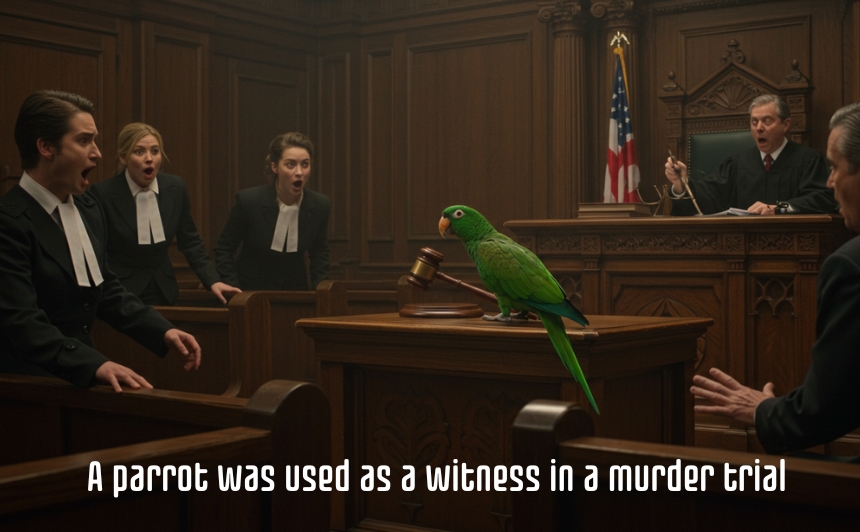
In one of the most bizarre and thought-provoking criminal trials in modern history, the world witnessed something unprecedented: a parrot witness in murder. This was not a joke, not a movie script, but a real courtroom drama that unfolded in Michigan, USA. It’s a case where feathers flew, words echoed from beyond the grave, and justice was aided—some believe—by a talking bird.
Yes, a parrot witness in murder was seriously considered by investigators when a beloved pet began repeating what sounded like the victim’s final words. This eerie repetition captured public attention and raised ethical and legal questions that had never been asked before.
Let’s dive into this fascinating story that blends true crime, animal behavior, and legal boundaries in the most surreal way possible.
🕵️♂️ The Murder That Shocked Michigan
In May 2015, Glenna Duram fatally shot her husband, Martin Duram, five times in their home in Sand Lake, Michigan. She then turned the gun on herself in a failed suicide attempt. While Glenna survived, Martin tragically did not.
The scene left investigators with many questions. But there was one surprising witness no one had expected: the couple’s pet parrot, Bud.
🦜 A Bird That Could Talk — And Repeat
Soon after Martin’s death, family members noticed Bud the parrot repeatedly squawking a terrifying phrase in a chillingly human voice:
“Don’t f*ing shoot!**”
According to family accounts, the bird mimicked the couple’s voices, especially Martin’s. The repetition was so persistent and dramatic that the family believed the parrot had witnessed the murder and was reliving the event.
This was the moment when the case of parrot witness in murder truly took flight.
⚖️ Can a Parrot Be a Legal Witness?
This incident raised an unprecedented legal question: Can an animal’s behavior be admissible as evidence in a murder trial?
Unfortunately, parrots can’t take the witness stand. They can’t swear an oath, understand cross-examination, or give statements under human rights protections. So Bud’s testimony wasn’t formally entered into the trial as evidence.
However, investigators did note Bud’s behavior during the investigation and even recorded his outbursts as part of the broader case context. Prosecutors used it circumstantially to build a picture of domestic tension.
🧠 How Smart Are Parrots, Really?
Parrots, especially species like African Greys and Amazons, are highly intelligent birds. They don’t just mimic sounds randomly; they often associate phrases with context, emotions, and even people.
Bud’s case was not just about mimicry. The tone, timing, and specific phrase he repeated made many believe he had internalized a traumatic event.
This case added to scientific debates about animal cognition and whether animals can be considered “witnesses” to human actions in meaningful ways.
🧑⚖️ The Outcome of the Trial
Despite Bud’s haunting repetition, the case was built primarily on forensic evidence, witness statements, and Glenna Duram’s behavior before and after the murder.
In 2017, Glenna Duram was convicted of first-degree murder and sentenced to life in prison.
Bud remained with Martin Duram’s ex-wife after the trial, and to this day, he still occasionally repeats the chilling phrase that once shook the courtroom.
🧬 The Ethical Questions Raised
This story opens up unusual questions:
- Should animal behavior be considered in criminal investigations?
- Can a pet’s trauma provide clues to abuse or violence?
- Could future AI technology allow us to interpret animal communication more reliably?
The story of the parrot witness in murder is not just a courtroom curiosity—it’s a glimpse into how the boundaries between human justice and animal intelligence may someday overlap.
🪶 Final Thoughts
The case of the parrot witness in murder is one of those real-life tales that feels stranger than fiction. It reminds us that sometimes the most unexpected witnesses carry the loudest truths—especially when they can talk.
While Bud the parrot didn’t get a lawyer or a witness stand, he undoubtedly left an imprint on one of the most peculiar criminal cases in U.S. history.