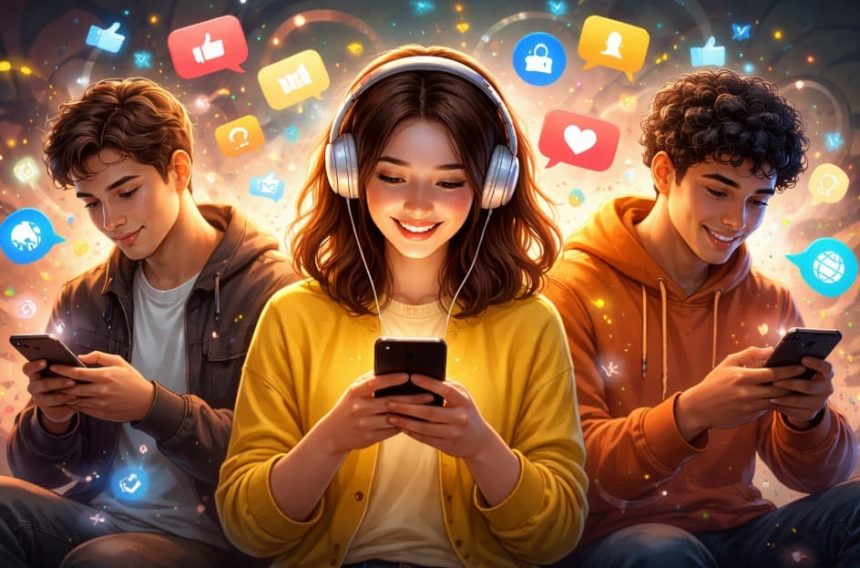
Social Media Shapes Our Thinking in ways that are both subtle and profound. Every post we scroll through, every like we give, and every comment we engage with can influence our opinions, emotions, and how we perceive the world around us. From shaping our beliefs to affecting how we view ourselves and others, the digital content we consume leaves a lasting mark on our thought patterns. In a world where online interactions are constant, understanding how social media shapes our thinking is essential for staying mindful, making conscious choices, and maintaining a balanced perspective in both our digital and real lives.
1. The Filter Bubble Effect
Social media platforms use sophisticated algorithms to show users content that aligns with their past behavior, clicks, and interactions. While this creates a sense of convenience, it often traps users in a “filter bubble,” where only familiar ideas and opinions are presented. Over time, this limits exposure to diverse perspectives, reinforcing preexisting beliefs and creating an echo chamber effect. People may begin to assume their limited view represents the broader reality, subtly shaping their understanding of society, politics, and culture.
2. The Psychology of Likes and Validation
Likes, shares, and comments act as micro-rewards for our online behavior. Each positive reaction triggers a dopamine release in the brain, creating a cycle of gratification that encourages repeated engagement. This constant feedback loop can influence priorities, pushing individuals to seek approval online over independent thought or real-world validation. Eventually, thinking can become subtly guided by what is likely to earn social validation rather than what is inherently meaningful or accurate.
3. Amplification of Emotional Content
Social media is designed to amplify content that evokes strong emotions—anger, joy, fear, or surprise—because emotional reactions drive engagement. This skewed amplification can distort perception, making rare or extreme events seem far more common than they actually are. Over time, individuals’ thinking becomes shaped not by facts but by emotionally charged narratives, which can influence decision-making, judgment, and worldview.
4. Shortened Attention Spans
The rapid-fire nature of social media feeds encourages users to skim rather than deeply process information. Quick scrolling and bite-sized content reduce the brain’s capacity for sustained attention and critical thinking. People become conditioned to seek instant information, making it harder to engage in deep analysis, reflective thought, or complex problem-solving.
5. Social Comparison and Self-Perception
Curated posts of others’ achievements, appearances, and lifestyles often lead to social comparison. Constant exposure to idealized images can distort self-perception, creating unrealistic expectations for oneself. This comparison can shape thinking about success, happiness, and personal goals, sometimes causing anxiety, self-doubt, or a need to conform to trends rather than authentic desires.
6. The Spread of Misinformation
Social media can rapidly disseminate both accurate information and false claims. Misinformation spreads faster than factual content due to its sensational or emotionally charged nature. People may internalize false narratives before verification, subtly influencing their beliefs and decision-making. This makes critical thinking more challenging and encourages accepting information at face value without scrutiny.
7. Collective Thought and Group Polarization
Online communities often foster collective thinking by connecting like-minded individuals. While this can create a sense of belonging, it also amplifies group biases. Exposure to repeated ideas within a homogenous group strengthens convictions and can polarize thinking, making individuals less receptive to alternative viewpoints or compromise.
8. Encouraging Instant Gratification
Social media is designed for immediate feedback and rapid reward. Notifications, trending posts, and viral content train users to seek quick results rather than reflective or long-term thinking. This can influence decision-making in daily life, fostering impulsivity and diminishing patience for deeper, slower, or more meaningful thought processes.
9. Influence on Memory and Knowledge Retention
With information constantly available online, people rely more on social media and search engines as external memory. This shifts cognitive processes: instead of retaining knowledge, individuals store information digitally and access it on-demand. While convenient, this can weaken memory retention, analytical thinking, and the ability to synthesize knowledge independently.
10. Shaping Cultural Norms and Trends
Social media has the power to redefine societal norms rapidly. Repeated exposure to certain behaviors, ideas, or aesthetics normalizes them over time. These trends can influence thinking about morality, lifestyle choices, fashion, and even political opinions, gradually shaping collective perceptions and individual beliefs.
11. Fear of Missing Out (FOMO)
Social media cultivates FOMO by constantly presenting images of others’ experiences, achievements, and adventures. The need to stay updated and not feel left out can subtly guide thinking and behavior, prompting decisions driven by comparison or social pressure rather than personal values or desires.
12. Shaping Opinions Through Influencers
Influencers and content creators play a major role in guiding thought patterns. Their opinions, endorsements, and lifestyle portrayals can have a disproportionate impact on followers. Over time, repeated exposure can shape perceptions, preferences, and even moral judgments, often without conscious awareness.
13. Normalizing Instant Reaction Over Reflection
Platforms reward quick responses—likes, shares, and comments—rather than thoughtful consideration. This conditions users to prioritize instant reaction over reflection, shaping thinking into a more reactive and less deliberative process. Complex issues may be oversimplified or judged emotionally, leading to surface-level understanding.
14. Reinforcing Cognitive Biases
Social media algorithms often amplify content that aligns with existing beliefs, reinforcing cognitive biases such as confirmation bias and availability bias. By continuously presenting information that supports prior views, thinking becomes more rigid and less open to critical examination or new evidence.
15. The Influence of Viral Challenges and Trends
Viral trends, challenges, or memes can subtly influence decision-making and risk assessment. Participating in online challenges often requires following collective behavior patterns rather than independent judgment, demonstrating how social media can shape thinking and action in both harmless and potentially harmful ways.
16. The Impact of Algorithmic Prioritization
Social media algorithms determine what content appears in our feeds based on engagement patterns. This prioritization subtly guides attention toward certain topics while suppressing others. Over time, it shapes our perception of what is important, creating a skewed sense of reality that influences opinions, interests, and even priorities in life.
17. Emotional Contagion Through Networks
Emotions are contagious on social media. Studies show that seeing posts expressing joy, anger, or sadness can influence a user’s own mood and thinking. Over time, exposure to collective emotional states can shape how we perceive events, respond to situations, and form judgments about people or communities.
18. Promoting Superficial Engagement
The design of social media encourages likes, shares, and brief comments rather than deep conversation. This fosters superficial engagement, where the focus is on quick reactions rather than thoughtful consideration. Thinking becomes shaped by popularity metrics rather than reflective reasoning or critical analysis.
19. The Role of Confirmation Bias
Social media feeds often reinforce existing beliefs by showing content that aligns with user preferences. This confirms what we already think, strengthening biases over time. Users may become less open to opposing views, and their thinking becomes increasingly filtered through preexisting opinions rather than balanced understanding.
20. Redefining Attention and Focus
Constant notifications, messages, and updates fragment attention. Multitasking between posts, videos, and chats affects the brain’s ability to focus on a single task for long periods. This shifts thinking patterns, making sustained attention, deep learning, and reflection more difficult.
21. Influencing Political and Social Beliefs
Social media shapes opinions on politics, culture, and society. Content that aligns with emotional or ideological preferences tends to be amplified, shaping collective attitudes. Over time, this can affect how individuals form political opinions, vote, or participate in civic discussions, often without realizing the subtle influence of digital exposure.
22. Cultivating Trends in Consumer Behavior
Advertisements, sponsored content, and influencer promotions subtly shape desires and purchasing decisions. Social media guides thinking about what is desirable, fashionable, or valuable, influencing behavior in ways that extend beyond the platform itself. Consumers may develop preferences based on perception rather than personal need or informed choice.
23. Encouraging Comparison Through Metrics
Follower counts, likes, and engagement statistics have become benchmarks for personal success. These visible metrics create pressure to measure self-worth through external indicators. Thinking and behavior begin to orient around achieving recognition rather than authentic personal growth.
24. The Power of Visual Storytelling
Images and videos dominate social media, shaping perception through visual rather than textual information. Humans process visual content rapidly, often bypassing critical evaluation. This influences thinking by creating emotional or aesthetic impressions that can guide judgments, attitudes, and memory retention.
25. Creating a Sense of Urgency
Real-time updates and live streams cultivate a perception that events are immediate and pressing. This sense of urgency can shape decision-making, prompting quick reactions and impulsive behavior rather than measured reflection. It subtly rewires thinking to prioritize speed over accuracy or careful analysis.
26. Highlighting Extreme Cases
Social media often amplifies extraordinary or sensational events. Frequent exposure to extreme cases—whether dramatic news, viral incidents, or shocking content—can distort thinking, making rare occurrences seem typical. This “availability bias” can influence fear, perception of risk, and decision-making in daily life.
27. Shaping Identity and Self-Expression
Online profiles, curated posts, and content creation allow users to present a crafted identity. Social media shapes thinking about self-perception, values, and social roles. The desire to maintain an appealing online identity can influence decisions, behavior, and even internalized beliefs about who we are.
28. Influence Through Peer Networks
Interactions with friends, peers, and communities significantly shape thought processes. Opinions expressed within networks can reinforce norms, create pressure to conform, and subtly shape beliefs. Peer influence on social media can be as powerful, if not more, than offline social influence.
29. Encouraging Instant Emotional Feedback
Reactions to posts provide immediate emotional feedback, conditioning users to think and react quickly. This shapes thought processes by emphasizing immediacy and emotional resonance over reflection or critical assessment. Gradually, thinking becomes oriented toward instant emotional responses rather than deliberate reasoning.
30. Normalizing Continuous Connectivity
The always-on nature of social media encourages constant engagement. Continuous connectivity can blur boundaries between personal time, work, and rest, subtly influencing priorities and thinking patterns. Users may prioritize digital interactions over offline reflection, leading to a shift in cognitive focus and decision-making strategies.