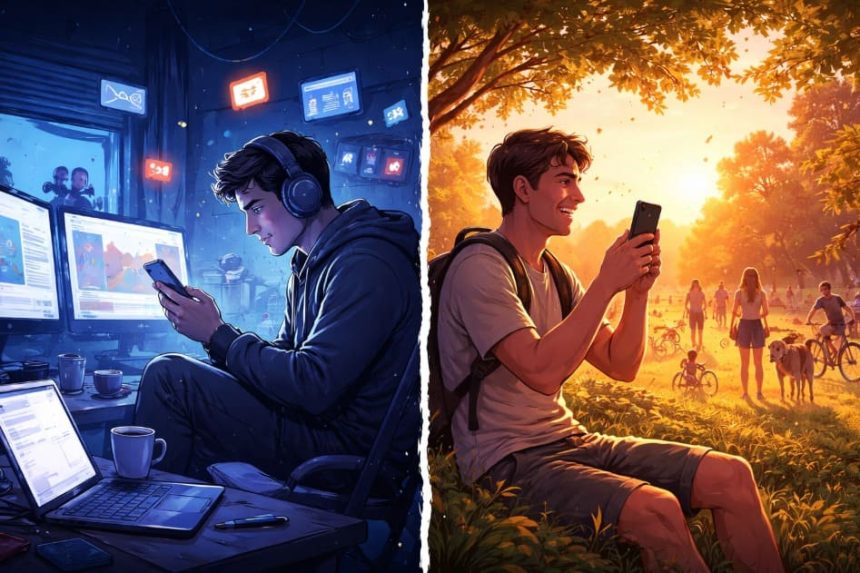
In today’s hyper-connected world, the debate of Digital Life vs Real Life has never been more relevant. Our days are increasingly dominated by screens, social media notifications, online meetings, and digital distractions, leaving many of us questioning whether we are truly living or merely existing online. While digital life offers unparalleled convenience, global connectivity, and instant access to information, it can also pull us away from meaningful real-world experiences, authentic relationships, and moments of presence that shape our emotional and mental well-being. Striking a balance between the digital and the real is not just a matter of choice—it is a conscious commitment to live with intention, ensuring that technology serves us without overshadowing the richness of offline life.
1. Connectivity vs Presence
Digital Life: The digital world allows us to connect across continents in an instant. Social media, messaging apps, and video calls have redefined what it means to stay in touch. You can chat with a friend in a different time zone, participate in online communities, or even collaborate with colleagues on the other side of the globe. This connectivity creates opportunities for knowledge sharing and emotional support that were once impossible.
Real Life: Yet, physical presence carries an irreplaceable depth. When you sit across from someone, the subtle cues—tone, body language, facial expressions—convey meaning that no emoji or text can replicate. Shared laughter, a comforting hug, or a long conversation builds trust and emotional closeness. Real-life presence fosters empathy and connection that digital interactions often lack.
2. Convenience vs Tangibility
Digital Life: From online shopping to remote work, digital tools make life more convenient than ever. You can pay bills, book flights, and learn a new skill with a few taps, saving hours of time and reducing effort. This efficiency allows people to focus on other priorities, whether it’s work, family, or personal growth.
Real Life: Yet, the tactile, hands-on experiences of real life offer a form of satisfaction that technology cannot replicate. Feeling the weight of a book, smelling fresh bread at a bakery, or physically crafting something connects you to the world in a deeper, more meaningful way. Tangible experiences leave lasting memories and a sense of accomplishment that convenience alone cannot provide.
3. Knowledge Access vs Applied Experience
Digital Life: The internet has made learning instantaneous. Tutorials, webinars, forums, and e-books provide an endless flow of knowledge. You can acquire new skills, explore complex topics, and gain perspectives from around the world without leaving your home.
Real Life: Knowledge, however, reaches its full potential only when applied. Experiential learning—through hands-on practice, observation, or real-world challenges—transforms information into wisdom. Making mistakes, problem-solving, and physically engaging with tasks teaches lessons that no video or article can fully impart. Life experience embeds understanding into memory and behavior.
4. Flexibility vs Routine
Digital Life: Online platforms allow unparalleled flexibility. Remote work, asynchronous communication, and digital tools let you manage your schedule according to your needs, providing freedom from traditional time and space constraints.
Real Life: However, structured routines in the physical world offer stability and discipline. Regular schedules, consistent engagement, and real-world obligations cultivate resilience and accountability. Physical routines provide rhythm and order that keep life grounded, which digital flexibility alone can sometimes destabilize.
5. Validation vs Authenticity
Digital Life: Likes, shares, comments, and follower counts offer instant feedback, creating a sense of recognition or validation. While satisfying in small doses, this system can foster dependency on external approval. Social comparison may trigger insecurity, anxiety, and a distorted sense of self-worth.
Real Life: In-person recognition is far more authentic. When someone genuinely praises your effort, listens to your concerns, or supports you through challenges, it builds lasting confidence. Real-life relationships reinforce self-worth through empathy, trust, and shared experience, not through curated online impressions.
6. Distraction vs Focus
Digital Life: The digital environment is designed to capture attention. Notifications, pop-ups, social media feeds, and constant messaging fragment focus, often making it difficult to immerse fully in one activity. Multitasking online may create the illusion of productivity, but it often diminishes concentration and mindfulness.
Real Life: Being fully present offline promotes deep focus. Without constant digital interruptions, tasks, conversations, and experiences gain clarity and meaning. Focused attention allows you to engage in creative problem-solving, develop emotional awareness, and experience life more profoundly.
7. Global Connection vs Local Community
Digital Life: The internet opens doors to friendships and collaborations across the world. Exposure to different cultures, ideas, and lifestyles fosters open-mindedness and global understanding. Online communities provide a sense of belonging even when geographically isolated.
Real Life: Yet, physical communities are vital for emotional support and social cohesion. Local friendships, family ties, and neighborhood interactions create trust, shared responsibility, and a sense of identity. These in-person networks provide a depth of connection and accountability that online interactions rarely achieve.
8. Entertainment vs Experience
Digital Life: Streaming services, online games, and social media deliver endless entertainment at your fingertips. The ability to consume content instantly offers convenience and escapism from boredom or stress.
Real Life: But actively participating in experiences—attending concerts, hiking, cooking, or engaging in hobbies—creates memories that are richer and more fulfilling. Experiences in the real world engage all senses, evoke emotions, and leave impressions that passive digital entertainment cannot match.
9. Speed vs Depth
Digital Life: Information travels instantly online, allowing quick decision-making, rapid learning, and immediate communication. Speed enhances efficiency but can sometimes sacrifice comprehension and reflection.
Real Life: Slower, deliberate interactions foster depth. Whether in conversation, learning, or creative work, taking time allows for contemplation, nuanced understanding, and thoughtful responses. Depth in real life creates wisdom, insight, and meaningful engagement that speed alone cannot provide.
10. Creativity vs Mindfulness
Digital Life: Digital tools empower creative expression, enabling art, writing, design, and music to reach global audiences instantly. Creativity flourishes online through sharing, collaboration, and inspiration from others.
Real Life: However, mindfulness nurtures creativity more profoundly. When fully present, observing the world, reflecting on ideas, and experimenting physically, creative solutions emerge naturally. Offline environments encourage patience, focus, and genuine inspiration free from algorithmic influence.
11. Overload vs Simplicity
Digital Life: Endless notifications, advertisements, and streams of information can overwhelm the mind. The constant inflow of content leads to mental fatigue, stress, and sometimes decision paralysis.
Real Life: A simpler offline life fosters clarity. By reducing digital noise, people can focus on priorities, enjoy solitude, and cultivate awareness. Simplicity allows the mind to rest, rejuvenate, and find satisfaction in tangible, meaningful experiences.
12. Learning vs Wisdom
Digital Life: Online learning provides abundant knowledge, but context is often missing. Understanding remains superficial if information is not critically processed or applied.
Real Life: Wisdom comes from living and applying knowledge. Experiencing challenges, observing consequences, and reflecting on actions cultivates insight. Life lessons in the real world build understanding that lasts, connecting intellectual knowledge with emotional intelligence.
13. Anonymity vs Accountability
Digital Life: Anonymity online allows freedom of expression, experimentation, and connection without immediate consequence. However, it can also lead to irresponsibility, shallow interactions, or harmful behavior, as actions often feel detached from reality.
Real Life: Physical presence creates accountability. Words, actions, and decisions have direct consequences, reinforcing responsibility, empathy, and integrity. Being accountable offline shapes character in ways that digital anonymity rarely does.
14. Productivity vs Fulfillment
Digital Life: Productivity apps, task management tools, and communication platforms enhance efficiency and organization, helping accomplish goals faster.
Real Life: Fulfillment arises from meaningful engagement and experiences. Achievements rooted in human connection, personal growth, and purposeful work create satisfaction that efficiency alone cannot provide. Productivity without real-life fulfillment can feel hollow and mechanical.
15. Dependence vs Control
Digital Life: Overreliance on devices, apps, and online validation can foster dependency, reducing resilience in offline situations. Habits may form that prioritize screen time over authentic life experiences.
Real Life: Maintaining control over habits, boundaries, and priorities empowers independence. Limiting device use, consciously choosing engagement, and investing in offline life strengthen self-discipline, resilience, and long-term mental and emotional well-being.
16. Instant Gratification vs Delayed Reward
Digital Life: Online platforms are designed to offer instant satisfaction. Notifications, likes, streaming, and online shopping provide immediate pleasure, often triggering a short-term dopamine rush. This constant availability can make patience feel unnatural.
Real Life: Offline experiences teach the value of delayed gratification. Investing time and effort in learning a skill, nurturing relationships, or completing a challenging project cultivates resilience, discipline, and a sense of true accomplishment. Delayed rewards deepen satisfaction and personal growth.
17. Illusion of Productivity vs Meaningful Action
Digital Life: Multitasking online creates a sense of productivity—replying to emails while scrolling social media—but often leads to shallow output and fragmented attention.
Real Life: Meaningful action requires focus and intention. Completing a task thoroughly, engaging in face-to-face problem-solving, or contributing to a community builds tangible results and a sense of purpose, rather than superficial busyness.
18. Global Awareness vs Local Understanding
Digital Life: Online news, social platforms, and educational resources provide exposure to global events and perspectives, fostering awareness and empathy for distant cultures.
Real Life: However, local engagement develops deeper understanding and responsibility. Participating in community events, volunteering, and interacting with neighbors cultivates insight into immediate social dynamics and strengthens real-world connections.
19. Digital Identity vs Personal Authenticity
Digital Life: Online profiles allow people to craft personas, highlighting achievements or curated images. This can feel empowering but may distort self-perception and create pressure to perform or conform.
Real Life: Authenticity emerges through genuine interactions. Offline life exposes vulnerabilities, emotions, and imperfections, allowing people to connect on a deeper level without filters, fostering trust and self-acceptance.
20. Algorithmic Influence vs Self-Directed Choice
Digital Life: Algorithms shape what we see, read, and consume online, often subtly influencing thoughts, opinions, and priorities. This can narrow perspectives and create echo chambers.
Real Life: Offline decisions are self-directed. Choices about activities, conversations, and learning are consciously made, promoting critical thinking, self-awareness, and freedom from external manipulation.
21. Constant Availability vs Personal Space
Digital Life: Being reachable 24/7 via messaging and social media can create pressure to respond immediately, leading to stress and burnout.
Real Life: Physical separation and personal space provide mental rest. Uninterrupted time allows reflection, recharging, and the ability to engage fully when interacting with others. Boundaries in offline life are crucial for balance and emotional health.
22. Curated Life vs Real Imperfection
Digital Life: Social media often presents polished, curated versions of life, highlighting achievements and happiness while concealing struggles. Comparing oneself to these portrayals can trigger insecurity and dissatisfaction.
Real Life: Actual experiences are imperfect but authentic. Facing challenges, failures, and unpredictability builds resilience, self-compassion, and a deeper appreciation for real-world moments that curated content can never replicate.
23. Rapid Communication vs Thoughtful Dialogue
Digital Life: Online messaging and social media enable fast communication, but brevity often sacrifices nuance, context, and emotional depth.
Real Life: In-person conversations encourage active listening, reflection, and emotional resonance. Thoughtful dialogue builds understanding, strengthens relationships, and allows subtle expression through tone, gestures, and shared presence.
24. Overload of Choice vs Mindful Decision
Digital Life: The digital world offers endless options—from entertainment to shopping to social interactions—which can lead to decision fatigue and anxiety.
Real Life: Limiting choices offline fosters intentionality. Prioritizing quality over quantity in experiences, purchases, and relationships allows more meaningful engagement and reduces mental stress.
25. Virtual Achievement vs Real Accomplishment
Digital Life: Online milestones, such as virtual game victories or social media follower growth, offer short-term satisfaction but may lack tangible impact.
Real Life: Real accomplishments—finishing a project, completing a marathon, or helping someone in need—create lasting pride, confidence, and measurable value. Tangible success connects effort with reward in a way digital wins cannot.
26. Passive Consumption vs Active Participation
Digital Life: Browsing feeds, watching videos, or scrolling endlessly encourages passive consumption of content, which often provides fleeting pleasure without engagement.
Real Life: Active participation—joining clubs, creating art, volunteering, or playing sports—stimulates creativity, skill-building, and social connection, leaving more profound and enduring satisfaction.
27. Screen Fatigue vs Sensory Engagement
Digital Life: Hours spent in front of screens can strain eyes, disrupt sleep, and numb physical awareness, creating mental and bodily fatigue.
Real Life: Engaging with the physical world—walking outside, cooking, gardening, or exercising—stimulates senses, improves health, and cultivates mindfulness, allowing people to feel alive and grounded.
28. Online Collaboration vs Team Synergy
Digital Life: Collaboration tools allow global teamwork and remote project management, enabling productivity without physical proximity.
Real Life: In-person teamwork fosters synergy through spontaneous discussions, body language, and real-time problem-solving. Physical collaboration builds rapport, trust, and creative energy that online tools often cannot fully replicate.
29. Convenience Addiction vs Resilience
Digital Life: Reliance on technology for convenience—navigation apps, reminders, and smart devices—can reduce problem-solving and adaptive skills.
Real Life: Facing challenges without digital shortcuts strengthens resilience, adaptability, and confidence. Real-world problem-solving encourages resourcefulness and personal growth.
30. Social Media Echo vs Emotional Reality
Digital Life: Online interactions often emphasize popularity, trends, or shared opinions, creating echo chambers that distort reality and emotional perception.
Real Life: Offline life exposes people to raw, unfiltered human experiences—emotions, struggles, and genuine reactions. Emotional intelligence and empathy grow through real-world engagement, offering a depth of understanding absent in curated digital spaces.