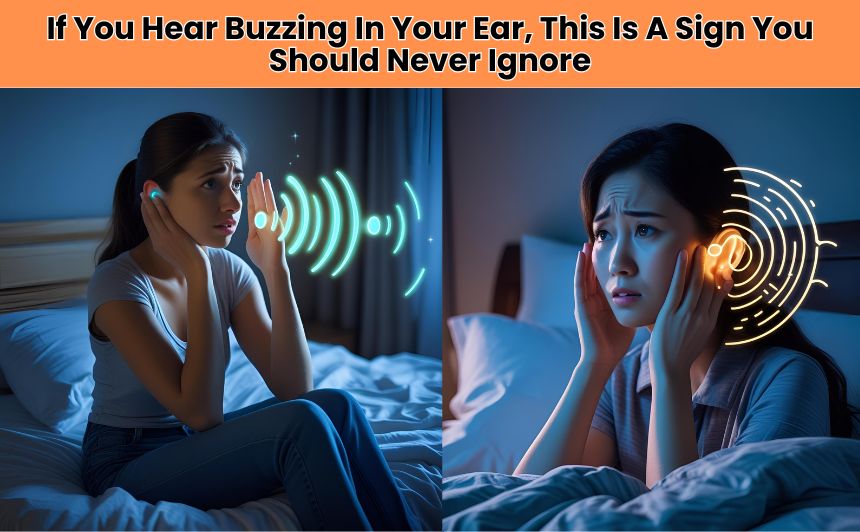
Hearing buzzing in your ear can feel unsettling, especially when it happens suddenly or persists for days. While many people dismiss it as harmless, this peculiar sensation can be a critical sign of underlying health problems you should never ignore. From hearing loss to high blood pressure and even neurological issues, buzzing in your ear—often called tinnitus—can be your body’s way of warning you that something needs attention. Have you ever laid in bed at night, only to be startled by a faint hum or buzzing sound that no one else can hear? This phenomenon, commonly known as tinnitus, affects millions of people around the world. While some experience it occasionally, others endure constant, intrusive sounds that disrupt their sleep, concentration, and quality of life.
Below, we’ll explore the most common causes, symptoms, and treatments for buzzing in your ear, as well as when you should see a doctor.
What Is Tinnitus?
Tinnitus is the perception of sound when no external noise is present. It can manifest as:
- Buzzing
- Ringing
- Hissing
- Whistling
- Roaring
Some people hear a low hum, while others describe high-pitched screeches. The sounds can be constant or intermittent, soft or loud, in one ear or both.
What Causes Buzzing In Your Ear?
There are many possible causes of tinnitus. Here are the most common:
1. Hearing Loss
Age-related hearing loss (presbycusis) often brings gradual damage to the inner ear, which can result in buzzing or ringing.
2. Loud Noise Exposure
Frequent exposure to loud music, machinery, or explosions can damage the tiny hair cells in your cochlea, triggering tinnitus.
3. Ear Infections or Blockages
Earwax buildup, fluid in the middle ear, or infections can distort sound perception and create buzzing sensations.
4. Medication Side Effects
Certain drugs (aspirin, antibiotics, diuretics, cancer medications) list tinnitus as a side effect.
5. High Blood Pressure
Increased pressure in blood vessels can cause pulsatile tinnitus, a rhythmic whooshing or buzzing in the ears.
6. Meniere’s Disease
This inner ear disorder causes tinnitus, dizziness, and hearing loss due to abnormal fluid buildup.
7. TMJ Disorders
Problems with your jaw joint can affect ear nerves and muscles, sometimes leading to buzzing sounds.
8. Neurological Disorders
Conditions like multiple sclerosis and acoustic neuroma (a benign tumor) can involve tinnitus as an early symptom.
Other Symptoms To Watch For
If you have buzzing in your ear, pay close attention to any additional symptoms:
- Dizziness or vertigo
- Ear pain or fullness
- Sudden hearing loss
- Headache or vision problems
- Weakness on one side of your face
These could indicate a serious medical condition requiring immediate care.
When To See a Doctor
You should always seek medical advice if:
- The buzzing comes on suddenly.
- You have hearing loss or dizziness.
- The noise is only in one ear.
- It disrupts your daily life.
An audiologist or ENT specialist can perform tests to pinpoint the cause and recommend appropriate treatment.
How Is Tinnitus Treated?
There is no universal cure for tinnitus, but treatment can reduce its impact. Options include:
- Hearing aids (to improve external sounds and mask tinnitus)
- Sound therapy (white noise machines)
- Cognitive Behavioral Therapy (CBT) to manage anxiety
- Medication for underlying conditions
- Earwax removal if blockage is the cause
- Lifestyle changes (reducing caffeine, managing stress)
Tips To Prevent Buzzing In Your Ear
- Protect your ears: Use earplugs in loud environments.
- Keep your blood pressure in check: Eat healthily and exercise regularly.
- Avoid excessive headphone use: Keep the volume low.
- Manage stress: Stress can amplify tinnitus.
- Limit stimulants: Cut back on caffeine and nicotine.
Conclusion:
Buzzing in your ear is more than an annoyance—it can be a powerful clue to your overall health. Whether it’s due to noise exposure, infection, or more serious conditions, understanding the causes empowers you to take action early. If you notice persistent buzzing, consult a healthcare professional. Your ears—and your health—deserve attention.