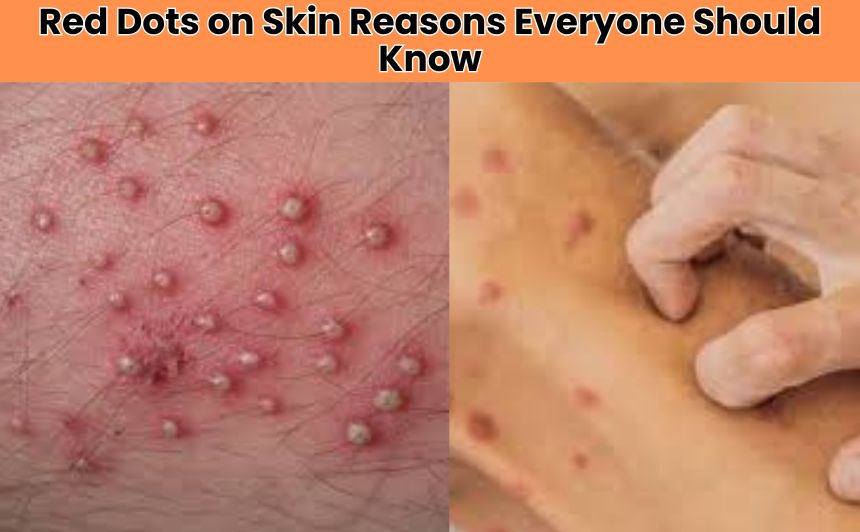
Have you ever looked in the mirror and noticed small, unexpected red dots on your skin? Whether they’re on your arms, chest, legs, or face, these red spots can be puzzling—and sometimes alarming. There are many red dots on skin reasons, ranging from harmless conditions to potential signs of deeper health issues. In this post, we’ll explore 15 possible causes behind red dots on your skin, when to worry, and how to manage them effectively.
🔴 15 Common Red Dots on Skin Reasons
1. Cherry Angiomas
Small, bright red growths caused by dilated blood vessels. Harmless and common with age.
2. Petechiae
Tiny pinpoint dots from broken capillaries. May indicate infection, blood clotting issues, or trauma.
3. Keratosis Pilaris
Rough, red bumps (often on arms/thighs) caused by clogged hair follicles. Harmless and treatable.
4. Allergic Reactions
Your skin may break out in red spots due to allergies to foods, products, or medications.
5. Heat Rash (Prickly Heat)
Caused by blocked sweat glands, especially in hot, humid conditions. Appears as small red dots or blisters.
6. Eczema (Atopic Dermatitis)
Can cause itchy, red patches that may look like raised or flat red dots, especially in sensitive skin areas.
7. Psoriasis
Autoimmune disorder causing red, scaly patches and dot-like spots. Needs medical attention and treatment.
8. Bug Bites
Mosquitoes, bedbugs, fleas, and mites can leave itchy red bumps. Pattern and location help identify the culprit.
9. Shingles (Herpes Zoster)
Painful red spots or blisters that follow a nerve path, often on one side of the body. Common in older adults.
10. Contact Dermatitis
Skin reacts to irritants like detergents, soaps, or metals. Red dots appear in contact areas.
11. Vasculitis
Inflammation of blood vessels, which can lead to red dots, swelling, and bruising. May need urgent care.
12. Scabies
Tiny red dots that itch intensely, caused by microscopic mites. Highly contagious and needs medical treatment.
13. Hives (Urticaria)
Raised, itchy red patches that come and go. Often triggered by stress, allergens, or infections.
14. Measles or Rubella
Viral infections that start with small red dots on the skin, followed by fever and other flu-like symptoms. Vaccination helps prevent these.
15. Blood Disorders
Unexplained red dots can sometimes indicate low platelet levels, leukemia, or clotting issues. Always check with a doctor if the spots are persistent, spreading, or accompanied by other symptoms.
🔍 When to See a Doctor
Seek medical attention if:
- The red dots spread rapidly
- You have a fever or feel unwell
- There’s pain, swelling, or bleeding
- You haven’t had recent vaccinations
- The spots don’t fade after 5–7 days
💡 How to Treat or Prevent Red Dots
- Avoid known allergens and irritants
- Keep skin clean and moisturized
- Use gentle, fragrance-free skincare products
- Wear loose, breathable clothing
- Treat insect bites quickly
- Manage underlying conditions like diabetes or autoimmune diseases
- Stay hydrated and eat skin-boosting foods (like vitamin C, E, and zinc)
🧠 Final Thoughts
There are many possible red dots on skin reasons, and while some are totally harmless, others can be indicators of deeper health problems. Don’t panic—but don’t ignore them either. Your skin often reveals what your body is trying to say, so it’s worth listening. Always consult a dermatologist or physician for accurate diagnosis and treatment if you’re unsure.