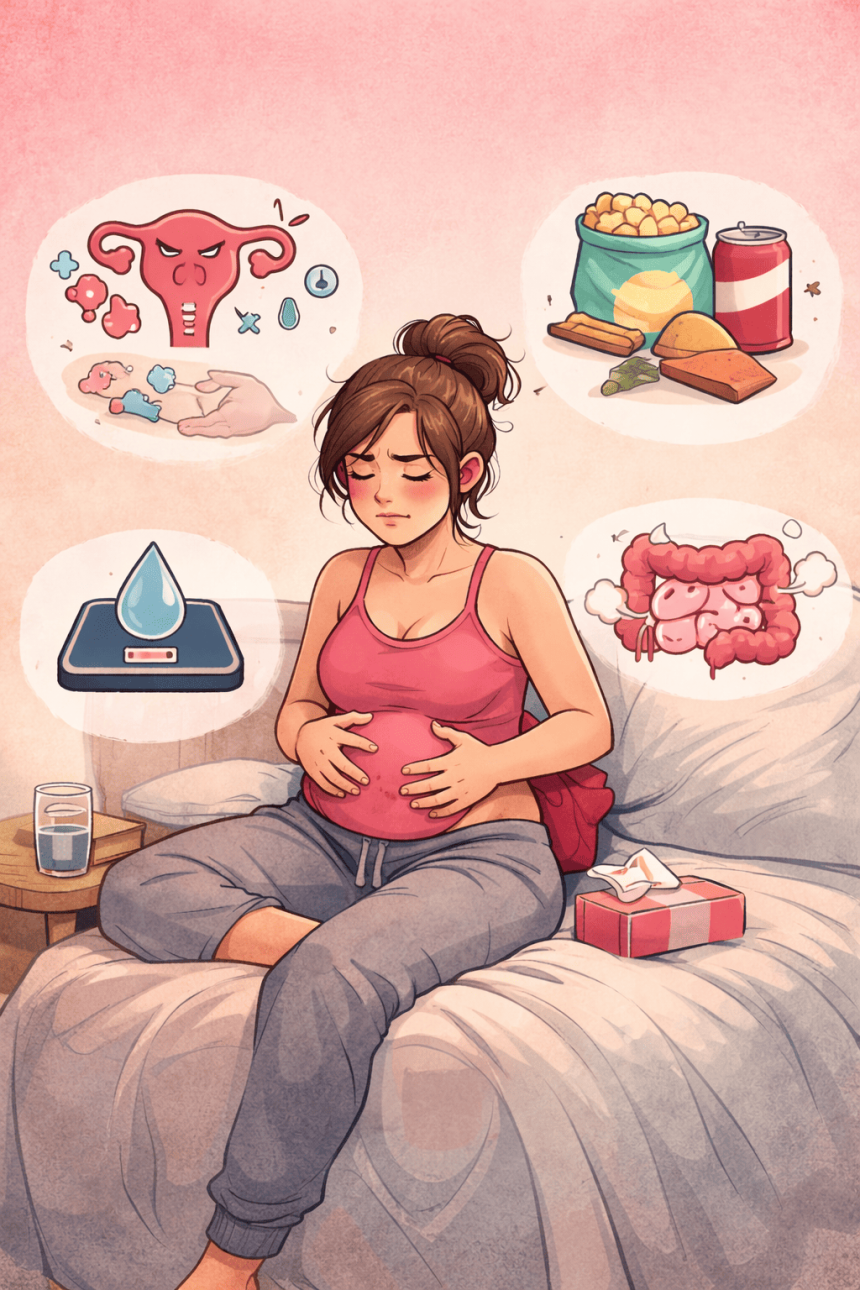
Why people bloat during periods is a common but often misunderstood experience that affects many individuals every month. The sudden swelling, tight stomach, and uncomfortable heaviness are not imagined or exaggerated—they are real physical responses caused by hormonal changes, digestion shifts, and fluid retention during the menstrual cycle. Understanding what’s actually happening inside the body can help reduce frustration and self-blame.
Why People Bloat During Periods
Period bloating is one of the most common premenstrual and menstrual symptoms, yet it’s rarely explained properly. Many people assume bloating happens because of overeating or lack of exercise, but in reality, it is largely driven by internal biological changes that are beyond conscious control.
During the days leading up to menstruation, the body goes through intense hormonal fluctuations. These changes affect how the body holds water, processes food, and moves waste through the digestive system.
Hormonal Changes Are the Main Cause
The biggest reason people bloat during periods is hormonal imbalance—specifically changes in estrogen and progesterone levels.
Before a period begins, estrogen levels rise and then suddenly drop. This fluctuation causes the body to retain more water and sodium, leading to swelling in the abdomen, breasts, face, and even hands and feet. Progesterone, which helps regulate digestion, also slows down gut movement when its levels change, making digestion feel heavier and slower.
This combination creates that tight, swollen feeling many experience before or during their period.
Water Retention Makes the Body Swell
Period bloating is not always gas—it’s often water retention. The body holds onto extra fluids as a response to hormonal shifts. This is why bloating can feel firm rather than gassy and why weight may temporarily increase during periods.
The bloating usually fades once hormones stabilize, but during that time, clothes may feel tighter and the stomach may appear visibly larger.
Digestive System Slows Down
Hormonal changes during the menstrual cycle can slow digestion. Food stays in the stomach and intestines longer than usual, leading to pressure, fullness, and bloating.
Additionally, the uterus sits close to the intestines. As it contracts to shed its lining, it can press against the digestive tract, worsening bloating and discomfort.
Increased Sensitivity to Food
During periods, the body becomes more sensitive to certain foods. Foods high in salt, sugar, or refined carbohydrates can worsen bloating by increasing water retention and inflammation.
Dairy, carbonated drinks, and highly processed foods may also feel harder to digest during this time, even if they don’t normally cause problems.
Changes in Gut Bacteria
Hormones also affect gut bacteria. During periods, the balance of bacteria in the digestive system can shift, causing increased gas production and digestive discomfort.
This is why some people experience bloating alongside constipation or diarrhea during menstruation.
Stress Makes Period Bloating Worse
Emotional stress increases cortisol levels, which can worsen water retention and slow digestion. Since periods already make the body more sensitive, stress can significantly amplify bloating symptoms.
Anxiety about body changes during periods can create a cycle where stress increases bloating, which then increases stress even more.
Lack of Movement Can Increase Bloating
Low energy during periods often leads to reduced movement. While rest is important, complete inactivity can slow digestion further and trap gas in the intestines.
Gentle movement like walking or stretching helps stimulate digestion and reduce bloating naturally.
Why Bloating Feels Different Each Month
Some months bloating feels mild, while other months it feels intense. This happens because hormone levels, stress, diet, sleep, and hydration change each cycle. No two periods are exactly the same, which is why bloating can vary in severity.
What Period Bloating Is NOT
Period bloating is not:
- Weight gain
- A sign of poor health
- Caused by lack of discipline
- Something you’re imagining
It is a normal biological response.
How Long Period Bloating Lasts
For most people, bloating starts a few days before the period and improves within a few days after menstruation begins. Once hormone levels stabilize, excess fluid is released naturally.
How to Reduce Bloating During Periods
While bloating can’t always be prevented, it can be managed:
- Drink more water to reduce water retention
- Reduce salty and processed foods
- Eat fiber-rich foods to support digestion
- Move gently instead of staying completely inactive
- Manage stress through rest and relaxation
Final Thoughts
Why people bloat during periods is rooted in hormones, digestion, and natural body responses—not personal failure or poor habits. Period bloating is temporary, common, and valid.
Your body is not working against you—it’s simply doing what it’s designed to do during a complex hormonal process. Understanding this can replace frustration with patience and self-compassion.