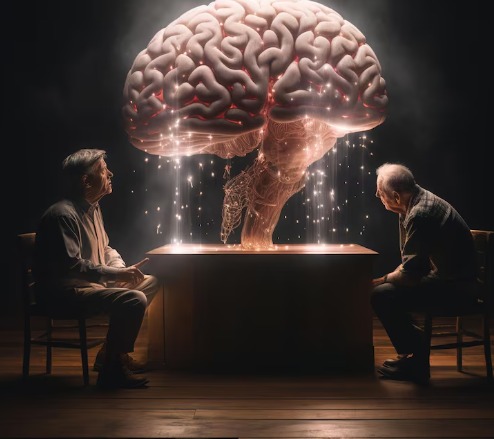
Your brain is a master of secrecy. Every second, it performs countless operations behind the scenes—regulating your body, processing emotions, and influencing decisions—without your conscious awareness. From subtle reactions to complex problem-solving, much of what drives your thoughts and actions happens automatically. Understanding these hidden processes can reveal why you behave the way you do and help you take better control of your mind. In this blog, we explore fascinating facts about what your brain does without ever telling you, uncovering its hidden influence on your daily life. Things Your Brain Does Without Telling You.
Things Your Brain Does Without Telling You – Points 1–20
1. Processes Millions of Signals Simultaneously
Your brain constantly processes sensory input, thoughts, and emotions at incredible speed, far beyond conscious awareness. From regulating heart rate to interpreting subtle facial expressions, most of this happens without you noticing.
2. Filters Information Automatically
The brain filters out unnecessary information to prevent overload. This selective attention means you don’t notice everything around you, allowing you to focus on what seems most relevant.
3. Predicts Future Events
Using past experiences, your brain predicts outcomes and prepares responses automatically. This predictive coding helps you navigate life efficiently, often without realizing how much it influences decisions.
4. Stores Memories Unconsciously
Even when you aren’t actively recalling events, your brain encodes and stores experiences, creating implicit memories that influence behavior, preferences, and reactions later.
5. Regulates Body Functions
Breathing, heartbeat, digestion, and temperature are controlled automatically by the brainstem. You rarely notice these processes, yet they are vital to survival.
6. Adjusts Mood Based on Environment
Your brain subconsciously processes environmental cues—light, sound, and social signals—to influence mood and emotional state, sometimes without your conscious awareness.
7. Detects Danger Instantly
The amygdala identifies threats before conscious thought occurs, triggering rapid stress responses such as increased heart rate or fight-or-flight reactions.
8. Solves Problems While You Sleep
During sleep, your brain consolidates memories and may work on unresolved problems. Often, solutions or insights arise without any conscious effort.
9. Creates Habits Without You Noticing
Repeated behaviors become automatic through neural pathways. These habits, whether healthy or not, form silently and dictate much of daily life without conscious control.
10. Interprets Nonverbal Cues
Your brain constantly reads body language, facial expressions, and tone, influencing your reactions and social understanding without conscious thought.
11. Controls Reflexive Movements
Reflex actions like pulling your hand from a hot surface happen before the conscious mind registers the danger. This is the nervous system acting faster than awareness.
12. Influences Decisions with Biases
Subconscious biases guide choices, from whom you trust to which products you buy, often without realizing the brain’s hidden influence.
13. Stores Emotional Experiences
Even when you think you’ve forgotten emotional events, the brain retains their essence. Past experiences subtly shape reactions to new situations.
14. Repairs and Maintains Brain Cells
Neurons undergo repair, synaptic pruning, and growth largely without conscious input. This maintenance is critical for cognitive function and memory consolidation.
15. Generates Dreams
While you sleep, the brain creates dream narratives that can process emotions, experiences, and fears, often without clear logic or conscious control.
16. Processes Language Automatically
Understanding and producing language happens almost entirely unconsciously. Your brain decodes words, grammar, and context without effort.
17. Enhances Focus Without Effort
Through unconscious filtering and attention prioritization, the brain allows you to concentrate on tasks by minimizing irrelevant distractions.
18. Adjusts Pain Perception
The brain modulates pain signals depending on context, attention, and emotion. This is why you sometimes feel less pain when distracted or more pain when stressed.
19. Guides Social Behavior Subconsciously
Mirror neurons help you empathize and react appropriately in social interactions, often without conscious awareness of why you feel or act a certain way.
20. Stores Subtle Preferences
The brain encodes likes and dislikes—even for smells, sounds, or tastes—without explicit awareness. These preferences influence choices in ways you rarely notice.
21. Regulates Hormones Automatically
Your brain controls hormone release via the hypothalamus and pituitary gland. These hormones influence energy, mood, sleep, and stress—without you ever consciously noticing.
22. Anticipates Rewards
The brain’s reward system predicts pleasure or satisfaction from actions before you even act, subtly guiding behavior toward perceived positive outcomes.
23. Processes Facial Recognition Instantly
Your brain can recognize familiar faces and detect emotions within milliseconds, long before conscious thought occurs, influencing trust and social interactions.
24. Detects Subtle Patterns
Even without conscious awareness, your brain identifies trends and patterns in the environment, helping with decision-making, problem-solving, and learning.
25. Modulates Immune Response
The brain communicates with the immune system via signaling molecules, influencing inflammation, recovery, and infection response without conscious input.
26. Influences Appetite and Cravings
Hunger, cravings, and satiety are regulated subconsciously. The brain balances energy needs and nutrient intake without active thought, often using environmental cues.
27. Automates Routine Tasks
Daily behaviors like walking, typing, or driving become automatic over time. The brain shifts these tasks to unconscious control to free up cognitive resources.
28. Generates Gut-Brain Communication
The enteric nervous system sends constant signals to the brain about digestion and health, influencing mood, energy, and cravings without conscious awareness.
29. Monitors Internal States
The brain continuously tracks body temperature, blood pressure, hydration, and oxygen levels, making adjustments automatically to maintain homeostasis.
30. Creates Subconscious Memories
Implicit memories form without conscious effort, such as knowing how to ride a bike or responding to social cues. These memories guide behavior silently.
31. Influences Body Language
Your posture, gestures, and expressions are often controlled subconsciously, reflecting internal states and emotions before conscious choice occurs.
32. Detects Microexpressions
The brain can pick up on microexpressions—tiny facial cues of emotion—that the conscious mind may miss, affecting social judgment and empathy.
33. Regulates Circadian Rhythms
Sleep-wake cycles, alertness, and hormone fluctuations are coordinated by the brain automatically, often influenced by light and routine without conscious direction.
34. Processes Complex Sensory Integration
Sight, sound, touch, and balance are integrated by the brain without awareness, enabling smooth movement, spatial navigation, and environmental awareness.
35. Stores Unconscious Associations
Your brain links emotions, objects, and experiences subconsciously, creating implicit associations that influence decision-making and emotional responses.
36. Prioritizes Threats Instantly
The brain continuously scans the environment for danger, often triggering subconscious reactions like tensing muscles or quick reflexes before you consciously notice the threat.
37. Balances Emotions Automatically
Neurotransmitter levels and brain circuitry regulate emotions subtly, often keeping you calm or alert without conscious effort or realization.
38. Influences Memory Recall Bias
Your brain unconsciously decides which memories are easily accessible and which fade, shaping perception of the past without awareness.
39. Triggers Automatic Problem Solving
Even when you aren’t actively thinking, the brain works on unresolved challenges in the background, generating insights or solutions during rest or distraction.
40. Regulates Breathing Patterns
Breathing adjusts automatically to activity, stress, and oxygen needs, yet can also be consciously controlled—a dual function largely managed without awareness.
41. Maintains Emotional Equilibrium
The brain monitors stress and emotional intensity, activating regulatory systems like the parasympathetic nervous system to maintain balance subconsciously.
42. Processes Nonverbal Communication
You respond to tone, gestures, and facial expressions automatically, often interpreting meaning without conscious effort, aiding social navigation.
43. Controls Reflexive Eye Movements
Your eyes track motion, focus, and balance automatically. Reflexive saccades and pupil adjustments occur without conscious thought, ensuring visual stability.
44. Generates Creative Insights Subconsciously
The brain can produce sudden ideas or creative solutions while not actively thinking about a problem, often experienced as “aha” moments.
45. Influences Social Trust and Bonding
Mirror neurons and subconscious emotional cues guide your perception of others’ intentions, creating trust or caution before conscious evaluation.
46. Anticipates Pain or Discomfort
The brain predicts potential pain from movements or experiences, subtly adjusting behavior to minimize harm without conscious thought.
47. Manages Energy Efficiency
Neural circuits optimize energy use, prioritizing important functions while reducing resources for less urgent tasks, all without your awareness.
48. Detects Emotional Tone in Speech
You perceive subtle emotional nuances in voices automatically, shaping social response and communication without conscious evaluation.
49. Encodes Lessons from Failure Automatically
Mistakes and negative experiences are stored subconsciously, helping the brain adjust future behavior and decisions without active reflection.
50. Coordinates Complex Movements
Activities like dancing, typing, or playing instruments involve thousands of neural calculations performed automatically, letting you perform smoothly without thinking about each step.