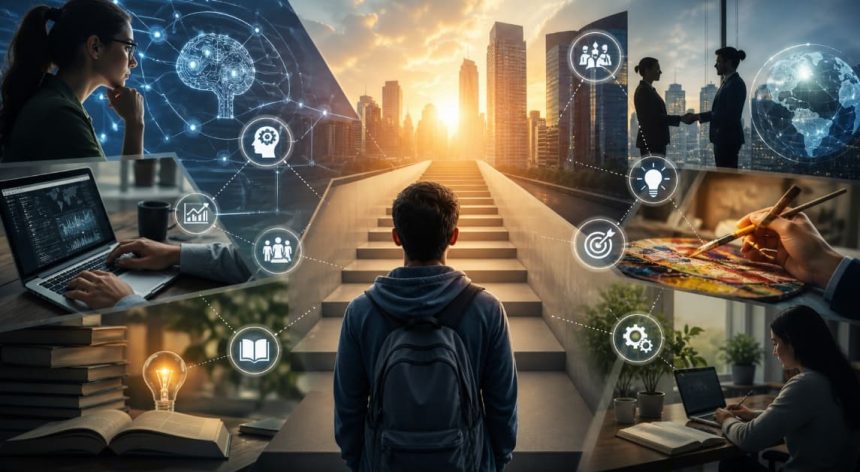
In a world that is rapidly changing due to technology, automation, and global competition, developing the right abilities has never been more important. The skills for future success are not just about academic knowledge anymore—they include adaptability, digital literacy, emotional intelligence, and creative problem-solving. As industries evolve and new career paths emerge, individuals who continuously upgrade their skill sets will have a significant advantage. Whether you are a student, professional, or entrepreneur, understanding and mastering these future-ready skills can help you stay relevant, competitive, and confident in any environment you step into. Here’s the Skills You Need to Learn for Future Success
1. Critical Thinking and Problem Solving
Critical thinking is the ability to analyze information objectively and make reasoned judgments. In the future job market, simply knowing facts will not be enough—what matters is how effectively you can use those facts to solve real problems. Employers value individuals who can break down complex situations, identify root causes, and develop practical solutions. Problem-solving also involves creativity, because many modern challenges do not have straightforward answers. Whether in business, technology, or daily life, people who can think independently and logically will always stand out.
2. Digital Literacy and Tech Skills
As technology continues to evolve, digital literacy has become a fundamental skill rather than an optional one. This includes understanding how to use software, navigate online tools, and adapt to new digital platforms quickly. In the future, almost every profession will involve some level of technology—from AI tools to automation systems. Learning basic coding, data handling, and digital security can give you a strong advantage. Those who resist digital change may struggle, while those who embrace it will find endless opportunities.
3. Emotional Intelligence (EQ)
Emotional intelligence is the ability to understand, manage, and express emotions effectively while also recognizing the emotions of others. In workplaces of the future, EQ will be just as important as IQ. Strong emotional intelligence helps in teamwork, leadership, conflict resolution, and communication. People with high EQ can stay calm under pressure, build stronger relationships, and make better decisions. As automation replaces repetitive tasks, human-centered skills like empathy and emotional awareness will become even more valuable.
4. Adaptability and Flexibility
The future is unpredictable, and industries are changing faster than ever before. Adaptability means being open to change and willing to learn new skills when required. Flexible individuals are not afraid of new challenges or unfamiliar environments. Instead, they see change as an opportunity for growth. Whether it’s switching careers, learning new technologies, or adjusting to global trends, adaptability ensures long-term success in any field. Those who resist change often fall behind, while adaptable individuals continue to grow.
5. Communication Skills
Effective communication is one of the most powerful skills for future success. It involves not only speaking clearly but also writing, listening, and understanding non-verbal cues. In a globalized world, people work with teams from different cultures and backgrounds, making clear communication essential. Strong communicators can express ideas confidently, reduce misunderstandings, and build trust. Whether in interviews, meetings, or presentations, communication can define your personal and professional success.
6. Creativity and Innovation
Creativity is no longer limited to artists or designers—it is a key skill in every industry. Innovation means finding new and better ways to solve problems, improve systems, or create products. As automation handles repetitive tasks, human creativity becomes the main driver of progress. Creative thinkers are able to see possibilities where others see limitations. They experiment, take risks, and develop unique ideas that lead to growth and success in business, technology, and entrepreneurship.
7. Leadership and Decision-Making
Leadership is not just about managing people; it is about guiding, influencing, and inspiring others toward a common goal. Future workplaces will require individuals who can make confident decisions even in uncertain situations. Good leaders take responsibility, stay accountable, and motivate their teams. Decision-making skills involve analyzing risks, considering alternatives, and choosing the best possible outcome. Whether you are leading a team or managing your own life, leadership skills are essential for long-term success.
8. Time Management and Productivity
Time is one of the most valuable resources, and managing it effectively is a critical skill for success. Time management involves prioritizing tasks, avoiding distractions, and working efficiently. In a world full of digital distractions, staying focused is becoming increasingly difficult. People who can manage their time well tend to achieve more in less time and maintain a better work-life balance. Productivity is not about doing more work—it is about doing the right work in the most effective way.
9. Lifelong Learning Mindset
The future belongs to learners. A lifelong learning mindset means continuously updating your knowledge and skills throughout your life. Because industries evolve quickly, what you learn today may become outdated tomorrow. People who embrace continuous learning stay relevant and competitive. This includes reading, taking online courses, attending workshops, and learning from experience. A curious mind that never stops learning is one of the strongest assets for future success.
10. Collaboration and Teamwork
No one succeeds alone in today’s interconnected world. Collaboration is the ability to work effectively with others toward a shared goal. It involves respect, communication, and understanding different perspectives. In future workplaces, teams will often be diverse, remote, and global. Strong teamwork skills help individuals combine their strengths, solve problems faster, and achieve better results. Those who can cooperate and contribute positively to a team environment will always be in demand.
11. Data Literacy
Data literacy is the ability to understand, interpret, and use data to make decisions. In the modern world, almost every industry depends on data—from business performance metrics to social media analytics and customer behavior tracking. People who can read charts, understand trends, and draw conclusions from numbers will have a major advantage. It is not just about technical tools but also about asking the right questions and identifying what the data actually means. As decisions become increasingly data-driven, this skill will separate informed professionals from those who rely on guesswork.
12. Artificial Intelligence Awareness
Artificial intelligence is reshaping how work is done across industries. AI awareness means understanding what AI is capable of, how it is used, and how it affects different jobs. This includes tools like chatbots, automation systems, recommendation engines, and predictive analytics. You don’t need to be a programmer, but you should understand how AI influences productivity and decision-making. Those who learn to work with AI will become more efficient, while those who ignore it may struggle to keep up with technological progress.
13. Cybersecurity Awareness
As digital systems expand, so do cyber threats like hacking, phishing, and identity theft. Cybersecurity awareness is the knowledge of how to protect your personal and professional information online. This includes using strong passwords, recognizing suspicious emails, and understanding safe browsing habits. In the future, even non-technical professionals will need basic cybersecurity knowledge. A single mistake online can lead to serious consequences, making this skill essential for everyone, not just IT specialists.
14. Networking Skills
Networking is the ability to build meaningful professional relationships that can support your growth. It is not just about collecting contacts but about creating genuine, long-term connections. Strong networking helps you discover opportunities, gain advice, and collaborate with others in your field. In many industries, success often comes from “who you know” as much as “what you know.” People with strong networking skills are more likely to access hidden job opportunities and grow faster in their careers.
15. Financial Literacy
Financial literacy is the understanding of how money works, including budgeting, saving, investing, and managing debt. It is a crucial life skill that affects both personal and professional success. People who understand financial principles can make smarter decisions about spending and investing. This skill also helps in building long-term wealth and avoiding financial stress. In a rapidly changing economy, financial literacy provides stability and independence, making it essential for future success.
16. Negotiation Skills
Negotiation is the ability to reach agreements that satisfy all parties involved. This skill is used in business deals, salary discussions, partnerships, and even daily life situations. Good negotiators understand both their own goals and the needs of others. They communicate clearly, stay calm under pressure, and aim for fair outcomes. In the future workplace, negotiation skills can help individuals secure better opportunities, resolve conflicts, and build stronger professional relationships.
17. Project Management
Project management is the skill of planning, organizing, and executing tasks efficiently to achieve specific goals. It involves managing time, resources, and teamwork effectively. As workplaces become more complex, handling multiple tasks and deadlines will become even more important. Project management also includes problem-solving, risk management, and decision-making during execution. Individuals who can successfully complete projects on time and within scope will always be highly valued.
18. Research Skills
Research skills involve the ability to find accurate information, evaluate sources, and draw meaningful conclusions. In an age of information overload, knowing how to separate reliable data from misinformation is critical. Strong research skills help in academics, business decisions, and problem-solving. They allow individuals to make informed choices based on facts rather than assumptions. This skill is also essential for innovation, as it helps build a strong foundation of knowledge before taking action.
19. Cultural Intelligence
Cultural intelligence is the ability to work effectively with people from different cultural backgrounds. In a globalized world, teams often include individuals from various countries and traditions. Cultural intelligence helps reduce misunderstandings and improves collaboration. It involves being open-minded, respectful, and adaptable to different communication styles and values. This skill is especially important for international careers, remote work, and global business environments.
20. Resilience and Stress Management
Resilience is the ability to recover quickly from challenges and keep moving forward despite setbacks. Stress management is closely connected and involves maintaining emotional balance under pressure. The future will bring uncertainty, competition, and constant change, making this skill essential. Resilient individuals do not give up easily; instead, they learn from failures and grow stronger. Managing stress effectively also improves mental health, productivity, and decision-making abilities.
21. Decision-Making Under Pressure
Decision-making under pressure is the ability to choose the best possible action quickly in stressful or uncertain situations. In the future workplace, delays or hesitation can lead to missed opportunities or bigger problems. This skill requires a calm mind, logical thinking, and the ability to evaluate risks rapidly. Strong decision-makers don’t panic; instead, they prioritize information, assess outcomes, and act confidently. This ability becomes especially important in fields like business, healthcare, emergency services, and technology where fast responses are critical.
22. Entrepreneurship Mindset
An entrepreneurship mindset is the ability to think creatively, take initiative, and identify opportunities where others see problems. It is not limited to starting a business—it applies to any role where innovation and ownership matter. People with this mindset are proactive, solution-oriented, and willing to take calculated risks. They are not afraid of failure because they see it as part of learning. In the future economy, this mindset will be essential for innovation, career growth, and personal independence.
23. Public Speaking
Public speaking is the skill of confidently communicating ideas to a group of people. It includes presentations, meetings, seminars, and even virtual conferences. Strong public speakers can influence, inspire, and persuade audiences effectively. This skill builds self-confidence and improves leadership abilities. In a world where communication happens both online and offline, being able to express ideas clearly and engagingly is extremely valuable. It helps in career advancement, networking, and professional visibility.
24. Innovation Thinking
Innovation thinking is the ability to create new ideas or improve existing systems in meaningful ways. It involves curiosity, experimentation, and problem-solving. Innovative individuals constantly ask how things can be done better, faster, or more efficiently. This skill is essential in industries driven by competition and technology. Organizations value people who can bring fresh perspectives and develop practical solutions that add value. Innovation is what drives progress in business, science, and society.
25. Collaboration in Remote Work
With remote and hybrid work becoming more common, the ability to collaborate effectively online is essential. This skill includes using digital tools, managing tasks virtually, and maintaining clear communication without physical presence. Remote collaboration requires discipline, accountability, and strong coordination skills. It also involves understanding time zones, respecting digital communication etiquette, and staying productive independently. Those who master remote teamwork will have access to global job opportunities.
26. Analytical Thinking
Analytical thinking is the ability to break down complex problems into smaller, understandable parts and examine them logically. It helps individuals identify patterns, relationships, and root causes of issues. This skill is widely used in business analysis, science, engineering, and data-driven roles. Analytical thinkers rely on facts and structured reasoning rather than assumptions. In the future, where problems are becoming more complex, this skill will be essential for making accurate and effective decisions.
27. Self-Discipline
Self-discipline is the ability to stay focused, control impulses, and consistently work toward long-term goals. It is one of the most important predictors of success. In a world full of distractions like social media, entertainment, and constant notifications, maintaining discipline is challenging but crucial. Self-disciplined individuals are able to follow routines, meet deadlines, and stay committed even when motivation decreases. This skill builds consistency, which is the foundation of achievement.
28. Emotional Regulation
Emotional regulation is the ability to manage emotions in different situations without letting them negatively affect decisions or behavior. It involves staying calm during stress, handling criticism constructively, and responding thoughtfully instead of reacting impulsively. This skill improves relationships, communication, and leadership effectiveness. In high-pressure environments, emotional control can determine success or failure. People who regulate their emotions well are more stable, respected, and effective in both personal and professional life.
29. Global Awareness
Global awareness is the understanding of international events, cultures, economies, and global trends. In a connected world, decisions made in one country can impact others globally. This skill helps individuals think beyond local boundaries and understand the bigger picture. It also improves adaptability in international environments and global careers. People with strong global awareness are better prepared for cross-cultural communication, global business, and international opportunities.
30. Continuous Adaptation Mindset
The continuous adaptation mindset is the ability to constantly evolve with changing circumstances, technologies, and industries. It combines learning agility, flexibility, and openness to change. Instead of resisting new developments, individuals with this mindset embrace them as opportunities for growth. In the future, job roles, tools, and industries will keep changing rapidly. Those who continuously adapt will remain relevant, competitive, and successful regardless of how the world evolves.