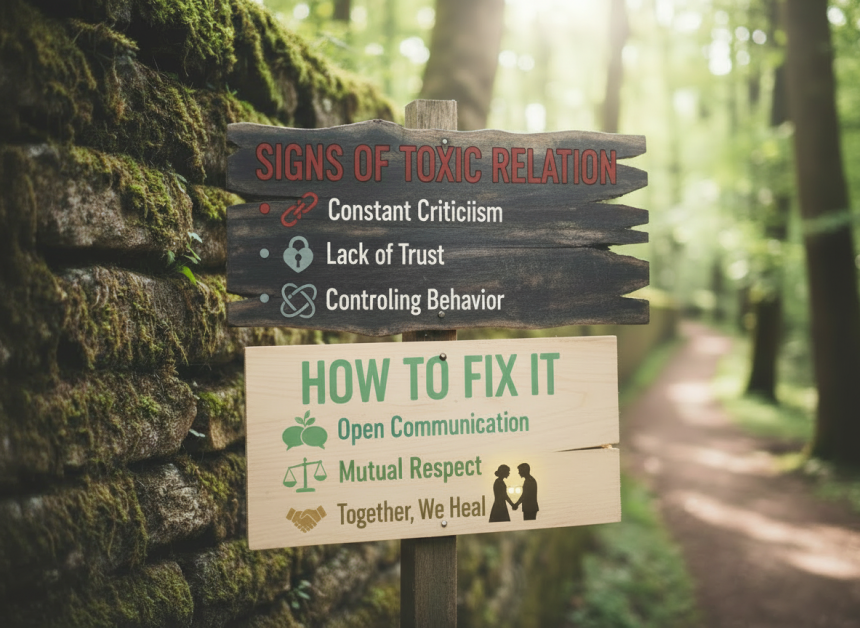
Signs Your Relationship Is Toxic can often be subtle at first, showing up as small criticisms, passive-aggressive comments, or emotional neglect. Over time, these behaviors can drain your energy, erode your confidence, and leave you feeling unseen or undervalued. Recognizing these warning signs early is essential because it empowers you to take action—whether that means addressing the issues, rebuilding trust, or making the difficult choice to step away for your emotional well-being.
Common Signs Your Relationship Is Toxic
- Constant Criticism
If your partner frequently belittles or criticizes you, even under the guise of “jokes,” it gradually undermines your self-esteem. - Lack of Support
Healthy relationships thrive on mutual encouragement. Feeling ignored, dismissed, or unsupported in your goals is a warning sign. - Control and Manipulation
Toxic partners may try to control your decisions, friendships, finances, or daily activities, which reduces trust and independence. - Walking on Eggshells
Feeling anxious about triggering anger or judgment indicates a lack of emotional safety. - Frequent Drama and Conflict
Occasional disagreements are normal, but constant arguing, unpredictable moods, or emotional highs and lows are unhealthy patterns. - Dishonesty and Betrayal
Lies, hidden information, or repeated breaches of trust compromise intimacy and emotional security. - Emotional Neglect
Feeling ignored, unheard, or dismissed consistently is a key sign of toxicity.
How to Fix a Toxic Relationship
Once you identify the warning signs, you can take these steps to improve the relationship:
- Communicate Openly
Calmly express your feelings without blame. Encourage honest dialogue, focusing on how actions affect you. - Set Healthy Boundaries
Define what behaviors are unacceptable. Boundaries protect your emotional well-being and foster mutual respect. - Seek Professional Help
Couples therapy or counseling can help break unhealthy patterns, rebuild trust, and strengthen communication skills. - Prioritize Self-Care
Focus on your mental, emotional, and physical health. A strong sense of self enables you to handle challenges effectively. - Evaluate the Relationship
If toxic patterns persist despite effort, consider whether leaving is the healthiest choice for your long-term happiness.
Rebuilding Trust and Emotional Safety
If both partners commit to change, trust can be restored. Consistent honesty, accountability, and patience are key. Celebrate small improvements, such as improved listening, reduced criticism, or healthier conflict resolution. Over time, emotional safety grows, allowing intimacy and connection to thrive again.
Preventing Toxic Patterns in the Future
- Know your values and standards to choose compatible partners.
- Recognize red flags early, including controlling behavior or emotional neglect.
- Maintain independence and personal goals; healthy love enhances your life, not diminishes it.
- Communicate clearly from the beginning to prevent misunderstandings from escalating.
Conclusion
Understanding the Signs Your Relationship Is Toxic is the first step toward protecting your emotional health and building healthier connections. Toxicity doesn’t define your worth—your response does. By recognizing warning signs, setting boundaries, seeking help, and prioritizing self-care, you can either restore the relationship or create space for love that truly nurtures your heart. Awareness, action, and commitment to positive change are what transform unhealthy patterns into lasting, supportive love.