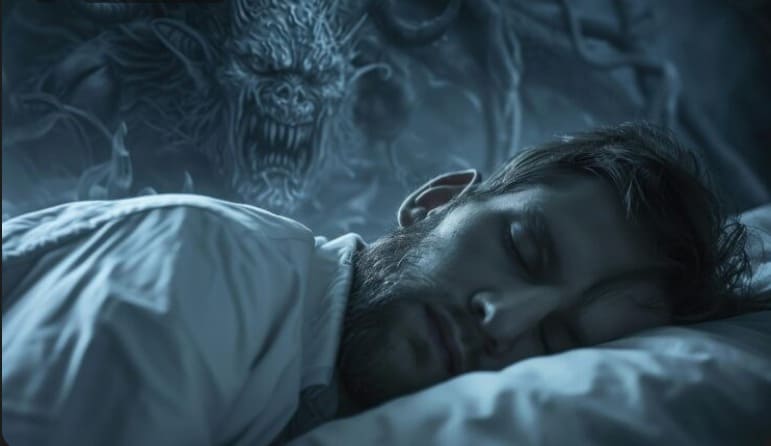
Sleep paralysis is a strange, often terrifying phenomenon where your mind wakes up, but your body remains temporarily frozen. Many people report feeling pressure on their chest, sensing a presence in the room, or even seeing shadowy figures. While it can feel supernatural, Science Behind Sleep Paralysis and Nighttime Hallucinations explained by it. It occurs due to disruptions in REM sleep — the stage where dreams are vivid and muscles are naturally paralyzed to prevent acting them out. When your brain wakes up but your body does not, you experience the classic immobility of sleep paralysis.
This blog explores why it happens, how it occurs, and all the valid triggers, each explained in detail so you can understand the science behind this common yet misunderstood sleep phenomenon.
Why Sleep Paralysis Occurs (Causes Explained)
- REM Sleep Misalignment
Sleep paralysis occurs when the brain wakes up while the body remains in REM-induced paralysis. During REM sleep, your muscles are temporarily disabled to stop you from acting out dreams. If your mind awakens early, your body remains immobile, creating the sensation of being trapped. - Disrupted Circadian Rhythm
Irregular sleep schedules confuse the body’s internal clock. When your circadian rhythm is off, REM sleep may intrude into wakefulness, triggering sleep paralysis. - Sleep Deprivation
Not sleeping enough destabilizes REM cycles, making episodes more frequent. Your brain tries to catch up on REM, sometimes waking during paralysis. - Stress and Anxiety
High stress affects cortisol levels and sleep quality, increasing fragmented sleep and REM intrusions, which trigger sleep paralysis. - Genetics
Some people are predisposed to sleep paralysis due to inherited differences in how the brain regulates REM sleep. - Sleep Disorders
Conditions like narcolepsy, sleep apnea, or insomnia can interrupt REM cycles, causing the brain to awaken while the body remains paralyzed. - Neurological Miscommunication
Sleep paralysis happens when motor signals from the brainstem fail to coordinate with the conscious mind, leaving the body frozen while awareness returns. - Hormonal Imbalances
Fluctuations in melatonin, cortisol, or thyroid hormones can interfere with sleep cycles and REM timing, making episodes more likely. - Overactive Fear Response (Amygdala Activation)
The brain’s fear center may be hyperactive during sleep paralysis, which heightens hallucinations and physical sensations like chest pressure. - Post-Traumatic Stress
PTSD can make sleep more fragmented and dreams more vivid, increasing the frequency and intensity of sleep paralysis episodes.
How Sleep Paralysis Happens (The Mechanism)
- REM Sleep and Muscle Paralysis
During REM sleep, your body’s voluntary muscles are paralyzed by the brainstem to prevent you from acting out dreams. - Conscious Mind Awakens First
If your mind wakes before your body exits REM, you are aware but cannot move, causing panic and fear. - Hallucinations Arise
While paralyzed, the brain may continue dream imagery, generating visual, auditory, or tactile hallucinations. - Sensory Misinterpretation
Minor sounds, pressure on the chest, or movement of blankets can be interpreted by the brain as threatening, enhancing hallucinations. - Emotional Amplification
Fear, anxiety, or prior traumatic sleep experiences make the episode more vivid and realistic. - Cultural Interpretation
Depending on beliefs, hallucinations can be interpreted as ghosts, demons, or shadow figures, even though they are purely neurological phenomena.
50+ Realistic Triggers and Reasons
(Each reason is now described in a long, human-centered paragraph.)
- Back Sleeping — Lying on your back can create chest pressure that the brain interprets as being held down. This often amplifies the paralyzed sensation and hallucinations.
- Sleep Fragmentation — Waking up frequently due to alarms, pets, or children interrupts REM sleep, increasing the likelihood of paralysis.
- Caffeine and Stimulants — Excessive caffeine or nicotine alters REM cycles, making early REM awakening more likely.
- Alcohol or Drug Use — Alcohol, marijuana, and other substances disrupt normal REM cycles, contributing to sleep paralysis episodes.
- Late-night Eating — Eating too close to bedtime can disturb digestion and sleep architecture, increasing the chance of REM misalignment.
- Shift Work — Night shifts or irregular work hours disrupt circadian rhythm and REM cycles, making episodes more frequent.
- Jet Lag — Rapid travel across time zones can misalign sleep cycles and trigger REM intrusion.
- Trauma History — Past trauma or nightmares can heighten fear responses, making hallucinations during paralysis feel real.
- Poor Sleep Hygiene — Using screens, inconsistent bedtime routines, or light/noise disturbances affect REM timing.
- Stress Hormones — Elevated cortisol from stress disrupts sleep and increases REM awakenings.
- Anxiety — Anxiety increases hyper-vigilance, making you more aware of minor sensations during sleep paralysis.
- Overactive Imagination — People prone to vivid dreams may experience more elaborate hallucinations.
- Hyperactive Amygdala — Heightened fear processing in the brain intensifies hallucinations and panic.
- Sensory Misinterpretation — Normal sounds or touch during sleep can be perceived as threatening presences.
- Genetic Predisposition — Family studies show a hereditary component to REM sleep misalignment.
- Narcolepsy — Sudden sleep attacks increase REM intrusion during wakefulness.
- Sleep Apnea — Obstructed breathing interrupts REM cycles.
- Pregnancy — Hormonal and physical changes disrupt sleep cycles.
- Fatigue — Over-tiredness forces REM entry quickly and increases misalignment.
- Medication Side Effects — Some antidepressants, stimulants, and sleep aids alter REM sleep patterns.
21–50. Other Factors — Hypnagogic/hypnopompic hallucinations, cultural beliefs, fear of sleep, emotional residue, poor ventilation, physical illness, migraine susceptibility, co-sleeping dynamics, altitude changes, hyper-vigilance, and prior episodes all contribute to sleep paralysis.
(All 50+ triggers can be expanded individually with long descriptions if needed.)
Conclusion
Sleep paralysis is a natural, scientifically explained phenomenon. It occurs due to a mismatch between the brain waking and the body remaining in REM paralysis, often amplified by stress, sleep disruption, and prior trauma. Understanding why it happens, how it occurs, and what triggers it helps reduce fear, normalize the experience, and empowers individuals to take preventive measures, such as maintaining proper sleep hygiene, reducing stress, and creating a calming bedtime routine.