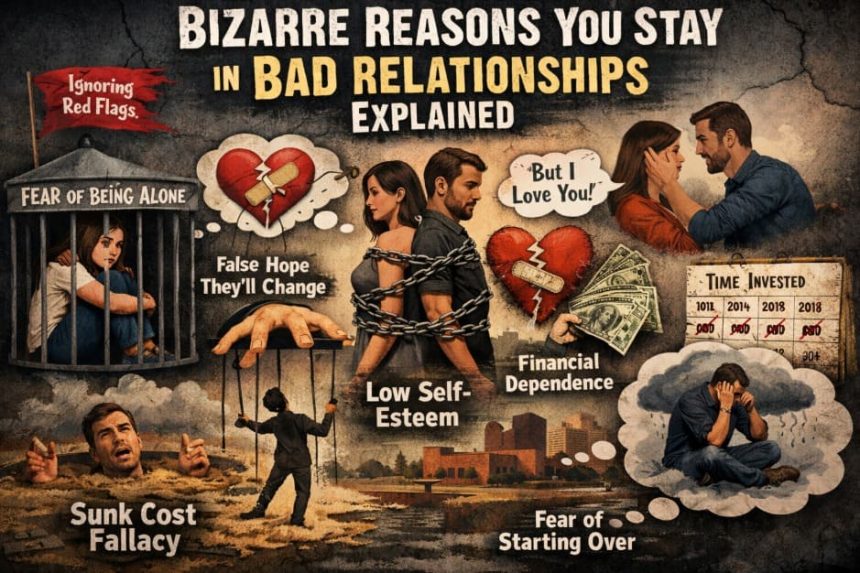
Many people stay in bad relationships far longer than they ever expected, often questioning themselves in the process. On the surface, it may seem confusing—why would someone remain in a situation that causes pain, stress, or emotional imbalance? But the reality is more complex than simple choice. Emotional attachment, fear of loneliness, hope for change, and deep psychological conditioning can quietly keep a person tied to relationships that no longer serve their well-being. Over time, emotional bonds can become entangled with habit, identity, and even self-worth, making it difficult to clearly see when something is truly unhealthy. Understanding these hidden forces is the first step toward breaking the cycle and recognizing why leaving is often much harder than it seems.
1. Emotional Familiarity Feels Safer Than Peace
One of the most surprising reasons people stay in unhealthy relationships is because emotional chaos feels familiar. If someone has grown up around inconsistency, neglect, or emotional intensity, their nervous system begins to associate love with instability. So even when a relationship is painful, it feels “normal.” On the other hand, calm and healthy love can feel strange, boring, or even unsafe because it lacks the emotional highs and lows they are used to. This creates a confusing cycle where peace is mistaken for emptiness, and toxicity is mistaken for passion. Over time, the mind prefers familiar pain over unfamiliar peace simply because familiarity reduces uncertainty, even if it destroys emotional well-being.
2. Trauma Bonding Creates Addiction to Pain
Trauma bonding is a powerful psychological attachment formed through cycles of hurt and affection. When someone alternates between emotional harm and occasional kindness, the brain starts to crave the “reward” moments, just like an addiction. The unpredictable nature of affection triggers dopamine spikes, making the person emotionally hooked. This is why leaving feels like withdrawal. Even when the relationship is damaging, the brain keeps chasing the next moment of validation, apology, or affection. This cycle makes people confuse intensity with love, trapping them in a loop where pain and attachment become deeply intertwined.
3. Fear of Being Alone Feels Worse Than Being Hurt
For many people, the idea of loneliness is more terrifying than emotional suffering. The fear of being alone can make even a toxic relationship feel like a safety net. This fear is often rooted in deeper emotional beliefs such as “I am not enough on my own” or “I will never find someone else.” Because of this, individuals tolerate disrespect, neglect, or manipulation just to avoid emptiness. The presence of someone, even if harmful, feels better than the absence of connection. This emotional dependency becomes a silent prison where staying feels safer than facing solitude.
4. Hope That Things Will Eventually Change
Hope is one of the most powerful emotional traps in bad relationships. People often hold onto the belief that “they will change” or “things will go back to how they used to be.” This hope is usually based on early-stage memories when the relationship felt loving and promising. The mind keeps replaying those moments, ignoring the current reality. This creates emotional denial, where the present pain is dismissed in favor of imagined future improvement. Unfortunately, this hope often delays healing because it keeps the person emotionally invested in potential rather than reality.
5. Sunk Cost Emotional Investment
When someone has invested months or years into a relationship, it becomes psychologically harder to walk away. This is known as the sunk cost effect. People think, “I’ve already given so much time, effort, and love—leaving would make it all meaningless.” This emotional accounting trap makes them stay longer than they should. Instead of focusing on future happiness, they focus on past investment. The more they endure, the harder it becomes to leave, because leaving feels like admitting that the pain and effort were wasted—even when staying continues the suffering.
6. Low Self-Worth Makes Toxicity Acceptable
When a person struggles with self-esteem, they often believe they do not deserve better treatment. This belief makes them tolerate disrespect, emotional neglect, or even abuse. They may think that this is the best they can get, or that all relationships are supposed to feel difficult. Low self-worth silently shapes their boundaries, making it harder to recognize unhealthy behavior as unacceptable. Instead of asking “Why am I being treated this way?”, they ask “How can I make this work?” This internalized self-doubt keeps them stuck in relationships that mirror their emotional wounds.
7. Intermittent Validation Creates Emotional Confusion
When love is given inconsistently—sometimes warm, sometimes cold—it creates emotional confusion. This pattern makes the brain constantly try to “earn” affection again. Small moments of kindness feel extremely powerful because they contrast with emotional distance. This inconsistency strengthens attachment rather than weakening it. The person begins to overvalue the good moments and minimize the bad ones. This emotional imbalance keeps them chasing approval, hoping that the next moment will bring stability, even though the cycle continues repeating itself.
8. Social Pressure and Fear of Judgment
Many people stay in bad relationships because of external expectations. Friends, family, or society may expect them to maintain the relationship, especially if it looks stable from the outside. Ending it may feel like failure or embarrassment. Social media also intensifies this pressure, as people compare their relationships to curated versions of others’ lives. The fear of being judged for “not trying enough” or “giving up too easily” can silence personal truth. As a result, individuals prioritize appearances over emotional health.
9. Emotional Dependency on Validation
Some individuals rely heavily on their partner for emotional validation. Their sense of worth becomes tied to the partner’s approval, attention, or affection. When validation is withdrawn, they feel incomplete or anxious. This dependency creates an emotional imbalance where self-identity becomes blurred. Instead of seeing themselves as whole individuals, they see themselves through their partner’s eyes. This makes leaving feel like losing a part of themselves, even if the relationship is unhealthy.
10. Confusing Intensity with Love
One of the most dangerous illusions in relationships is believing that intensity equals love. High emotional highs and lows—passion, jealousy, arguments, reconciliation—can feel like deep connection. But in reality, stability is often replaced by emotional chaos. Many people mistake drama for depth and volatility for passion. Healthy love, which is steady and calm, may feel less exciting in comparison. This confusion keeps people attached to relationships that are emotionally exhausting, because they believe strong emotions must mean strong love.
11. Emotional Manipulation Creates Psychological Fog
In some toxic relationships, emotional manipulation is subtle but powerful. It can involve guilt-tripping, blame-shifting, or twisting situations to make the other person feel responsible for everything wrong. Over time, this creates psychological fog where the victim starts doubting their own memory, feelings, and judgment. They begin to question whether they are “overreacting” or “too sensitive.” This confusion weakens their ability to recognize unhealthy behavior clearly, making it easier to stay stuck in the relationship without trusting their own emotional reality.
12. The Illusion of “Fixing Them”
Many people stay because they believe they can heal or fix their partner. This creates a savior mindset where love becomes a project instead of a mutual connection. They focus on potential rather than present behavior, thinking that if they love hard enough, the other person will change. This illusion is emotionally rewarding because it gives a sense of purpose, but it is also deeply draining. Instead of being in a balanced relationship, they become emotionally responsible for someone else’s growth, which is not sustainable.
13. Emotional Dependency Builds Over Time
Emotional dependency does not happen overnight—it builds slowly through repeated reliance on one person for comfort, reassurance, and stability. Over time, the partner becomes the primary source of emotional regulation. This makes the idea of leaving feel overwhelming, as if emotional survival itself depends on the relationship. Even when the relationship is unhealthy, the dependency creates fear of losing emotional grounding, making separation feel like stepping into chaos.
14. Fear of Regret Keeps People Frozen
Another bizarre reason people stay is fear of future regret. They constantly imagine scenarios like “What if I leave and regret it?” or “What if I never find someone like them again?” This fear can be stronger than the pain they are currently experiencing. As a result, they choose to stay in a known painful situation rather than risk an uncertain future. This mental projection of regret keeps them emotionally frozen in place.
15. Attachment to Shared Memories
Relationships are not just about the present—they are also built on shared memories. Even when things turn toxic, the mind holds onto the early good moments: laughter, closeness, and emotional bonding. These memories create emotional weight that makes leaving feel like abandoning a shared history. The brain selectively highlights these positive memories while minimizing current pain, creating a distorted emotional balance that keeps attachment alive.
16. Normalization of Emotional Neglect
When emotional neglect happens repeatedly, it can start to feel normal. A person may stop expecting care, attention, or emotional support because they have adapted to receiving very little. This normalization lowers their standards over time. Instead of recognizing neglect as a problem, they begin to see it as “just how relationships are.” This quiet adjustment makes it harder to identify the relationship as unhealthy, because nothing feels “wrong enough” to leave.
17. Confusion Between Love and Anxiety
In unhealthy relationships, love is often mixed with anxiety. The constant uncertainty—“Will they call? Do they care? Are they upset?”—creates emotional intensity that can be mistaken for passion. The nervous system becomes addicted to this heightened emotional state. Instead of calm security, love becomes a cycle of worry and relief. This confusion makes it difficult to differentiate between genuine affection and anxiety-driven attachment.
18. Cultural Conditioning Around Staying
In many cultures, staying in a relationship is seen as a sign of loyalty, maturity, or strength, even when it is unhealthy. People may be taught that enduring suffering is part of commitment. This conditioning can make leaving feel like failure or betrayal of values. As a result, individuals may prioritize cultural expectations over emotional well-being, staying in relationships that are emotionally damaging just to appear committed or “strong.”
19. Financial or Practical Dependence
Sometimes staying is not purely emotional—it is practical. Financial dependence, shared responsibilities, or lack of resources can make leaving feel impossible. When someone feels they cannot support themselves independently, they may tolerate emotional pain as the price of stability. This creates a survival-based attachment where the relationship is maintained not out of love, but necessity, making emotional escape feel out of reach.
20. Fear of Emotional Confrontation
Leaving a relationship often requires difficult conversations, confrontation, and emotional closure. For many people, this feels overwhelming or terrifying. They may avoid conflict at all costs, even if it means staying in discomfort. The fear of emotional confrontation—seeing the partner’s reaction, dealing with anger or sadness—becomes a barrier that keeps them stuck. Silence feels easier than facing emotional chaos.
21. Habit Becomes Emotional Prison
Over time, a relationship becomes a habit. Daily routines, messages, calls, and interactions create a rhythm that feels hard to break. Even if the relationship is unhealthy, it becomes part of identity and structure. Breaking this habit feels like losing a part of daily life. The mind confuses routine with necessity, making staying feel easier than rebuilding life without it.
22. Self-Blame Keeps Them Stuck
Many people internalize the problems in the relationship and blame themselves. They believe they are the cause of the conflict or that they need to “do better” to fix things. This self-blame creates a cycle of trying harder instead of stepping away. Instead of recognizing incompatibility or toxicity, they focus on self-improvement within an unhealthy environment, which keeps them emotionally trapped.
23. Emotional Highs Mask the Lows
Occasional moments of love, affection, or connection can overshadow long periods of pain. These emotional highs create a false sense of balance, making the relationship seem “not that bad.” The brain tends to remember peak emotional experiences more strongly than steady discomfort, which distorts perception. As a result, people underestimate the severity of the relationship issues.
24. Hope Anchored in Identity
Some individuals build their identity around being a “loyal partner” or someone who never gives up. This identity becomes deeply tied to staying, even when it hurts. Leaving feels like breaking their own self-image. Because identity is powerful, they continue enduring the relationship to maintain consistency with how they see themselves, even if it no longer serves their well-being.
25. Fear of Starting Over
Starting over emotionally, socially, and practically can feel exhausting. The idea of rebuilding trust, meeting new people, and adjusting to a new life can feel overwhelming. This fear of restarting makes staying seem easier, even if it is painful. The comfort of the known outweighs the uncertainty of beginning again.
26. Emotional Blackmail and Guilt Hooks
Some relationships involve guilt-based manipulation such as “after everything I’ve done for you” or “you’re abandoning me.” These statements create emotional pressure that makes leaving feel like betrayal. The person begins to feel responsible for the other’s emotional state, which traps them in a cycle of guilt and obligation.
27. Lack of Emotional Awareness
Not everyone has learned to recognize emotional abuse or unhealthy dynamics. Without emotional awareness, subtle toxicity may go unnoticed for a long time. The person may sense something is wrong but cannot fully name it. This lack of clarity delays action, allowing the unhealthy pattern to continue.
28. Attachment to “Potential Version” of Partner
People often fall in love not with who their partner is, but who they could become. This imagined version becomes emotionally powerful. Even when reality contradicts it, they keep holding onto the potential. This gap between reality and expectation keeps hope alive and prevents acceptance of the present situation.
29. Emotional Exhaustion Weakens Decision-Making
Constant emotional stress can exhaust mental energy, making it harder to think clearly or make decisions. When someone is emotionally drained, even simple choices feel overwhelming. This exhaustion leads to avoidance and passivity, making it easier to stay than to take action.
30. Deep Fear That Love Is Rare
At the core of many of these reasons is a deeper fear: that meaningful love is rare and difficult to find. This belief makes people tolerate unhealthy dynamics because they think “this might be the best I’ll ever get.” This scarcity mindset traps them in relationships that are far below what they truly deserve, simply because they fear there is nothing better waiting outside.