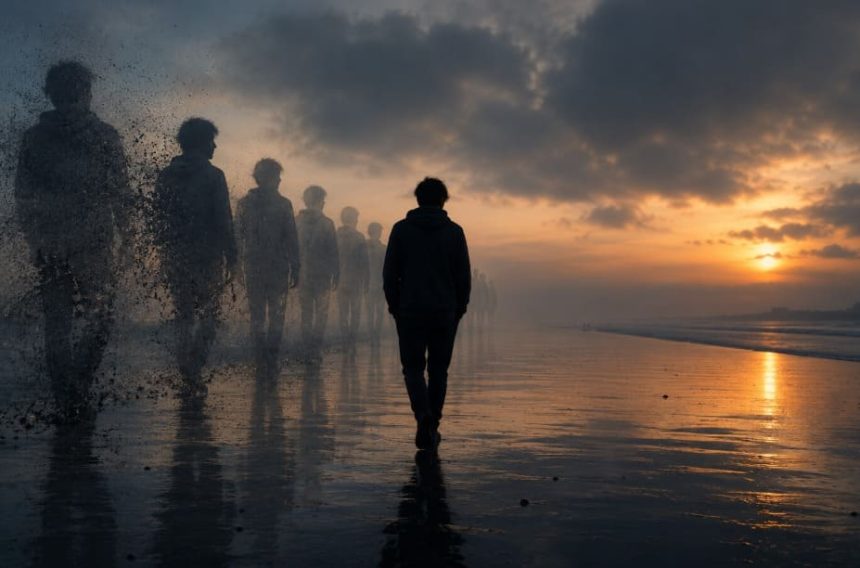
There are some changes in life that happen so quietly you do not notice them until you no longer feel like yourself anymore. The quiet disappearance of your old self often begins through emotional pain, heartbreak, disappointment, and exhaustion that slowly reshape who you are from the inside. You still continue with life, but the version of you that once felt happy, carefree, and emotionally alive slowly fades into the background without anyone truly noticing.
1. You Stop Recognizing the Person You Used to Be
One day, without warning, you begin noticing that you are no longer the same person you once were. The things that once made you excited no longer move you. The laughter that used to come naturally now feels forced. Even your energy feels different—quieter, heavier, emotionally exhausted. It is not because you suddenly changed overnight, but because life slowly reshaped you through pain, disappointment, heartbreak, and survival. And the hardest part is realizing that your old self did not disappear loudly. It faded quietly while you were busy trying to hold yourself together.
2. Happiness Starts Feeling Unfamiliar
There was a version of you that found joy in simple things—small conversations, music, dreams, people, random moments. But over time, emotional exhaustion changes the way happiness feels. You begin struggling to fully enjoy things the way you once did. Even when good moments happen, they feel temporary, distant, almost unreal. Pain does not always destroy happiness completely—it simply makes it harder to reach.
3. You Become Emotionally Tired All the Time
Not physically tired, but emotionally drained in ways sleep cannot fix. Your mind constantly feels heavy with overthinking, suppressed emotions, and silent battles nobody else sees. Even small tasks start feeling overwhelming because your emotional energy has been carrying unresolved pain for too long. You continue functioning, smiling, and surviving, but inside, you feel emotionally exhausted almost every day.
4. You Start Hiding Your Real Feelings
At some point, you stop explaining how deeply things affect you. You say “I’m okay” because it feels easier than describing the sadness living inside you. Slowly, you begin hiding your emotions not only from others, but sometimes from yourself too. You learn how to appear emotionally stable while silently breaking inside. And over time, pretending becomes a habit.
5. You Lose Interest in Things You Once Loved
The hobbies, passions, and little joys that once felt exciting slowly begin losing meaning. It becomes difficult to feel connected to things that once made you feel alive. Emotional pain has a way of draining color from life, making even beautiful things feel emotionally distant. And that loss is heartbreaking because you remember how much those things once meant to you.
6. You Start Feeling Disconnected From Everyone
Even when surrounded by people, you feel emotionally alone. Conversations feel empty, interactions feel forced, and connection starts feeling harder to maintain. It becomes difficult to explain what is wrong because the emptiness is deeper than words. You begin feeling like nobody truly understands the version of you that exists beneath the surface.
7. Overthinking Becomes Your Constant Companion
Your mind rarely rests anymore. You replay conversations, memories, mistakes, and painful moments repeatedly, trying to understand things you cannot change. Every silence feels personal, every disappointment feels permanent, and every emotional wound stays longer than it should. Overthinking slowly turns into emotional survival, even though it quietly destroys your peace.
8. You Stop Expressing Yourself Fully
You begin holding back parts of yourself. You think twice before speaking honestly, showing emotion, or trusting people with your vulnerability. Not because you stopped feeling deeply, but because life taught you how painful it can be when your emotions are misunderstood, ignored, or dismissed. Slowly, silence becomes safer than openness.
9. You Miss the Old Version of Yourself
Sometimes the sadness is not about missing another person—it is about missing who you used to be before life became so emotionally heavy. You miss your softness, your excitement, your emotional freedom, your ability to trust and love without fear. And there are moments where you grieve your old self like you lost someone important.
10. You Realize Survival Changed You Completely
Eventually, you understand that constantly surviving emotional pain changes people deeply. The experiences you endured forced you to become stronger, quieter, more guarded, and emotionally careful. You may still look the same from the outside, but internally, you became someone entirely different. And while growth often comes from pain, there is still sadness in realizing how much of your old self disappeared just to survive what life put you through.
11. You Begin Feeling Emotionally Numb
After carrying emotional pain for too long, your feelings slowly become quieter. The sadness is still there, but it no longer comes out the same way. You stop reacting as strongly, stop expressing as much, and sometimes stop feeling anything at all. It is not healing—it is emotional exhaustion reaching a point where your mind shuts down certain feelings just to protect you from further pain. And the frightening part is how normal that numbness eventually becomes.
12. You Stop Expecting People to Understand You
At one point, you tried explaining your emotions, your struggles, your loneliness. But after feeling misunderstood too many times, you slowly stop trying. You begin believing that no matter how deeply you explain yourself, people will only understand the surface version of your pain. So instead of opening up, you quietly carry everything alone, convincing yourself that silence is easier than disappointment.
13. You Become More Guarded With Your Heart
The old version of you trusted easily, loved openly, and expressed emotions without fear. But pain changes that. After being hurt repeatedly, you start building emotional walls without even realizing it. You become careful with your words, cautious with your feelings, and slower to trust people. Not because you want distance, but because your heart has learned how painful closeness can become.
14. You Start Feeling Like a Stranger to Yourself
There are moments where you pause and wonder what happened to you. Your reactions feel different. Your thoughts feel heavier. The person you once recognized so easily now feels emotionally unfamiliar. You begin missing parts of yourself you cannot fully explain—the carefree energy, the emotional openness, the softness you once carried naturally before life hardened certain parts of you.
15. Your Smile Starts Hiding More Than It Shows
People may still see you smiling, laughing, and functioning normally, but they do not see the emotional weight hidden underneath. You learn how to perform “being okay” so well that even those closest to you stop questioning it. But deep down, your smile slowly becomes a shield used to protect your pain from becoming visible.
16. You Stop Feeling Excited About the Future
Dreams that once motivated you begin feeling distant and emotionally unreachable. It becomes difficult to imagine happiness ahead when you are emotionally exhausted in the present. You still continue moving forward, but without the same hope, excitement, or emotional energy you once carried. Survival replaces excitement, and life begins feeling more like endurance than living.
17. Small Things Start Hurting More Deeply
Because you are already emotionally overwhelmed, even small disappointments begin affecting you deeply. A simple misunderstanding, feeling ignored, or a small rejection can trigger emotions much bigger than the situation itself. It is not weakness—it is accumulated emotional exhaustion finally overflowing through smaller moments.
18. You Start Outgrowing People Quietly
As pain changes you, your relationships begin changing too. Some people no longer understand the version of you that exists now. Conversations feel different, connections weaken, and emotional distance slowly grows. You begin realizing that growth and pain sometimes separate people naturally, even when nobody intended for it to happen.
19. You Realize Healing Is Not Always Visible
From the outside, your life may appear normal. But internally, you are fighting emotional battles every single day. Healing does not always look dramatic or inspiring. Sometimes healing is simply waking up every morning and continuing life while carrying invisible emotional scars nobody else can see.
20. You Quietly Accept That You Will Never Be the Same Again
Eventually, you understand something painful but true: some experiences change people permanently. You may heal, grow, and become stronger, but you will never fully return to the exact version of yourself that existed before the pain. And while there is grief in accepting that reality, there is also wisdom in understanding that survival transforms people in ways they never expected.
21. You Stop Telling People What Hurts You
At some point, you become tired of explaining your pain. Not because the pain disappeared, but because repeating it over and over without feeling truly understood becomes emotionally exhausting. So instead of speaking openly, you begin carrying things silently. You answer “nothing” when something is clearly wrong. You smile through emotional heaviness because it feels easier than trying to make people understand the storm happening inside you. And slowly, silence becomes your safest form of protection.
22. You Begin Feeling Detached From Life Around You
The world continues moving normally, but you no longer feel fully connected to it. Conversations, routines, gatherings, and even happy moments start feeling emotionally distant, like you are present physically but absent internally. You go through daily life on autopilot, completing responsibilities while your mind feels disconnected from everything around you. It becomes difficult to feel emotionally present in a life that once felt meaningful.
23. You Start Missing Simpler Versions of Life
You find yourself longing for moments that once felt ordinary—old friendships, peaceful nights, carefree laughter, emotional safety, and the version of yourself that existed before everything became heavy. It is not just nostalgia. It is grief for a time when your heart felt lighter and your mind was not constantly fighting silent battles.
24. Trust Stops Coming Naturally
The more pain changes you, the harder trust becomes. You begin questioning people’s intentions, doubting emotional consistency, and preparing yourself for disappointment even before it happens. Your heart no longer relaxes easily around people because experience has taught you how quickly comfort can turn into pain. And while those emotional walls protect you, they also make genuine connection harder to reach.
25. You Become Comfortable With Loneliness
At first, loneliness hurts deeply. But over time, you adapt to it. You become so used to handling emotions alone that solitude starts feeling more familiar than connection. You stop expecting people to stay emotionally present, so you learn how to survive without depending on anyone too much. And although independence may look strong from the outside, it often grows from repeated emotional disappointment.
26. You Realize Pain Changed Your Personality
You notice subtle differences in yourself. You are quieter than before. More careful with people. Less emotionally expressive. You no longer react with the same innocence or emotional openness you once carried naturally. Pain did not just affect your emotions—it slowly reshaped your personality. And sometimes that realization feels heartbreaking because you remember how soft and emotionally free you used to be.
27. You Stop Feeling Fully Understood
Even when surrounded by people who care about you, there remains a quiet feeling that nobody truly sees the depth of what you carry inside. You start realizing that some emotional experiences are difficult to explain because words can never fully capture the weight of silent suffering. And that emotional isolation slowly becomes one of the loneliest parts of healing.
28. You Learn How to Hide Your Sadness Well
Over time, you become skilled at appearing okay. You know how to continue conversations, complete responsibilities, laugh when necessary, and maintain normalcy while emotionally struggling inside. Most people around you would never guess how exhausted you truly feel because your pain became invisible long ago. And sometimes, hiding it so well becomes its own form of loneliness.
29. You Quietly Grieve the Old Version of Yourself
There are moments where you deeply miss the person you once were before life became emotionally heavy. You miss your excitement, your softness, your ability to trust people without fear, and your emotional freedom. You realize that healing is not only about recovering from pain—it is also about mourning the parts of yourself that disappeared while trying to survive it.
30. You Accept That Growth Sometimes Comes Through Disappearance
Eventually, you understand something painful but powerful: sometimes people do not completely break—they slowly transform through what they endure. The old version of you disappeared quietly, but not without reason. Life reshaped you through heartbreak, disappointment, loneliness, and survival. And although there is sadness in losing parts of yourself, there is also strength in realizing you survived experiences that could have destroyed you completely.