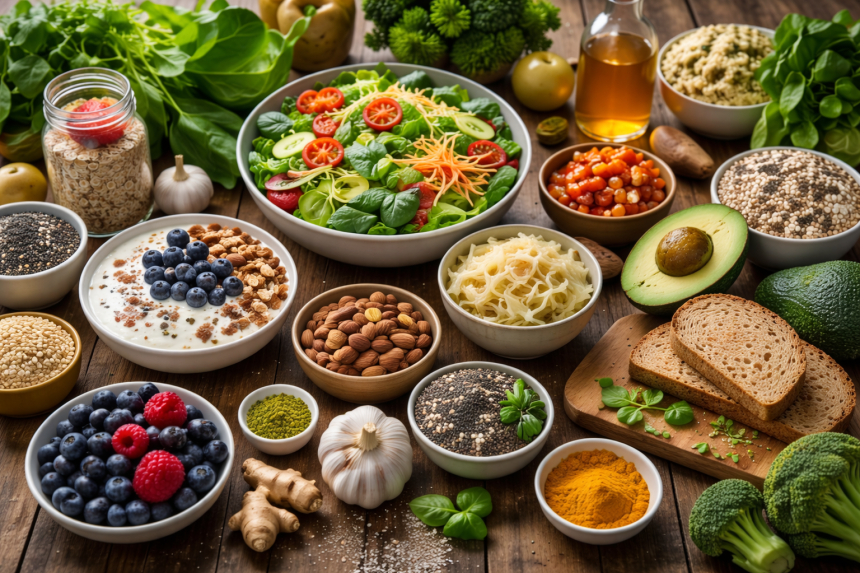
Maintaining a healthy digestive system is crucial for overall wellness, and following the 50 Best Practices for Gut Health can help you improve digestion, boost immunity, and support long-term well-being. From diet and lifestyle adjustments to mindfulness and daily habits, these practices are natural, practical, and science-backed. By incorporating them consistently, you can nourish your gut, restore balance to your microbiome, and prevent digestive issues while promoting overall health.
50 Best Practices for Gut Health
1. Eat a Variety of Foods
Diverse diets support a wider range of gut bacteria, improving overall gut health.
2. Include Plenty of Fiber
Fruits, vegetables, legumes, and whole grains promote digestion and healthy bacteria growth.
3. Consume Fermented Foods
Yogurt, kefir, kimchi, and sauerkraut are rich in probiotics that benefit your gut.
4. Drink Enough Water
Staying hydrated aids digestion and helps move nutrients through your system.
5. Limit Processed Foods
Highly processed and sugary foods can disrupt your gut microbiome balance.
6. Reduce Artificial Sweeteners
Sweeteners like aspartame may negatively affect gut bacteria.
7. Eat Prebiotic-Rich Foods
Foods like garlic, onions, asparagus, and bananas feed beneficial gut bacteria.
8. Manage Stress Levels
Chronic stress can negatively affect gut health, causing bloating and digestive issues.
9. Get Enough Sleep
Poor sleep disrupts your microbiome and can increase inflammation.
10. Exercise Regularly
Physical activity supports gut diversity and improves digestion.
11. Avoid Excessive Antibiotic Use
Antibiotics kill beneficial bacteria along with harmful ones. Use them only when necessary.
12. Chew Your Food Thoroughly
Proper chewing aids digestion and nutrient absorption.
13. Limit Red Meat Consumption
High amounts of red meat may negatively affect gut microbiota diversity.
14. Include Polyphenol-Rich Foods
Berries, green tea, and dark chocolate provide antioxidants that support gut bacteria.
15. Avoid Overeating
Large meals put stress on your digestive system. Eat moderate portions.
16. Eat Slowly and Mindfully
Slow eating improves digestion and prevents overeating.
17. Reduce Alcohol Intake
Excess alcohol can harm the gut lining and microbiome.
18. Avoid Smoking
Smoking negatively impacts gut health and increases disease risk.
19. Include Omega-3 Fatty Acids
Found in fatty fish, flax, and chia seeds, omega-3s reduce inflammation in the gut.
20. Try Probiotic Supplements if Needed
Supplements can help restore gut bacteria, especially after antibiotics.
21. Limit High-Fat Diets
Excess unhealthy fats can disrupt your gut bacteria balance.
22. Stay Physically Active Throughout the Day
Movement helps food pass smoothly through your digestive tract.
23. Include Resistant Starch
Foods like green bananas and cooked-cooled potatoes feed healthy gut bacteria.
24. Reduce Added Sugars
High sugar diets encourage harmful bacteria growth.
25. Avoid Highly Refined Grains
White bread, pasta, and pastries may negatively affect gut diversity.
26. Maintain Healthy Weight
Obesity can alter gut microbiota and lead to inflammation.
27. Limit Dairy if Sensitive
Some people benefit from avoiding lactose-containing foods.
28. Include Nuts and Seeds
Almonds, flaxseeds, and chia seeds provide fiber and healthy fats.
29. Eat Seasonal Produce
Seasonal fruits and vegetables support diverse gut microbiota.
30. Stay Hydrated with Herbal Teas
Herbal teas like peppermint and ginger support digestion naturally.
31. Avoid Stress Eating
Emotional eating can trigger gut imbalance and inflammation.
32. Maintain Good Dental Hygiene
Oral health affects gut health because bacteria travel from the mouth to the gut.
33. Consider Intermittent Fasting
Controlled fasting can improve gut microbiome diversity.
34. Reduce Salt Intake
Excess sodium negatively affects gut bacteria.
35. Incorporate Whole Grains
Oats, barley, and quinoa support fiber intake and bacterial health.
36. Use Spices and Herbs
Turmeric, ginger, and cinnamon help reduce gut inflammation.
37. Limit Artificial Preservatives
Processed additives can disrupt microbiome balance.
38. Practice Mindful Eating
Pay attention to hunger and fullness cues to support healthy digestion.
39. Include Legumes
Beans and lentils provide fiber and support beneficial bacteria growth.
40. Avoid Excess Caffeine
Too much caffeine can irritate the digestive system.
41. Cook Food Properly
Properly cooked foods aid digestion and nutrient absorption.
42. Include Leafy Greens
Spinach, kale, and arugula provide fiber and antioxidants.
43. Reduce Stress Hormones
Practices like yoga, meditation, and deep breathing support gut function.
44. Avoid Eating Late at Night
Late-night eating disrupts digestion and gut microbiota balance.
45. Include Garlic and Onion
These prebiotic foods feed beneficial gut bacteria.
46. Avoid Highly Processed Meats
Sausages, hot dogs, and deli meats may harm gut bacteria.
47. Include Bone Broth
Rich in collagen and amino acids, it supports gut lining integrity.
48. Limit Fried Foods
Excessive fried food intake negatively affects digestion and microbiota.
49. Include Fruits Daily
Berries, apples, and pears provide fiber and antioxidants for gut health.
50. Stay Consistent with Healthy Habits
Long-term consistency is key for maintaining a balanced and thriving gut microbiome.
Final Thoughts
Following these 50 best practices for gut health can dramatically improve digestion, immunity, energy, and overall wellness. Gut health isn’t just about avoiding digestive discomfort—it affects your mood, mental clarity, and long-term disease prevention. Incorporating a variety of fiber-rich foods, probiotics, prebiotics, and healthy lifestyle habits helps maintain a balanced microbiome. Consistency, mindful eating, stress management, and staying hydrated are the foundation of a gut-friendly lifestyle that supports health for years to come.