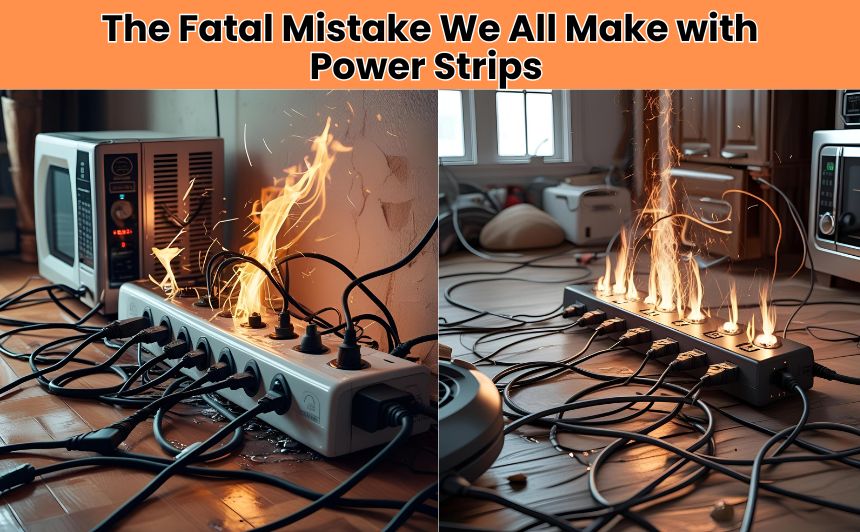
Most people use power strips every day without a second thought. But power strip safety mistakes are more common — and more dangerous — than you might think. From plugging in too many high-powered devices to placing strips in unsafe locations, one simple error can lead to devastating consequences like electrical fires, property damage, or serious injury. In this blog, we’ll break down the most frequent power strip mistakes, explain the risks involved, and teach you how to protect your family and home from hidden hazards.
What Is a Power Strip?
A power strip is a block of electrical sockets attached to a flexible cable that plugs into a wall outlet. It’s designed to let you power multiple devices from a single source. They’re often used in homes, offices, and dorm rooms to provide convenience. However, convenience can quickly turn into a catastrophe if these strips are misused.
The Most Common Power Strip Mistake
The biggest and most dangerous mistake people make with power strips is overloading them. This happens when you plug in multiple high-wattage appliances like space heaters, microwaves, air fryers, or even refrigerators. Power strips are not made to handle such loads. When overwhelmed, they can overheat, melt, or even catch fire.
Other Common Power Strip Safety Mistakes
- Using Indoor Strips Outdoors
Power strips made for indoor use are not weatherproof. Using them outdoors can lead to water exposure and electrical shock or fires. - Daisy-Chaining (Piggybacking) Strips
Plugging one power strip into another is a major fire hazard. It increases the electrical load and exceeds the limit of the circuit. - Placing Under Rugs or Furniture
Covering a power strip traps heat and prevents ventilation. Heat buildup can lead to melting or fire without you noticing. - Using Damaged or Old Power Strips
Frayed cords, cracked casings, or outdated models without surge protection are all unsafe. Age weakens the components, increasing the risk. - Using the Wrong Strip for the Job
Some strips are designed for computers and electronics; others are made to handle heavier loads. Always read the label to know the wattage limits.
Real-Life Power Strip Disasters
According to the National Fire Protection Association (NFPA), electrical failures or malfunctions were the second leading cause of home fires in the U.S. Power strips were involved in hundreds of these fires annually. In many cases, tragedies happened overnight while families were sleeping — all due to a simple misuse.
One such incident involved a family using a power strip to plug in a heater, a laptop charger, and a humidifier. It caught fire at 2 a.m., spreading through the bedroom and causing major smoke inhalation injuries.
How to Use Power Strips Safely
Here are some essential safety tips to prevent power strip safety mistakes:
- Check the wattage rating and never exceed it.
- Avoid plugging in high-power appliances.
- Use strips with built-in surge protection.
- Never daisy-chain multiple strips.
- Inspect the strip regularly for wear and tear.
- Don’t use power strips for permanent solutions.
- Keep them in cool, dry, well-ventilated areas.
- Use heavy-duty strips for heavy appliances — only if absolutely necessary.
Better Alternatives to Power Strips
- Install more wall outlets if you frequently run out of sockets.
- Use circuit breaker-equipped power strips.
- Opt for a surge protector with automatic shut-off.
- Use smart plugs that allow remote control and monitoring.
When to Replace Your Power Strip
Even if it looks fine, it’s smart to replace a power strip every few years. Newer models often include improved safety features such as:
- Fire-resistant casings
- Circuit breakers
- USB ports with overload protection
- Child-safety features
Final Thoughts: Stay Smart, Stay Safe
Power strips are practical, but they’re not built to be overloaded or misused. One of the easiest ways to protect your family and your property is by avoiding power strip safety mistakes. Don’t wait for a near-tragedy to take action. Go check your power strips right now — what’s plugged in, where they’re placed, and how old they are. It could save your life.