


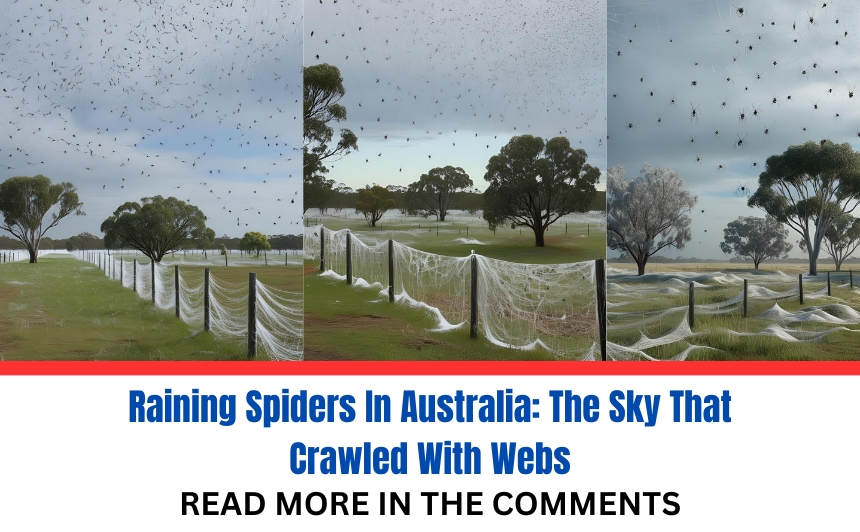
It may sound like a horror movie, but it’s absolutely real—raining spiders in Australia has been witnessed by thousands and captured on camera during migration season. Imagine stepping outside only to find countless tiny spiders falling from the sky and silken threads covering trees, fields, and rooftops. This eerie and bizarre event shocks people across the world, but in parts of Australia, it’s a natural phenomenon that locals have learned to accept.
🕸️ What Exactly Is Spider Rain?
Spider rain, also known as “angel hair” or ballooning, is a real meteorological-meets-biological occurrence where thousands or even millions of spiders take to the air using their silk threads to travel long distances. This occurs most notably after heavy rains or during spider migration periods.
In Australia—where unusual wildlife is the norm—certain species of spiders participate in this migration by ballooning into the sky, catching the wind with their web strands, and drifting for miles.
🌧️ Why Do Spiders Rain from the Sky?
Spider rain is driven by survival and reproduction:
- After floods, ground-dwelling spiders escape rising water.
- Juvenile spiders search for new habitats.
- They climb high vegetation or fences and release silk threads that act like parachutes.
- Carried by the wind, they eventually land en masse—creating the impression that spiders are literally raining down.
📍 Where in Australia Has This Happened?
This creepy yet incredible event has been documented in:
- Goulburn, New South Wales (2015): Residents reported their entire town blanketed in webs.
- Southern Tablelands: Frequent reports of floating silk and falling spiders.
- Victoria and Gippsland regions: Especially after floods.
Locals woke to find fields shimmering in spider silk and thousands of tiny arachnids crawling everywhere—on fences, cars, homes, and even clotheslines.
📸 Eyewitness Accounts and Reactions
People who’ve experienced spider rain describe it as both terrifying and beautiful:
“It looked like snow at first… until I saw the spiders crawling all over it.”
—Resident of Goulburn
Others report having to sweep their doorways and windows to prevent spider invasions. Children have cried in fear. Scientists, however, rush to document this rare behavior.
🔬 Is It Dangerous?
Despite the horror-movie feel, the spiders involved are usually:
- Harmless to humans
- Tiny (often smaller than a fingernail)
- Important for local ecosystems as they control pests
Still, for arachnophobes, raining spiders in Australia is the ultimate nightmare.
🧠 What Science Says About It
According to arachnologists, ballooning is:
- A natural dispersal method
- Found in spiderlings and small adult species
- Influenced by humidity, wind, and temperature
The mass migration isn’t unique to Australia, but the scale of spider rain there is unmatched.
🌍 Are There Other Places Where It Happens?
Yes, similar events have occurred in:
- Brazil
- United States (Texas, Midwest)
- Argentina
But Australia takes the crown when it comes to spectacle and scale.
📽️ Viral Videos and Photos
Numerous videos have captured spider rain:
- YouTube videos with millions of views
- News footage from 7News Australia and ABC
- Stunning shots of spider silk coating entire meadows
These visuals have helped the world learn about and fear this bizarre phenomenon.
🕷️ The Psychological Impact
For many, witnessing spider rain:
- Triggers intense anxiety
- Causes temporary avoidance of outdoor spaces
- Inspires horror stories, urban legends, and fear-based headlines
Interestingly, the natural beauty of the silken landscapes offers a haunting contrast to the underlying discomfort.
🎬 Pop Culture Inspiration
The idea of spiders falling from the sky has inspired:
- Horror films
- Short stories
- Internet memes
It’s one of those “you won’t believe it until you see it” tales that blurs the line between nature and nightmare.
🧭 Final Thoughts: Nature’s Creepiest Surprise
Raining spiders in Australia isn’t a myth—it’s a powerful reminder of the wild, raw unpredictability of nature. While terrifying to many, it’s also a symbol of nature’s resilience and adaptability. So, if you ever plan to visit Australia during migration season, don’t forget your umbrella—not for rain, but for spiders.


