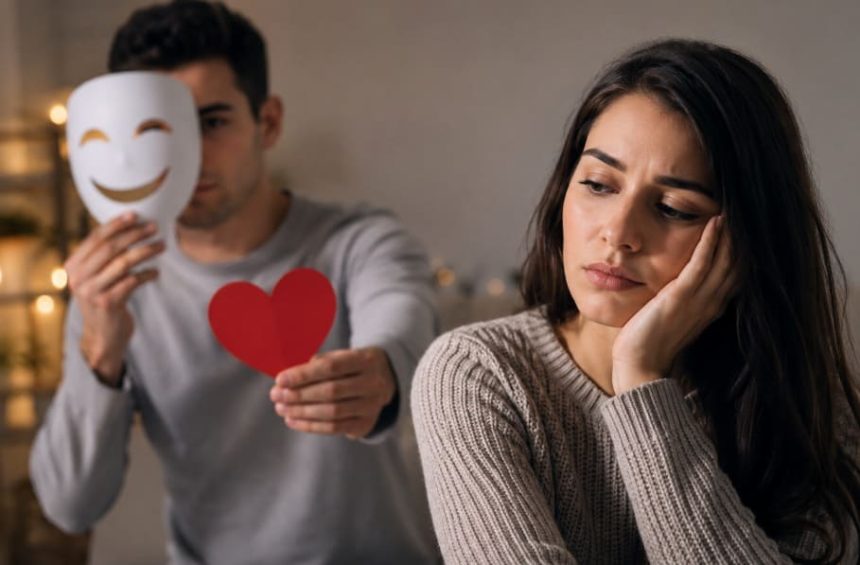
Love is often seen as one of the most genuine human emotions, but not every expression of love is real. In many relationships, people may pretend to care deeply while their actions reveal something completely different. Understanding the signs someone is pretending to love you and learn how to spot fake affection before it hurts your emotional well-being.can help you protect your emotional well-being and avoid getting trapped in a one-sided or dishonest relationship. When love is real, it brings consistency, respect, and emotional safety—but when it is fake, it often feels confusing, inconsistent, and emotionally draining even when everything seems “fine” on the surface.
1. Words Feel Perfect, But Emotion Feels Empty
One of the earliest signs of fake love is when a person’s words sound emotionally perfect, but their presence feels hollow. They may speak with charm, affection, and strong promises that make you feel deeply wanted, yet something inside you still feels disconnected. This happens because fake love is often built on performance rather than genuine emotional investment. They know what to say to keep you emotionally engaged, but their actions lack consistency and depth. Over time, this creates a strange emotional gap where you hear love, but you don’t truly feel it. Real love brings warmth, stability, and emotional safety, while fake love often feels like a well-written script without real emotion behind it.
2. Effort Is Always One-Sided
In fake love, effort rarely flows equally between two people. You may find yourself constantly initiating conversations, planning meetups, fixing misunderstandings, and trying to maintain emotional connection, while the other person contributes just enough to keep you from leaving. This imbalance slowly drains your emotional energy because you are the only one actively building the relationship. Instead of feeling supported, you feel responsible for keeping everything alive. Real love feels balanced and mutual, where both people naturally invest time and care. But in fake love, effort feels like a job you are doing alone, not a shared emotional experience.
3. Their Attention Comes and Goes Without Reason
A very confusing signs of fake love is inconsistent attention. One moment they are deeply engaged, affectionate, and present, and the next they become distant or emotionally unavailable without any clear explanation. This unpredictable behavior creates emotional instability, making you constantly wonder what changed or what you did wrong. In reality, the inconsistency has less to do with you and more to do with their lack of genuine emotional commitment. Fake love often operates in cycles of attention and withdrawal to keep you emotionally attached, while real love remains steady and reassuring even during normal ups and downs.
4. They Avoid Emotional Depth
People who are pretending to love you often avoid deep emotional conversations because vulnerability exposes their lack of real emotional connection. They may enjoy light conversations, jokes, or casual talks, but the moment things become emotionally serious, they withdraw or change the subject. This avoidance creates a relationship that feels surface-level, no matter how long you have known them. Real love grows through emotional honesty and openness, even when conversations are uncomfortable. Fake love, however, cannot survive emotional depth because it was never built on true emotional intimacy in the first place.
5. You Feel Like You Are Always Proving Yourself
In fake love, you may constantly feel like you are not “enough” and need to prove your worth repeatedly. You might adjust your behavior, over-give, over-explain, and try harder in hopes of receiving stable affection. Instead of being accepted naturally, you feel like you are being evaluated all the time. This creates emotional pressure and slowly affects your self-esteem. Real love does not require constant proving or emotional performance; it accepts you as you are. But fake love turns affection into something conditional, making you feel like you must earn what should be freely given.
6. They Show Love Only When It Benefits Them
A clear signs of fake love is conditional affection, where love appears only when it serves their emotional or personal needs. They may be affectionate when they want attention, comfort, or validation, but become distant when you need support or emotional presence. This creates a transactional dynamic where love feels calculated rather than natural. Instead of mutual care, the relationship becomes about convenience and emotional benefit. Real love gives consistently without expecting immediate returns, while fake love appears and disappears depending on what they can gain.
7. You Feel Emotionally Confused Most of the Time
Fake love often creates emotional confusion because their behavior is inconsistent and unpredictable. You may find yourself constantly questioning the relationship, replaying conversations, and overthinking small changes in tone or behavior. One day you feel secure, and the next day you feel uncertain again. This emotional instability keeps your mind occupied and dependent on their validation. Over time, you may start blaming yourself for the confusion, even though the real issue is their inconsistent emotional investment. Real love brings clarity and peace, not constant mental noise.
8. They Don’t Truly Listen to You
In fake love, communication often feels one-sided even when they appear to be listening. They may hear your words but fail to understand your emotions or remember important details about your feelings and experiences. You might notice that your concerns are ignored, repeated, or only acknowledged briefly without real change. This lack of emotional listening shows that they are not deeply invested in your inner world. Real love involves active emotional listening, where your thoughts and feelings are valued and remembered. Fake love, however, listens superficially without true emotional engagement.
9. Your Needs Are Always Secondary
Another strong signs of fake love is when your emotional needs are consistently overlooked or treated as less important. You may express discomfort, ask for support, or request change, but little to nothing improves over time. This forces you to adjust yourself instead of expecting equal effort from them. Slowly, you begin to suppress your needs just to maintain peace in the relationship. Real love respects both people equally and prioritizes mutual emotional well-being. Fake love, however, creates a pattern where only one person’s needs are consistently met.
10. Deep Down, You Already Feel Something Is Wrong
Even before you can logically explain it, your intuition often senses that something is off in the relationship. You may feel uneasy, anxious, or emotionally unsettled without a clear reason. This inner discomfort is your mind recognizing patterns that don’t align with genuine love. Many people ignore this feeling and try to rationalize it, hoping things will improve with time. However, real love brings emotional calmness and security, while fake love creates ongoing doubt and confusion. When your intuition repeatedly signals that something doesn’t feel right, it is often reflecting emotional truths you haven’t fully accepted yet.
11. They Only Show Up When They Need Something
One of the subtle but powerful signs of fake love is when someone becomes noticeably present only during their own needs. They may suddenly start texting you, calling you, or acting affectionate when they want emotional support, attention, validation, or even help with their personal problems. But once their need is fulfilled, their presence fades again. This creates a one-sided emotional cycle where you are used as a source of comfort rather than being genuinely valued. Real love doesn’t operate on demand; it stays consistent regardless of personal benefit. Fake love, however, often appears like a transaction where your importance depends on their convenience.
12. They Avoid Accountability in the Relationship
In fake love, responsibility is often shifted away from them, no matter the situation. If something goes wrong, they rarely admit their mistakes and instead find ways to justify their behavior or blame external factors—or even you. This avoidance of accountability prevents real emotional growth in the relationship because issues are never properly addressed. Over time, you may find yourself always apologizing just to keep peace, even when you are not at fault. Real love encourages honesty and responsibility, but fake love protects ego over emotional connection, making resolution nearly impossible.
13. Their Affection Feels Inconsistent and Forced
A clear signs of fake love is when affection feels like it comes in bursts rather than naturally. One day they may act extremely loving, expressive, and attentive, but on other days they feel distant, uninterested, or emotionally absent. This inconsistency makes their affection feel less like genuine emotion and more like a temporary performance. You may even notice that their loving behavior appears only when they fear losing you or when they need something emotionally. Real love feels steady and effortless, while fake love fluctuates based on mood, benefit, or situation.
14. They Don’t Invest in Understanding You Deeply
In fake love, there is often a lack of curiosity about who you truly are on a deeper level. They may know your favorite food, habits, or basic details, but they don’t make an effort to understand your emotions, fears, or inner struggles. Conversations remain surface-level because emotional depth requires genuine interest, which they don’t fully have. Over time, this creates a feeling of emotional invisibility, where you are physically present in their life but not truly seen. Real love seeks to understand you deeply; fake love only engages with what is convenient or easy.
15. They Make You Feel Guilty for Expressing Needs
Another strong signs of fake love is emotional guilt-tripping when you express your needs or expectations. Instead of listening and trying to understand, they may make you feel like you are asking for too much, being too sensitive, or creating unnecessary problems. This slowly trains you to suppress your feelings just to avoid conflict. Over time, you stop expressing yourself freely and start shrinking your emotional needs. Real love welcomes communication, even when it is uncomfortable. Fake love, however, punishes emotional honesty by making you feel guilty for having normal relationship expectations.
16. Their Presence Feels More Physical Than Emotional
In fake love, someone may be physically present but emotionally absent. They might sit beside you, talk to you, or spend time with you, yet you still feel lonely. This happens because emotional connection is missing even though physical presence exists. You may notice that conversations lack depth, reactions feel mechanical, and emotional warmth is absent. Real love makes even silence feel comforting, while fake love makes even presence feel empty. This emotional distance is often a hidden sign that the connection is not truly genuine.
17. They Don’t Celebrate Your Growth Fully
A person who is pretending to love you may not fully support or celebrate your personal growth. Instead of feeling happy about your achievements or progress, they may show indifference, subtle jealousy, or shift the focus back to themselves. This happens because fake love is often self-centered and insecure, making it difficult for them to genuinely appreciate your success. Real love feels proud of your growth and encourages you to become better. Fake love, however, struggles to support anything that shifts attention away from them.
18. You Feel Drained After Interacting With Them
One of the most noticeable signs of fake love is emotional exhaustion after interactions. Instead of feeling happy, supported, or relaxed after talking to them, you often feel drained, confused, or overthinking everything that was said. This happens because the emotional exchange is unbalanced. You are giving more energy, attention, and emotional effort than you are receiving. Real love feels refreshing and comforting, but fake love leaves you mentally and emotionally tired without a clear reason.
19. They Keep the Relationship Undefined
In fake love, clarity is often missing. They avoid defining the relationship clearly or giving you a sense of direction about where things are going. When you ask about commitment or future intentions, you may receive vague answers, excuses, or avoidance. This keeps you emotionally attached while leaving you uncertain. Real love naturally moves toward clarity and stability, but fake love thrives in confusion because it allows them to stay without full responsibility. The lack of definition is often a deliberate way to maintain control without commitment.
20. You Feel More Anxious Than Secure
At the deepest level, signs of fake love often show up as emotional insecurity. Instead of feeling safe, valued, and calm, you feel anxious, uncertain, and emotionally unstable most of the time. You may constantly worry about losing them, misreading their behavior, or doing something wrong. This ongoing anxiety is not a sign of healthy love—it is a sign of emotional imbalance. Real love provides comfort and security even during challenges, while fake love keeps your mind in a constant state of doubt and emotional alertness.
21. They Keep You in Emotional Limbo
One of the strongest signs of fake love is when you are never fully “in” or “out” of the relationship emotionally. They don’t clearly commit, but they also don’t fully leave. This in-between state keeps you stuck in emotional limbo, where you keep hoping things will become stable someday. Instead of clarity, you are given mixed signals that make you hold on longer than you should. Real love moves forward with direction and honesty, while fake love keeps you suspended in uncertainty so they can maintain control without responsibility.
22. Their Apologies Never Lead to Change
In fake love, apologies may sound sincere, but they rarely come with real behavioral change. They might say “sorry” after hurting you, but the same patterns repeat again and again. This shows that the apology is not rooted in accountability, but in convenience—just enough to stop conflict, not to fix the issue. Over time, you begin to notice that words of regret don’t translate into improved behavior. Real love apologizes and grows from mistakes, while fake love apologizes only to reset the cycle without real improvement.
23. They Make You Doubt Your Own Reality
A subtle but damaging signs of fake love is emotional manipulation that makes you question your own memory, feelings, or perception. They may deny things they clearly said, downplay your emotions, or act like you are “overreacting” even when you are not. This creates self-doubt over time, making you unsure of what is real and what isn’t. Instead of trusting your feelings, you start relying on their version of events. Real love validates your emotions even during disagreements, while fake love slowly distorts your confidence in your own reality.
24. They Don’t Make You a Priority
In fake love, you often feel like an option rather than a priority. They may prioritize friends, social life, work, or personal interests over you consistently, without making any effort to balance the relationship. While having independence is healthy, constantly being last on their list emotionally shows lack of real investment. You may notice that your time and needs are easily adjusted or ignored, while theirs always come first. Real love finds balance, but fake love places you in the background of their life.
25. They Disappear Emotionally Even When Present Physically
Another strong signs of fake love is emotional absence despite physical presence. They might sit with you, talk to you, or spend time with you, but their mind feels elsewhere. Conversations feel forced, responses are short, and emotional connection is missing. You may feel like you are spending time with someone who is not truly “there.” This emotional disconnection creates loneliness even when you are together. Real love brings emotional presence, not just physical proximity. Fake love often lacks the emotional awareness needed to truly connect.
26. They Avoid Making Future Effort
In fake love, there is little to no effort toward building a shared future. Whether it’s planning, commitment, or long-term stability, they tend to avoid any serious steps forward. When future topics come up, they may become vague, uncomfortable, or change the subject entirely. This shows a lack of long-term intention. Real love naturally moves toward building something meaningful together, while fake love avoids responsibility by keeping everything temporary and uncertain.
27. You Feel Emotionally Alone Even in the Relationship
One of the deepest signs of fake love is emotional loneliness. Even though you are technically in a relationship, you may feel like you are handling everything alone—your emotions, your struggles, and your insecurities. They may be physically present but emotionally unavailable when you truly need support. This creates a painful disconnect where the relationship exists in name, but not in emotional reality. Real love makes you feel supported; fake love makes you feel isolated even while being “together.”
28. They Show Interest Only When Losing You Feels Possible
In fake love, their interest often spikes only when they sense you pulling away. When they feel secure, they become distant, but when they feel you might leave, they suddenly become affectionate and attentive again. This cycle is not love—it is fear of loss mixed with control. It keeps you emotionally trapped in a loop of hope and disappointment. Real love is consistent regardless of fear; fake love only reacts when it feels like it is losing control.
29. You Start Losing Yourself in the Relationship
A powerful signs of fake love is gradual loss of self. You may start changing your personality, opinions, or behavior just to maintain peace or keep their attention. Over time, you begin prioritizing their comfort over your authenticity. You may stop expressing your true feelings or interests because you fear rejection or conflict. Real love encourages you to grow into yourself, while fake love slowly makes you shrink emotionally just to be accepted.
30. Deep Down, You Already Know It Isn’t Real
At the core of fake love, there is always an inner awareness that something is not right. Even if everything looks fine on the surface, your intuition quietly notices the emotional gaps, inconsistency, and lack of depth. You may ignore this feeling, rationalize it, or hope it will change, but it keeps returning. This internal discomfort is often the most honest signs of fake love. Real love feels calm, stable, and secure—fake love, no matter how convincing, always leaves a lingering sense that something essential is missing.