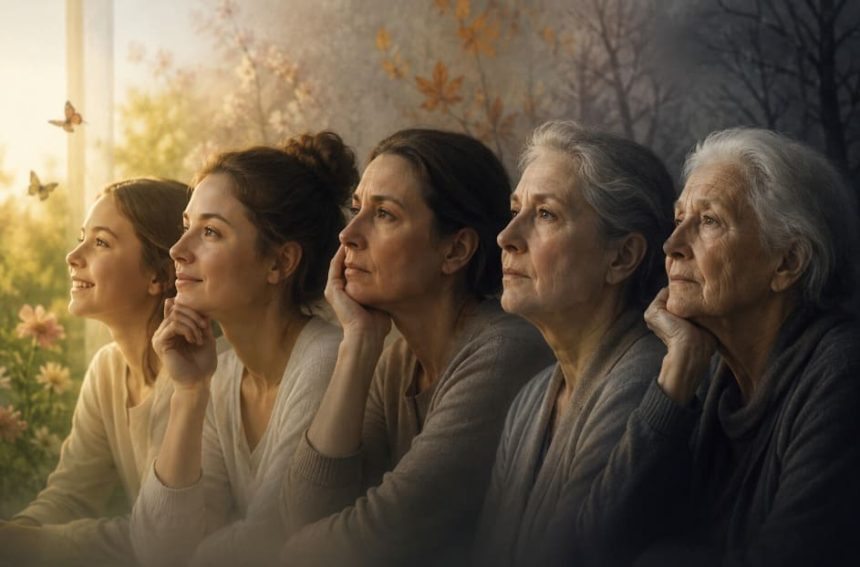
As people age, it is natural for emotions to shift in ways that are often unexpected yet deeply meaningful. The process of growing older emotional changes is not just about physical transformation, but also about how the mind processes experiences, memories, and relationships over time. With age, emotional reactions may become more reflective, sensitive, or even calmer depending on life experiences and inner growth. Understanding these emotional shifts helps you make sense of your changing thoughts, reactions, and inner balance as you move through different stages of life. Here’s Why Growing Older Changes Your Emotions.
1. Life experience reshapes emotional reactions
As we age, we collect experiences that slowly reshape how we respond to life. Early in life, emotions often feel intense, immediate, and overwhelming because we haven’t yet developed reference points for handling pain, failure, or disappointment. But with time, each experience—whether joyful or painful—becomes a lesson stored in emotional memory. This creates a kind of inner filter. Instead of reacting impulsively, older individuals tend to pause and interpret situations through the lens of past experiences. This doesn’t mean emotions become weaker; rather, they become more informed. The same situation that once triggered panic or anger may later be met with calm understanding, simply because the mind has “seen something like this before” and knows it will pass.
2. The brain naturally becomes more emotionally regulated
Neurologically, aging influences how the brain processes emotions. The prefrontal cortex, responsible for decision-making and emotional control, becomes more active in regulating emotional responses over time. This means older adults often gain better control over impulsive reactions. At the same time, the amygdala—the brain’s emotional alarm system—becomes less reactive to minor stressors. As a result, emotional intensity tends to smooth out. People don’t stop feeling deeply; instead, they become less controlled by sudden emotional spikes. This neurological shift supports a more stable emotional life, where feelings are acknowledged but not always acted upon immediately.
3. Priorities change, and so do emotional triggers
When we are younger, many emotional triggers are tied to external validation—approval, success, appearance, or social status. As people grow older, priorities gradually shift inward. Stability, peace, relationships, and meaning often begin to matter more than competition or comparison. Because of this shift, many previous emotional triggers lose their power. A comment that once caused insecurity may now feel insignificant. Emotional energy gets redirected toward things that genuinely matter, reducing unnecessary emotional turbulence and creating a calmer inner world.
4. Increased awareness of time makes emotions deeper
Aging brings a stronger awareness that time is limited. This realization often changes how emotions are experienced. Moments feel more valuable, relationships feel more meaningful, and even simple experiences carry deeper emotional weight. This awareness can intensify gratitude but also bring reflection about missed opportunities or past decisions. However, instead of creating chaos, it often leads to emotional depth—a richer appreciation for life’s fleeting nature. Emotions become less about reaction and more about meaning, making even small moments feel significant.
5. Emotional resilience develops through hardship
Over time, most people face some level of hardship—loss, heartbreak, failure, or disappointment. While painful, these experiences build emotional resilience. This resilience doesn’t eliminate sadness or stress, but it changes how long we stay stuck in them. Younger individuals may feel emotions intensely and for longer periods because they are still learning coping mechanisms. Older individuals, having gone through similar cycles before, often recover more quickly. They understand that emotional pain is temporary, which helps them move through difficult feelings with greater strength and acceptance.
6. Relationships become more emotionally selective
As people age, they often become more selective about relationships. In youth, social circles may be large but emotionally inconsistent. Over time, many realize that not all connections are worth emotional investment. This leads to fewer but deeper relationships. Emotional energy is no longer scattered across many superficial interactions but focused on meaningful bonds. This selectivity reduces emotional noise and increases emotional stability. Conflicts may still occur, but they are handled with more patience and less urgency to react or prove a point.
7. Self-identity becomes more stable over time
In younger years, identity is still forming, which makes emotions more reactive to external opinions. As people grow older, self-understanding becomes stronger and more stable. This internal stability reduces emotional dependency on others’ validation. Criticism feels less threatening, and praise feels less defining. Because identity is less fragile, emotions are less easily shaken by external circumstances. This creates a grounded emotional state where self-worth is less influenced by momentary situations or opinions.
8. Emotional intelligence increases naturally
With age, people tend to develop stronger emotional intelligence—the ability to understand, interpret, and manage emotions in themselves and others. This includes recognizing emotional patterns, identifying triggers, and responding with empathy rather than impulse. Emotional intelligence helps transform conflicts into understanding and confusion into clarity. Instead of being overwhelmed by emotions, older individuals often observe them more objectively. This creates space between feeling and reaction, allowing for more thoughtful responses.
9. Memory becomes more reflective than reactive
As life progresses, memory shifts from being purely reactive to more reflective. Instead of reliving emotions exactly as they happened, older individuals often interpret memories with perspective. Painful events may be seen with understanding, and joyful memories may be appreciated more deeply. This reflective memory process softens emotional extremes. It allows people to revisit the past without being fully emotionally trapped in it, creating a healthier emotional relationship with personal history.
10. Acceptance becomes a powerful emotional state
One of the most profound emotional changes with age is the development of acceptance. This does not mean resignation or giving up—it means understanding what cannot be controlled. Younger individuals often fight against reality, trying to change outcomes or resist situations. Over time, people learn that not everything is within their control. This realization brings emotional peace. Acceptance reduces unnecessary emotional struggle and replaces it with clarity and calm. It becomes easier to let go, forgive, and move forward without carrying emotional weight unnecessarily.
11. Hormonal and biological changes influence emotional balance
As the body ages, hormonal levels gradually shift, and these biological changes have a direct impact on emotional experiences. Hormones such as cortisol, serotonin, and dopamine play key roles in regulating mood, stress, and motivation. In younger years, these systems often fluctuate more intensely, leading to stronger emotional highs and lows. With age, these fluctuations tend to stabilize, creating a more balanced emotional baseline. While this can sometimes feel like reduced excitement, it often results in fewer emotional extremes. People may experience less emotional “spiking” and more steady moods, allowing them to navigate life with greater calmness and predictability.
12. Stress response becomes more measured over time
Younger individuals often react to stress in a more immediate and physical way, with emotions rising quickly under pressure. As people grow older, their stress response becomes more measured due to repeated exposure to challenging situations. The nervous system learns that not every problem requires an urgent emotional reaction. Instead of panic or overthinking, older adults often shift into problem-solving mode. This doesn’t mean stress disappears, but it becomes more manageable. Emotional responses become less chaotic and more structured, allowing clearer thinking even in difficult moments.
13. Emotional expectations become more realistic
With age comes a gradual adjustment of emotional expectations. In youth, people often expect relationships, careers, and life events to unfold in ideal or perfect ways. Over time, real-life experiences teach that imperfection is the norm. This understanding reduces emotional disappointment because expectations align more closely with reality. Instead of feeling deeply shaken when things don’t go as planned, older individuals are more likely to adapt. Emotional maturity grows from this acceptance, leading to fewer dramatic emotional reactions and a more grounded approach to life.
14. Past pain loses its sharp emotional intensity
Time has a powerful effect on emotional wounds. While painful experiences may never fully disappear from memory, their emotional intensity often fades with age. The brain gradually processes and softens emotional pain, allowing individuals to reflect on difficult experiences without reliving the same intensity. This emotional fading doesn’t erase the lesson—it transforms it. What once felt overwhelming becomes something understood. This shift allows people to carry their past without being emotionally controlled by it, creating a sense of emotional freedom and healing.
15. Gratitude becomes a stronger emotional presence
As people grow older, there is often a noticeable increase in gratitude. This shift happens because life experience brings awareness of both loss and value. Simple things—health, relationships, peace, or daily routines—begin to feel more meaningful. Instead of constantly chasing what is missing, attention shifts toward appreciating what is already present. This emotional transformation creates a more positive internal state. Gratitude softens negative emotions and strengthens emotional resilience, making it easier to find peace even in imperfect circumstances.
16. Emotional energy becomes more conserved and intentional
In earlier stages of life, emotional energy is often spent freely—on conflicts, comparisons, or unnecessary stress. With age, people become more aware of the cost of emotional exhaustion. This awareness leads to more intentional use of emotional energy. Instead of reacting to every situation, individuals begin to choose what deserves their emotional attention. This conservation of emotional energy helps maintain inner stability. It also reduces burnout from unnecessary emotional involvement, creating a more peaceful and controlled emotional life.
17. Understanding replaces the need to react immediately
One of the key emotional shifts with age is the ability to pause before reacting. Instead of responding instantly to situations, older individuals often seek understanding first. This pause creates space between emotion and action, which reduces impulsive reactions. Over time, this becomes a habit of emotional maturity. Misunderstandings are less likely to escalate because there is more curiosity and less urgency in emotional responses. This shift transforms conflicts into opportunities for clarity rather than emotional escalation.
18. Emotional sensitivity becomes more refined
Contrary to the belief that people become less sensitive with age, emotional sensitivity often becomes more refined rather than reduced. Instead of reacting strongly to everything, individuals become more sensitive to what truly matters. They may feel deeper empathy, stronger appreciation for meaningful moments, and greater awareness of emotional subtleties in relationships. However, they become less reactive to superficial or temporary emotional triggers. This refined sensitivity leads to deeper emotional understanding without unnecessary emotional overwhelm.
19. Letting go becomes easier with experience
Letting go is one of the most significant emotional skills developed over time. Whether it involves relationships, expectations, or past experiences, older individuals often find it easier to release emotional attachment. This is not because emotions are weaker, but because perspective becomes stronger. People begin to understand that holding onto emotional pain or resentment does not change the past. This realization creates emotional relief. Letting go becomes a conscious choice for peace rather than a struggle, leading to lighter emotional living.
20. Inner peace gradually becomes more valuable than emotional intensity
In younger years, emotional intensity is often mistaken for meaningful experience—strong feelings, dramatic reactions, and emotional highs can feel exciting. As people grow older, this begins to shift. Inner peace becomes more valuable than emotional intensity. Stability, calmness, and emotional balance start to feel more fulfilling than constant emotional turbulence. This change reflects emotional maturity, where the goal is no longer to feel everything intensely but to feel life deeply with steadiness. Inner peace becomes the new emotional priority, guiding how life is experienced and understood.
21. Emotional maturity softens the need for control
As people grow older, there is a gradual realization that not everything in life can be controlled or directed. In younger years, emotional responses are often tied to the desire to control outcomes—relationships, success, timing, or even how others behave. With experience, this need slowly softens. Older individuals begin to understand that trying to control everything creates more emotional tension than peace. Instead of resisting uncertainty, they learn to adapt to it. This shift reduces frustration and emotional strain, replacing it with acceptance and flexibility. Emotional energy is no longer wasted on forcing outcomes but is redirected toward adjusting and responding with calmness.
22. Comparison with others loses emotional power
One of the strongest emotional influences in younger life is comparison—comparing appearance, success, relationships, or lifestyle with others. As people age, this habit tends to weaken. Life experience teaches that every individual has a different timeline, different struggles, and different definitions of success. This awareness reduces the emotional impact of comparison. Instead of feeling inadequate or pressured, individuals begin focusing more on their personal journey. Emotional stability grows when external comparison is replaced by internal understanding. Life feels less like competition and more like personal growth.
23. Emotional clarity improves decision-making
With age, emotions become more connected to clarity rather than confusion. Younger emotional states can often blur judgment, leading to impulsive decisions. Over time, individuals learn to separate temporary emotions from long-term consequences. This emotional clarity allows for more thoughtful decision-making. Instead of reacting based on momentary feelings, choices are made with awareness of future impact. Emotions are still present, but they no longer dominate decisions. This balance between feeling and thinking creates more stable life outcomes and reduces regret.
24. Forgiveness becomes emotionally easier
Forgiveness is often emotionally difficult in early life because emotional wounds feel sharper and more personal. However, with age, people begin to see situations from broader perspectives. They understand that most actions come from human imperfection, misunderstanding, or personal struggle. This awareness makes forgiveness less about the other person and more about inner peace. Letting go of resentment becomes a way to protect emotional well-being. As emotional maturity grows, holding onto anger feels heavier than releasing it, making forgiveness a more natural and healing response.
25. Emotional attachment becomes more meaningful but less dependent
As people age, emotional attachment changes in quality. In younger years, attachment can sometimes feel dependent, where emotional stability relies heavily on relationships or external validation. With time, attachment becomes more meaningful but less dependent. Relationships are valued deeply, but they are no longer the sole source of emotional stability. This creates healthier emotional bonds where love exists without emotional dependency. Individuals can care deeply without losing their own emotional balance, resulting in more stable and fulfilling connections.
26. Silence becomes emotionally comfortable
In youth, silence can sometimes feel uncomfortable or empty. As emotional maturity develops, silence begins to feel peaceful rather than awkward. Older individuals often find comfort in quiet moments because they no longer feel the need to fill every space with words or reactions. Silence becomes a form of emotional rest, allowing thoughts and feelings to settle naturally. This comfort with silence reflects inner stability, where peace is not dependent on constant stimulation or external noise.
27. Emotional triggers become easier to recognize and manage
With experience, people develop a stronger awareness of what triggers their emotional reactions. Instead of being surprised by emotional responses, they begin to recognize patterns. This awareness allows them to manage emotions more effectively before they escalate. For example, if a situation has caused stress in the past, they are more prepared to respond calmly rather than react impulsively. This ability to identify triggers leads to greater emotional control and reduces unnecessary emotional turbulence.
28. Emotional healing becomes a continuous process
Emotional healing does not happen all at once; it unfolds gradually over time. As people grow older, they often realize that healing is not a destination but an ongoing process. Past wounds may resurface occasionally, but their impact becomes less intense. With time, individuals learn how to process emotions in healthier ways. Instead of suppressing or avoiding feelings, they allow themselves to understand and release them. This ongoing healing creates emotional resilience and long-term inner balance.
29. Perspective transforms emotional meaning
One of the most powerful changes with age is the shift in perspective. Events that once seemed devastating may later be seen as turning points or lessons. This change in interpretation alters emotional meaning. What once caused deep sadness or anger may now be understood as necessary for growth. Perspective transforms emotional memory, softening pain and enhancing understanding. This ability to reframe experiences helps individuals carry their past with less emotional burden and more wisdom.
30. Emotional peace becomes the ultimate priority
In the later stages of emotional development, peace becomes more important than intensity, excitement, or validation. Instead of chasing emotional highs or avoiding emotional lows, individuals begin to value stability above all. Emotional peace becomes a guiding principle in relationships, decisions, and daily life. This does not mean emotions disappear; it means they are experienced in a balanced and grounded way. The ultimate goal shifts from feeling everything strongly to feeling life deeply but calmly, with a steady sense of inner harmony.