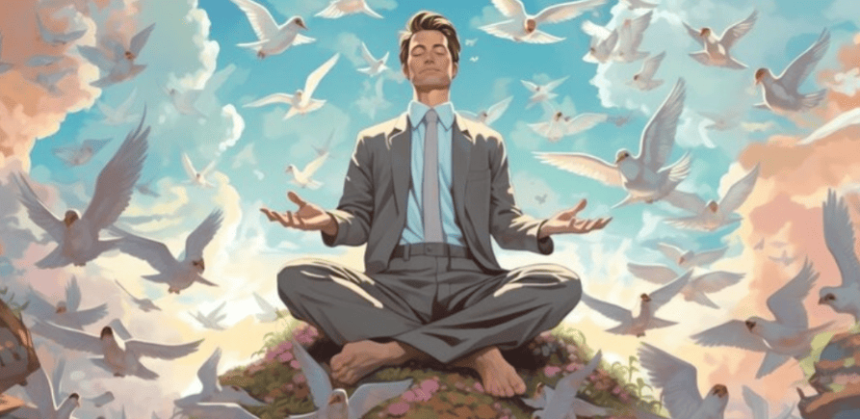
There comes a point in life when the noise inside your mind becomes louder than anything happening around you. Thoughts race, emotions clash, and even simple days start feeling heavy and overwhelming. You begin to realize that living in constant chaos is not strength—it’s exhaustion in disguise. Choosing peace over chaos is not about escaping life or avoiding problems; it is about consciously stepping away from what drains you and moving toward what restores you. It feels like taking your first deep breath after being underwater for too long—slow, unfamiliar at first, but deeply healing. In that moment, you don’t just change your circumstances; you change the way you experience yourself and the world around you. Here’s How It Feels to Finally Choose Peace Over Chaos.
1. You Stop Reacting to Everything Around You
Choosing peace over chaos begins when you no longer feel the need to react to every opinion, situation, or emotional trigger. Earlier, everything may have felt personal—every comment, every delay, every disappointment. But now, there is a quiet shift inside you. You start realizing that not everything deserves your energy. Instead of immediately responding with emotion, you pause. That pause becomes powerful. It creates space between what happens and how you respond. In that space, peace starts to grow, because chaos no longer controls your first instinct.
2. Silence Feels Less Empty and More Healing
At first, silence can feel uncomfortable, almost unfamiliar. But as you choose peace over chaos, silence slowly transforms into something comforting. You begin to sit with your own thoughts without needing constant distractions. Music, noise, scrolling—these stop being necessities and become choices. In silence, you start hearing yourself more clearly. You notice your emotions without judging them. Instead of avoiding stillness, you begin to appreciate it as a place where your mind finally rests.
3. You Outgrow Emotional Dramas
One of the clearest signs of choosing peace is when drama no longer excites or engages you. Situations that once pulled you in emotionally now feel distant or unnecessary. You stop feeding into arguments that lead nowhere and conversations that only create tension. It’s not that you become indifferent—it’s that you become selective. Your energy becomes too valuable to waste on chaos that doesn’t contribute to your growth or calmness. Peace begins where unnecessary drama ends.
4. Your Mind Becomes Less Cluttered
Chaos often lives in an overthinking mind—replaying conversations, imagining worst-case scenarios, and carrying mental noise everywhere. But when you choose peace, you slowly start decluttering your thoughts. You learn to let go of mental loops that don’t serve you. Not every thought gets your attention anymore. You start focusing on what is real and present instead of what is imagined or feared. This mental simplicity creates space for clarity, and clarity naturally brings peace.
5. You Start Setting Boundaries Without Guilt
Peace requires boundaries, and boundaries require courage. When you begin choosing peace over chaos, you understand that saying “no” is not rude—it is necessary. You stop over-explaining yourself and stop agreeing to things that drain you. At first, guilt may appear, but over time, it fades as you realize your well-being matters. Boundaries protect your energy, and protecting your energy is one of the most powerful forms of self-respect.
6. Emotional Triggers Lose Their Power
Things that once upset you deeply start losing their emotional grip. You may still feel things, but you don’t spiral like before. Instead of being pulled into anger, sadness, or frustration, you observe your emotions with awareness. You understand that feelings are temporary, not permanent identities. This shift doesn’t happen overnight, but gradually, chaos loses its ability to control your emotional state, and peace becomes your default response.
7. You Choose Rest Over Constant Productivity
In a chaotic mindset, rest often feels like laziness. But when you choose peace, rest becomes essential rather than optional. You begin to understand that slowing down is not falling behind—it is recovering. You stop measuring your worth only by productivity. Instead, you listen to your body and mind when they ask for pause. Rest becomes an act of healing, not guilt, and this changes your entire relationship with time and energy.
8. Relationships Become More Intentional
As peace becomes your priority, your relationships start shifting too. You no longer stay in connections that feel heavy, confusing, or emotionally draining. Instead, you lean toward people who bring calm, understanding, and respect. Conversations become more meaningful, and silence with the right people feels comfortable. You stop chasing validation and start valuing emotional safety. This clarity naturally filters out chaos from your social world.
9. You Begin to Trust Yourself More
Chaos often creates self-doubt, making you question your decisions repeatedly. But choosing peace slowly rebuilds your self-trust. You stop overanalyzing every choice and start believing in your ability to handle outcomes. Even if things go wrong, you no longer collapse emotionally. Instead, you adapt. This trust in yourself reduces internal conflict, and without internal conflict, peace has more room to exist.
10. Peace Feels Simple, Not Dramatic
The most surprising part of choosing peace over chaos is that it doesn’t feel grand or dramatic. It feels simple. It looks like quiet mornings, lighter thoughts, calmer reactions, and a softer way of existing. There is no sudden transformation—just a steady return to yourself. You realize peace was never something you had to chase; it was something you had to stop resisting. And once you reach it, you understand that peace is not a destination—it is a way of living.
11. You Stop Romanticizing Emotional Chaos
At some point, chaos may have felt intense, meaningful, or even addictive. The highs and lows might have seemed like passion or depth. But when you choose peace over chaos, that illusion fades. You start seeing emotional turbulence for what it really is—exhaustion disguised as intensity. You no longer confuse instability with love, excitement, or purpose. Instead, you begin to value consistency, calmness, and emotional safety over dramatic feelings that leave you drained.
12. Your Inner Voice Becomes Kinder
In chaos, your inner voice can be harsh, critical, and unforgiving. It replays mistakes and amplifies self-doubt. But as peace takes root, that voice softens. You stop attacking yourself for every imperfection and start speaking to yourself with patience. You become more understanding of your own struggles. Instead of “Why did I do that?”, it slowly turns into “It’s okay, I’m learning.” This shift makes your mind a safer place to live in.
13. You No Longer Rush Healing
When you’re in chaos, you often want quick fixes for emotional pain. But choosing peace teaches you that healing doesn’t work on urgency—it works on patience. You stop forcing yourself to “get over it” quickly and start allowing yourself to feel things fully. You understand that healing is not linear, and that’s okay. Instead of rushing through pain, you begin walking through it gently.
14. You Start Noticing Small Joys Again
Chaos tends to make life feel heavy and dull, where even good moments go unnoticed. But peace slowly brings your awareness back. You begin noticing small things again—the warmth of sunlight, a quiet morning, a genuine smile, or a calm evening. These simple experiences start feeling meaningful again. Life doesn’t need to be extreme to be beautiful; peace helps you rediscover that truth.
15. You Become More Emotionally Present
Instead of constantly living in past regrets or future worries, you begin returning to the present moment. You notice what is happening right now rather than what could go wrong or what already went wrong. Conversations feel deeper, experiences feel clearer, and your attention becomes more grounded. Peace pulls you out of mental time travel and brings you back to your actual life.
16. You Stop Seeking External Validation
In chaos, approval from others can feel necessary for self-worth. But as peace grows, that need slowly weakens. You stop measuring yourself through likes, opinions, or comparisons. Instead, you begin trusting your own judgment. You realize that external validation is temporary, but inner peace is lasting. This shift gives you emotional independence and reduces unnecessary pressure.
17. You Learn to Sit With Discomfort
Peace doesn’t mean life becomes easy—it means you become stronger in uncomfortable moments. Instead of escaping discomfort, you learn to sit with it. Whether it’s sadness, uncertainty, or silence, you stop running from it. You understand that discomfort is temporary and often necessary for growth. This acceptance reduces inner resistance, which is a major source of chaos.
18. Your Energy Feels More Protected
Before, your energy may have been scattered across people, problems, and thoughts that didn’t deserve it. Now, you become more intentional with where your energy goes. You notice what drains you faster and what restores you. You stop overgiving in situations that don’t reciprocate. This protection of energy creates a natural boundary between you and unnecessary chaos.
19. You Feel Less Attached to Control
Chaos often comes from trying to control everything—outcomes, people, timing, and uncertainty. But peace teaches you surrender. Not in a passive way, but in a grounded way. You begin to understand that not everything is meant to be controlled. Some things are meant to unfold. This acceptance reduces inner tension and allows life to move more naturally.
20. You Realize Peace Was Always Available Within You
The most profound realization is that peace was never something you had to find outside yourself. It was always within you, waiting beneath the noise, fear, and overthinking. Choosing peace over chaos is not about changing the world—it is about changing your relationship with it. And once you experience that, you understand that peace was never missing; it was simply covered.
21. You Start Letting Go Without Overthinking
In chaos, letting go often feels impossible because the mind keeps replaying what happened and what could have been different. But when you choose peace, letting go becomes less of a battle and more of a natural release. You stop holding onto conversations, outcomes, or people that no longer belong in your life. Instead of analyzing every detail, you accept that not everything needs closure to be released. This lightness slowly frees your mind from unnecessary emotional weight.
22. Your Expectations Become More Realistic
Chaos often grows when expectations are too high, rigid, or disconnected from reality. You expect people to act a certain way, situations to unfold perfectly, or life to follow a specific timeline. But peace brings grounding. You start seeing life as it is, not as you wish it to be. Expectations become softer, more flexible, and aligned with reality. This shift reduces disappointment and creates emotional balance.
23. You Stop Taking Everything Personally
When chaos dominates your mindset, every action or word from others can feel directed at you. But as peace grows, you begin to separate yourself from external behavior. You realize that people’s actions often reflect their own experiences, not your worth. This understanding helps you step back emotionally. You stop absorbing negativity that was never meant to define you in the first place.
24. Your Mind No Longer Feels Like a Battlefield
Earlier, your thoughts may have felt like constant conflict—worry fighting hope, fear fighting confidence. But choosing peace slowly quiets that internal war. Your thoughts begin to align instead of collide. Even when negativity appears, it doesn’t dominate your entire mental space. There is more balance, more stillness, and more clarity within your inner world.
25. You Begin to Trust Timing More
In chaos, waiting feels unbearable. You want answers now, results now, and clarity immediately. But peace teaches patience with timing. You begin to understand that not everything is delayed—some things are simply unfolding at the right pace. This trust in timing reduces anxiety and helps you stop forcing life into rushed decisions.
26. You Feel Less Urge to Prove Yourself
There is a quiet confidence that comes with peace. You no longer feel the need to constantly prove your worth, explain your choices, or justify your path to others. You start focusing more on living your truth than defending it. This shift removes a huge layer of emotional pressure that chaos often creates.
27. You Become More Selective With Your Thoughts
Not every thought deserves your attention anymore. In chaos, the mind entertains everything—worries, fears, doubts, and assumptions. But peace teaches discernment. You begin to notice which thoughts are helpful and which ones are harmful. Instead of engaging with every mental story, you gently redirect your focus toward what is real and grounding.
28. You Stop Chasing Emotional Intensity
Chaos often confuses intensity with meaning. High emotional highs and lows can feel exciting or deep, but they are often draining. When you choose peace, you stop chasing emotional extremes. You begin to appreciate calm, steady emotions that don’t exhaust you. Stability starts feeling more fulfilling than unpredictability ever was.
29. You Feel More Connected to Yourself
As external noise fades, your relationship with yourself becomes stronger. You start understanding your emotions, needs, and limits more clearly. Instead of ignoring yourself to please the world, you start listening inwardly. This self-connection becomes a source of comfort that chaos could never provide.
30. You Realize Peace Is a Daily Choice
The final understanding is that peace is not a one-time achievement—it is something you choose repeatedly. Every day, in small moments, you decide whether to engage with chaos or return to calm. Some days are easier than others, but the awareness remains. Peace is not a destination you arrive at; it is a direction you keep choosing, again and again.