


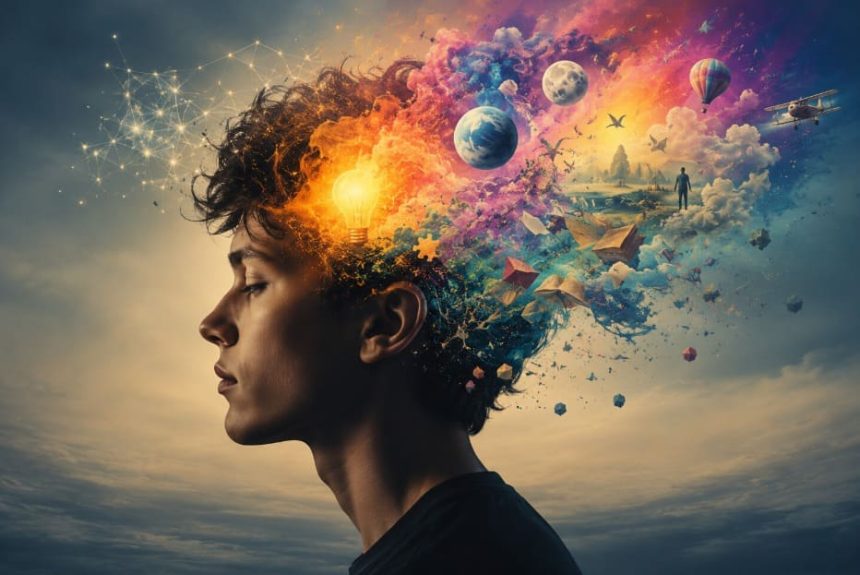
The human mind is a constant source of surprising and unpredictable thoughts that often appear without warning or clear reason. At times, these thoughts can be creative, strange, emotional, or even completely unrelated to reality, yet they reveal the deep complexity of how the brain works. This flow of unexpected ideas is not random noise—it is the result of memory, imagination, emotions, and subconscious processing working together. Understanding these mental patterns helps us see how creativity and thought generation are deeply connected within the human mind. Here’s Human Mind Thoughts Creativity: Unexpected Mental Ideas.
1. The Brain Is Always in Motion, Even in Stillness
The human brain never truly switches off. Even when a person is resting, daydreaming, or doing nothing, billions of neurons continue firing and communicating. This constant activity creates a background stream of thoughts that rise and fall without control. That is why unexpected ideas often appear when you are not actively trying to think—during showers, walks, or before sleep. The mind uses these quiet moments to reorganize information and explore hidden connections.
2. Thoughts Are Born from Invisible Memory Networks
Every thought we experience is linked in some way to memory. The brain stores not only clear events but also emotions, sensations, and fragmented impressions. When something triggers even a small part of this network, it can activate a chain of associations. This is why a simple smell, word, or image can suddenly bring unrelated thoughts into focus. These memory connections are not linear—they are deeply layered and highly complex.
3. The Subconscious Mind Works Behind Awareness
Much of human thinking happens below conscious awareness. The subconscious mind continuously processes experiences, solves problems in the background, and stores emotional reactions. When these hidden processes surface, they appear as sudden thoughts or realizations. These moments often feel surprising because we are not aware of the mental work happening beforehand, even though it has been building for a long time.
4. Emotions Act as Mental Amplifiers
Emotions strongly influence what the mind focuses on. When a person is happy, anxious, stressed, or excited, the brain prioritizes thoughts that match or explain that emotional state. This is why emotional moments often bring intense or unexpected thoughts. Emotions do not just react to thoughts—they actively shape them, making certain ideas more vivid and persistent than others.
5. Imagination Blends Reality with Possibility
Imagination allows the mind to break free from physical reality and explore alternative scenarios. It combines real memories with creative interpretation, forming new mental images or ideas. This blending process is one reason why thoughts can feel strange or disconnected from reality. The brain is constantly testing “what if” situations, even without conscious effort.
6. Random Thoughts Are Not Truly Random
What feels like randomness is actually the result of hidden patterns in the brain. Thoughts are influenced by recent experiences, emotional states, and long-term memories. The mind connects these elements in ways that are not always logical or obvious. Because we are not aware of all the underlying connections, the final thought feels sudden or unplanned.
7. Attention Determines Which Thoughts Surface
The human brain generates far more thoughts than we consciously notice. Attention acts like a spotlight, selecting only certain ideas to enter awareness. This means many thoughts arise and disappear without being noticed. The ones we do notice are simply the ones that our attention has momentarily captured, often influenced by relevance or emotional intensity.
8. Creativity Emerges from Unexpected Connections
Creative thinking often happens when the brain links unrelated ideas. These unexpected combinations form new perspectives, solutions, or artistic expressions. The mind does not separate logic and imagination strictly—it blends them. This is why sudden inspiration can feel unpredictable, even though it is built on stored knowledge and experiences.
9. The Mind Continuously Searches for Meaning
Humans have a natural tendency to find patterns and meaning in everything, including thoughts. Even random mental activity is often interpreted as significant. The brain tries to organize chaos into structure, which can lead to deep reflection or overthinking. This search for meaning is part of what makes human thought so rich and layered.
10. Unexpected Thoughts Reveal Inner Complexity
Every sudden or strange thought is a reflection of the brain’s depth. It shows how memory, emotion, imagination, and subconscious processes interact in real time. Instead of being dismissed as noise, these thoughts highlight the complexity of human cognition. They are small glimpses into the vast internal system that constantly builds our perception of reality.
11. The Brain Builds Meaning Through Association
The human mind rarely processes information in isolation. Instead, it constantly links new input with existing knowledge. When one idea connects to another through association, it can trigger a chain of thoughts that feels sudden or unrelated. These mental links are built over time through experience, learning, and emotion, making each thought part of a much larger internal network.
12. Daydreaming Is a Form of Hidden Processing
When the mind drifts away from focus, it is not inactive—it is reorganizing information. Daydreaming allows the brain to simulate scenarios, revisit memories, and explore possibilities without external pressure. These wandering thoughts often lead to unexpected ideas because the mind is free to combine information in unconventional ways.
13. The Brain Predicts Before We Realize
A large part of human thinking involves prediction. The brain constantly anticipates what might happen next based on patterns it has learned. Sometimes, these predictions surface as sudden thoughts or instincts before we are consciously aware of them. This predictive nature of the mind contributes to the feeling of thoughts appearing “out of nowhere.”
14. Internal Dialogue Shapes Thought Flow
The constant inner voice many people experience plays a major role in shaping thoughts. This internal dialogue is a reflection of how the brain processes information, debates ideas, and rehearses situations. It can shift quickly from topic to topic, creating the impression of unpredictable or spontaneous thinking.
15. External Stimuli Subtly Guide the Mind
Even small environmental details—such as sounds, colors, or movements—can influence thought patterns. The brain is always scanning surroundings, even when we are not fully aware of it. These subtle inputs can trigger memories or ideas, leading to sudden mental shifts that feel unconnected to the moment.
16. Overthinking Is the Mind Over-Connecting
Overthinking happens when the brain continues to build associations beyond what is necessary. Instead of stopping at one interpretation, it keeps expanding possibilities. This can create loops of thoughts that feel intense or repetitive. While it may seem overwhelming, it reflects the brain’s natural tendency to explore all possible meanings.
17. Emotional Memory Triggers Strong Thought Waves
Some memories are stored with strong emotional weight. When these memories are activated, they bring not just information but also feelings attached to them. This combination often produces powerful and unexpected thoughts that can influence mood and perception instantly.
18. The Subconscious Filters Information Constantly
The subconscious mind does not store everything equally. It filters and prioritizes information based on relevance, emotion, and survival value. This filtering system influences which thoughts surface into awareness and which remain hidden, shaping the unpredictable nature of mental activity.
19. Silence Amplifies Inner Thoughts
In quiet environments, external distractions fade, allowing internal thoughts to become more noticeable. This is why people often experience a surge of ideas or reflections during silence. The brain fills the absence of external input with internal processing, making thoughts feel more vivid and frequent.
20. Every Thought Reflects Mental Complexity
No thought exists in complete isolation. Even the simplest idea is built from layers of memory, emotion, perception, and subconscious processing. When unexpected thoughts arise, they reveal how deeply interconnected these systems are. What feels random is actually the visible surface of a highly complex mental structure.
21. The Mind Constantly Reorganizes Experience
The human brain is always sorting, updating, and restructuring past experiences. Even without conscious effort, it re-evaluates memories and links them with new information. This ongoing reorganization can produce sudden thoughts that feel unrelated, when in reality they are the result of the brain integrating old and new experiences into a unified mental system.
22. Thoughts Travel Through Emotional Pathways
Ideas in the mind do not move randomly; they often follow emotional routes. A single feeling can guide the direction of thought, pulling attention toward memories or scenarios that match that emotional tone. This is why mood changes can instantly shift the type of thoughts a person experiences.
23. Mental Noise Is the Brain’s Background Processing
What we often call “mental noise” is actually the brain processing large amounts of information simultaneously. It includes sensory input, emotional reactions, and memory activation. This background activity occasionally rises into awareness, creating the impression of sudden or strange thoughts appearing without cause.
24. The Mind Seeks Patterns Even in Chaos
The human brain has a strong tendency to detect patterns, even where none exist. This pattern-seeking behavior helps with survival and understanding the world, but it also leads to unusual thought connections. Random mental fragments can be interpreted as meaningful simply because the brain is wired to find structure everywhere.
25. Small Triggers Create Large Thought Chains
A minor stimulus—like a word, sound, or image—can activate a long chain of related thoughts. This happens because the brain stores information in interconnected networks. Once a single node is activated, it spreads activation across related memories and ideas, leading to rapid and unexpected mental shifts.
26. Conscious Control Over Thoughts Is Limited
Although it feels like we control our thinking, much of thought generation happens automatically. Conscious awareness acts more like an observer than a controller. This is why thoughts can appear unexpectedly, even when we try to focus on something entirely different.
27. The Brain Simulates Possible Realities
The mind constantly runs internal simulations of different outcomes, decisions, and scenarios. This mental simulation helps with planning and survival, but it also produces imaginative and unexpected thoughts. These simulations often blend reality with imagination, creating complex inner experiences.
28. Repressed Thoughts Resurface Indirectly
Some thoughts are not fully processed when they occur, especially if they are emotionally intense. Instead of disappearing, they can resurface later in altered or symbolic forms. This indirect return can make thoughts feel surprising or disconnected from their original source.
29. Cognitive Overlap Creates Thought Blending
Different mental processes—memory, imagination, emotion, and logic—often operate at the same time. When they overlap, they can merge into hybrid thoughts that feel unusual or unpredictable. This blending is a natural result of the brain working as an interconnected system rather than separate compartments.
30. Unexpected Thoughts Reveal the Depth of Consciousness
Every sudden or unusual thought is a reminder of how deep and layered human consciousness truly is. The mind is not a simple stream but a vast network of continuous activity beneath awareness. These thoughts are small glimpses into that hidden complexity, showing that the brain is always creating, connecting, and evolving ideas in real time.


