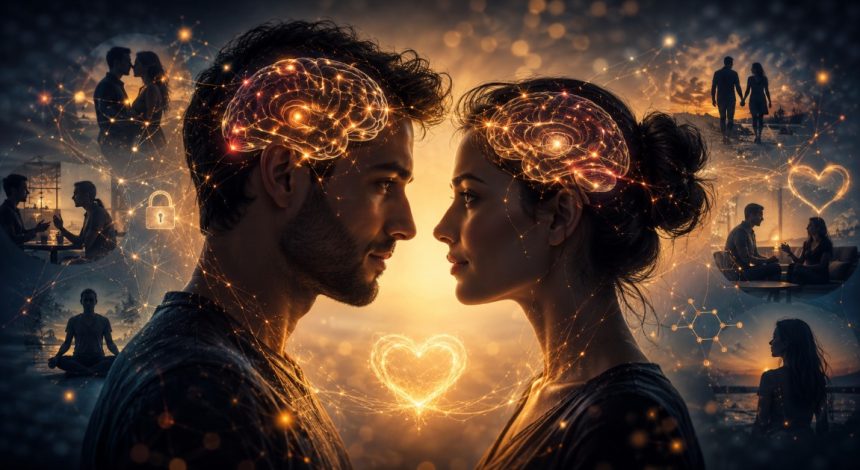
The psychology behind strong attraction is not just about looks or instant chemistry—it is a combination of emotions, subconscious signals, and brain activity working together. Attraction often starts quietly through small cues like body language, tone of voice, or a feeling of familiarity that we may not immediately recognize. In the brain, chemicals like dopamine and oxytocin create pleasure and emotional bonding, making us feel drawn to someone. Psychological factors such as shared values, confidence, and emotional safety also deepen this connection. Even a bit of mystery or uncertainty can intensify attraction, as it keeps the mind engaged and curious. Over time, all these elements blend together to form the powerful feeling we call strong attraction.
1. Attraction Begins in the Subconscious Mind
Strong attraction rarely starts with conscious decision-making. Instead, it begins in the subconscious mind, where the brain quickly scans for familiarity, emotional safety, and past relationship patterns. Without realizing it, we are drawn to people who reflect certain emotional imprints from our earlier experiences—both positive and negative. This is why someone can feel “familiar” even when we have just met them. The subconscious plays a powerful role in deciding who feels safe, exciting, or meaningful before logic even enters the picture.
2. The Role of Dopamine and Emotional Reward
One of the strongest drivers of attraction is dopamine, the brain’s “reward chemical.” When we meet someone who excites or interests us, dopamine levels rise, creating feelings of pleasure and anticipation. This is why thinking about a person can feel addictive in early attraction stages. The brain begins associating that person with reward, motivation, and emotional highs, making us want more interaction, more connection, and more emotional closeness over time.
3. Emotional Familiarity Creates Comfort
People are often drawn to what feels emotionally familiar, even if they are not fully aware of it. This familiarity can come from childhood experiences, past relationships, or emotional patterns we have repeatedly seen. When someone’s behavior, energy, or emotional style matches what our brain recognizes, it creates comfort and trust. This sense of “I’ve felt this before” can intensify attraction because the mind interprets familiarity as safety.
4. The Power of Physical and Non-Verbal Cues
Attraction is heavily influenced by non-verbal communication. Body language, eye contact, posture, facial expressions, and even subtle gestures can communicate confidence, warmth, or emotional openness. These cues are processed faster than words and often determine first impressions. A simple look or smile can create a strong emotional response, triggering curiosity and interest before any real conversation even begins.
5. Similarity Strengthens Emotional Bonding
We are naturally drawn to people who share similar values, interests, beliefs, or life perspectives. This similarity creates a sense of understanding and reduces emotional effort in connection. When someone feels “like us,” the brain perceives them as more trustworthy and relatable. Over time, this shared identity strengthens emotional bonding and deepens attraction into something more stable and meaningful.
6. The Mystery Effect and Psychological Curiosity
Uncertainty can actually increase attraction. When someone is not fully predictable or easy to read, the brain becomes more engaged and curious. This psychological tension keeps attention focused and creates emotional intensity. The mind starts trying to “figure out” the person, which can strengthen emotional investment. However, too much uncertainty can also create confusion, making balance important.
7. Emotional Availability and Safety
Strong attraction grows when emotional safety is present. People are more likely to open up and connect deeply with someone who feels emotionally available, understanding, and non-judgmental. When the brain senses safety, it allows vulnerability, which naturally strengthens emotional bonds. Without emotional safety, attraction may exist but struggle to deepen into something stable.
8. The Role of Oxytocin in Bonding
Oxytocin, often called the “bonding hormone,” plays a major role in emotional attachment. It is released during moments of closeness, trust, physical touch, or meaningful emotional interaction. This hormone strengthens feelings of connection and loyalty over time. The more emotionally intimate experiences shared, the stronger the bond becomes, gradually turning attraction into attachment.
9. Idealization in Early Attraction
During early stages of attraction, the brain often idealizes the other person. We tend to focus on their positive traits while overlooking flaws or inconsistencies. This mental filtering creates an elevated perception of the person, making them seem more perfect or emotionally significant than they may actually be. Over time, as reality sets in, this idealization may either stabilize into real connection or fade if expectations don’t match reality.
10. Attachment Patterns Shape Long-Term Attraction
Long-term attraction is deeply influenced by attachment styles formed in early life experiences. Secure, anxious, or avoidant attachment patterns affect how we connect, trust, and maintain relationships. These patterns shape emotional reactions, communication styles, and even who we feel drawn to repeatedly. Understanding these attachment dynamics helps explain why some attractions feel intense but unstable, while others grow slowly but become deeply lasting.
11. Emotional Projection and Unconscious Needs
Strong attraction is often shaped by emotional projection, where we unconsciously place our own desires, hopes, or unmet needs onto another person. Instead of seeing them exactly as they are, the mind fills in emotional gaps based on what we are seeking—love, security, validation, or excitement. This can intensify attraction because the person feels like they represent something deeply important to us. However, this projection can also create illusions, where the emotional bond is stronger than the actual reality of the relationship.
12. The Role of Validation and Self-Esteem
Attraction is deeply connected to self-esteem and the need for validation. When someone shows interest, admiration, or acceptance, it activates a powerful emotional response in the brain. This external validation can temporarily boost self-worth, making the person who provides it feel more desirable. People often feel strongly attracted to those who make them feel seen, valued, or “chosen,” especially if they lack that feeling internally. Over time, this emotional reinforcement strengthens attachment and desire.
13. Dopamine Loops and Emotional Obsession
In some cases, attraction can turn into emotional obsession due to dopamine-driven loops. When interactions are unpredictable—sometimes warm, sometimes distant—the brain becomes highly engaged, constantly seeking emotional reward. This pattern creates a cycle of anticipation and craving. The unpredictability keeps the mind focused on the person, making them feel more important than they may objectively be. This is why inconsistent attention can sometimes intensify attraction rather than reduce it.
14. The Psychology of Emotional Intensity
Intensity plays a major role in attraction. People are often drawn to experiences that feel emotionally charged, whether positive or complex. High emotional intensity creates strong memory encoding in the brain, making interactions feel significant and unforgettable. This intensity can come from deep conversations, emotional vulnerability, or even conflict followed by reconciliation. The stronger the emotional highs and lows, the more powerful the attraction can feel.
15. Familiar Pain and Repeated Patterns
Sometimes attraction is influenced by familiar emotional pain patterns. The brain may unconsciously repeat dynamics from past relationships or childhood experiences, even if they were unhealthy. This happens because familiarity feels predictable, even if it is not always beneficial. As a result, people may feel strongly drawn to partners who mirror unresolved emotional experiences, mistaking intensity or emotional struggle for deep connection.
16. The Role of Confidence and Presence
Confidence is one of the most powerful psychological triggers of attraction. A person who is grounded, self-assured, and emotionally present naturally draws attention. Confidence signals emotional stability, leadership, and inner security, which the brain interprets as attractive traits. Importantly, it is not just about dominance—it is about calm presence, clarity in communication, and emotional control, all of which create a strong magnetic effect.
17. Emotional Mirroring and Connection Depth
Humans naturally mirror the emotions and energy of those they are attracted to. This mirroring creates a sense of emotional alignment, where two people begin to feel “in sync.” When someone reflects our emotions, thoughts, or energy patterns, it strengthens connection and increases comfort. This subconscious mirroring helps build emotional depth quickly, making interactions feel natural and deeply connected.
18. Scarcity and Perceived Value
Scarcity plays a subtle but powerful role in attraction. When someone feels emotionally or physically less available, the brain often increases their perceived value. This is linked to the psychological principle that we desire what feels less accessible. However, this does not mean genuine attraction depends on distance—it simply shows how the brain reacts to availability and emotional investment levels.
19. Emotional Risk and Vulnerability
Attraction deepens when emotional risk and vulnerability are present. Opening up emotionally creates a sense of trust and intimacy that strengthens bonds. When someone shares personal thoughts, fears, or feelings, the brain interprets this as a sign of closeness and authenticity. This vulnerability creates emotional depth, making the connection feel more real and meaningful over time.
20. Transformation from Attraction to Attachment
Over time, strong attraction often evolves into attachment. This shift happens when emotional familiarity, trust, and shared experiences build a stable emotional bond. What begins as excitement and curiosity gradually turns into emotional dependency and connection. Attachment is less about intensity and more about consistency, comfort, and emotional security, marking the transition from temporary attraction to deeper relational bonding.
21. The Brain’s Reward Anticipation System
Attraction is strongly influenced by how the brain anticipates reward, not just the reward itself. When we expect emotional connection, attention, or affection from someone, the brain becomes highly active in anticipation. This expectation creates excitement, motivation, and focus. Interestingly, the feeling of “waiting” for interaction can sometimes feel even more powerful than the interaction itself. This anticipation loop is a major reason why attraction can feel intense and mentally consuming.
22. Emotional Contrast and Intensity Shifts
The human brain responds strongly to contrast in emotional experiences. When someone alternates between warmth and distance, or excitement and calmness, it creates emotional contrast that heightens attention. This shift makes the experience feel more dynamic and meaningful. The brain becomes more engaged because it is constantly adjusting to emotional changes, which strengthens attraction through heightened awareness and emotional sensitivity.
23. Attachment Through Shared Experiences
Shared experiences play a crucial role in deepening attraction over time. When two people go through meaningful moments together—whether positive, challenging, or emotional—the brain begins to associate that person with significance and memory. These shared emotional imprints create a sense of “we have been through something together,” which strengthens bonding and gradually transforms attraction into emotional attachment.
24. The Influence of Emotional Safety Signals
The brain constantly scans for emotional safety signals in relationships. When someone responds with understanding, patience, and consistency, it reduces emotional threat responses in the mind. This allows attraction to grow without resistance. Emotional safety does not eliminate excitement; instead, it creates a stable environment where deeper feelings can develop naturally without fear or anxiety.
25. Cognitive Bias and Selective Attention
During attraction, the brain often engages in cognitive bias, where it selectively focuses on positive traits while minimizing flaws. This selective attention enhances emotional perception, making the person appear more appealing than they may objectively be. The mind prioritizes information that supports emotional desire, which strengthens attraction and can sometimes create idealized perceptions in early stages.
26. Emotional Energy and Psychological Resonance
People are often drawn to others whose emotional energy resonates with their own internal state. This resonance can be calm, intense, playful, or deeply emotional. When two emotional energies align, the connection feels effortless and natural. The brain interprets this alignment as compatibility, which strengthens attraction and encourages continued emotional engagement.
27. The Role of Unfulfilled Curiosity
Curiosity is one of the strongest psychological drivers of attraction. When we do not fully understand someone, the brain remains engaged, trying to fill in missing emotional or behavioral information. This unfulfilled curiosity keeps attention focused and creates a sense of emotional investment. The more there is to “discover,” the more the mind becomes attached to the process of understanding the person.
28. Emotional Conditioning and Past Patterns
Past emotional experiences significantly shape present attraction. The brain learns patterns from previous relationships and conditions itself to respond to similar emotional cues in the future. This means attraction is often not random but influenced by familiar emotional dynamics stored in memory. These patterns can either support healthy connections or repeat unresolved emotional cycles.
29. The Balance of Stability and Excitement
Strong attraction often exists in the balance between emotional stability and excitement. Stability creates trust and safety, while excitement maintains curiosity and engagement. When both elements are present, attraction becomes more sustainable and meaningful. Too much stability can feel dull, while too much excitement can feel overwhelming—balance is what creates lasting emotional interest.
30. From Psychological Attraction to Deep Connection
Eventually, strong attraction can evolve into deep emotional connection when psychological factors mature into trust, understanding, and emotional consistency. What begins as subconscious interest, dopamine-driven excitement, and curiosity gradually transforms into stable emotional bonding. At this stage, attraction is no longer just a reaction—it becomes a conscious emotional connection built on shared meaning, presence, and long-term emotional alignment.