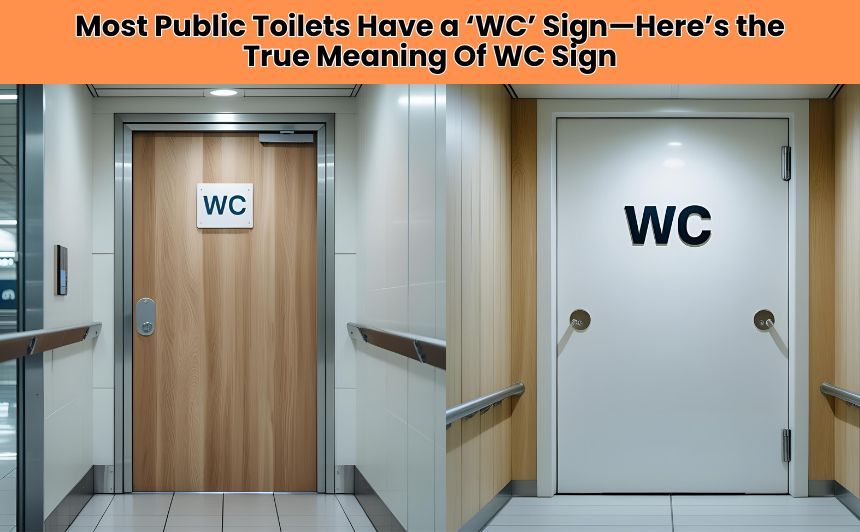
The true meaning of wc sign. If you’ve ever travelled or visited public places, you’ve probably noticed the small “WC” sign on restroom doors. But have you ever stopped to wonder about the True Meaning Of WC Sign and why it’s so widely used? Surprisingly, most people have no idea what those two letters actually stand for or where they came from. In this article, we’ll explore the fascinating history of this familiar abbreviation, why it became the global symbol for public toilets, and what makes it so enduring.
Public bathrooms are one of those universal essentials—you’ll find them in airports, restaurants, parks, and highways all over the world. And nearly everywhere you go, you’ll see the small letters WC marking the door. But what does it actually mean? Let’s clear up the mystery once and for all.
The Origin of “WC”
“WC” stands for Water Closet.
The term dates back to the 19th century, when indoor plumbing became more common in Europe. Before the widespread use of flushing toilets, most people used outhouses or chamber pots. Early indoor toilets that used water to flush waste away were seen as a technological marvel and were called “water closets.”
Why “Water Closet”?
The phrase “water closet” described a small, enclosed room in a house (a closet) with a water-flushing toilet. Over time, the term was abbreviated to WC, which quickly caught on in England and throughout Europe.
Even as modern bathrooms evolved, the label WC remained a convenient shorthand that architects, builders, and public facilities could use to indicate a toilet.
Global Adoption
As British influence spread through trade and colonization, “WC” became the internationally recognized sign for a toilet. It has since appeared on millions of restroom doors across Europe, Asia, Africa, and beyond.
Common Misconceptions
Because the term isn’t used in everyday conversation anymore, many people assume WC stands for:
- Washroom Compartment
- Water Chamber
- Washing Closet
While these guesses sound logical, Water Closet is the true historical origin.
Modern Usage
Although phrases like “restroom,” “toilet,” or “bathroom” are more common in spoken English today, “WC” remains popular on signage because:
✅ It’s universally understood across language barriers
✅ It’s short and easy to fit on small plaques and doors
✅ It has a neutral, formal tone suitable for public places
Other Common Toilet Signs
In addition to WC, you’ll often see:
🚻 Toilet (UK and global English)
🚻 Restroom (US English)
🚻 Lavatory (formal British English)
🚻 Loo (casual UK English)
🚻 Washroom (Canada)
Fun Fact
In many European hotels, you might notice a separate WC room apart from the bathroom itself. In these layouts, the bathroom refers only to the space with the bathtub or shower, while the WC is the small room containing just the toilet.
✅ Why Does This Matter?
Understanding the Meaning Of WC Sign isn’t just trivia—it helps you confidently find facilities when traveling, especially in countries where English isn’t the main language. It’s a simple way to decode signage that could otherwise leave you guessing in an urgent moment!
✅ Conclusion:
So the next time you see a public toilet with a WC sign, you’ll know exactly what it means: Water Closet. This little abbreviation has a surprisingly rich history and continues to serve as a universal symbol for restrooms around the world. From Victorian innovation to modern convenience, the Meaning Of WC Sign proves that some things never change—even as the rest of the world evolves.