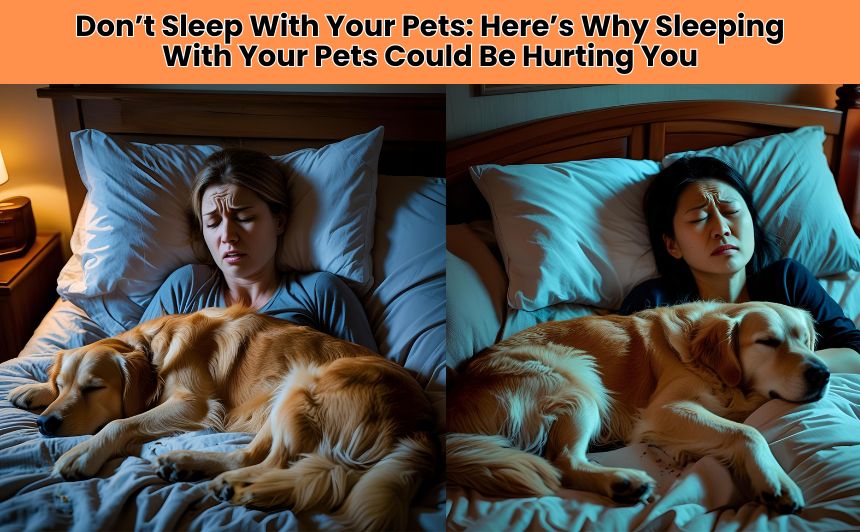
It might feel comforting and sweet to drift off with your furry friend snuggled close, but Sleeping With Your Pets can cause more harm than you realize. From sleep disruptions to hidden health risks, sharing your bed with cats or dogs isn’t always the safest or healthiest choice. While millions of pet owners love the closeness, understanding the potential downsides can help you make the best decision for yourself—and your beloved animal companion.
Pets bring us unconditional love, comfort, and companionship. It’s no wonder so many people invite them under the covers each night. But studies show there are real drawbacks to Sleeping With Your Pets, and knowing them can help you protect your sleep, your health, and your pet’s well-being.
Here are some of the most important reasons experts recommend rethinking this common habit:
1. Disrupted Sleep Cycles
Pets move around, scratch, groom themselves, and shift positions throughout the night. Even if you think you’re used to it, research shows that sharing your bed with animals can cause fragmented sleep and prevent you from reaching restorative deep sleep.
2. Allergies and Respiratory Issues
If you suffer from allergies or asthma, having pet dander, fur, and dust mites in your bed can worsen symptoms. Over time, constant exposure can lead to chronic congestion, sneezing, and irritated eyes.
3. Increased Risk of Zoonotic Diseases
Zoonotic diseases are illnesses that can pass from animals to humans. Even healthy pets can carry bacteria, parasites, or fungi. Sleeping in close contact increases your risk of ringworm, MRSA, fleas, and even certain types of worms.
4. Worsened Behavioral Problems
Allowing your pet to sleep in your bed can sometimes create or reinforce behavioral issues, such as separation anxiety, territorial aggression, or possessiveness over the sleeping space.
5. Poor Sleep Hygiene
Pets can track in dirt, pollen, and outdoor debris. Even well-groomed animals can shed fur and dander onto your sheets, making it harder to keep your bedding clean and hygienic.
6. Accidental Injuries
Especially with small children or older adults, sharing a bed with pets increases the risk of scratches or bites during the night if your pet is startled or feels trapped.
7. Impact on Relationships
Many couples report that sleeping with pets creates distance between them or leads to disagreements about space, hygiene, and nighttime disturbances.
8. Interrupted Restroom Breaks
Dogs and cats may need to get up to relieve themselves or drink water, forcing you to wake up and let them out. Over time, this can seriously impact your rest.
9. Overheating and Discomfort
Pets give off body heat. In the warmer months, this can lead to overheating, night sweats, and discomfort, making it harder to get quality sleep.
10. Encouraging Dependency
While you love your pet dearly, always sharing your bed can create an unhealthy dependency, making it difficult for them to sleep alone or adjust to other environments.
✅ Safer Alternatives to Sleeping With Your Pets
If you want to stay close to your animal without sharing the same bed, here are some great options:
- Place a pet bed next to yours: Your pet still feels secure, but you maintain your space.
- Train your pet to sleep at the foot of the bed: If you must share the bed, keep them out of your pillow area.
- Provide a cozy crate: Many dogs feel safe and comfortable in a crate with soft bedding.
- Use air purifiers and frequent washing: This helps reduce allergens and keep your bedroom clean.
✅ Conclusion:
While Sleeping With Your Pets can feel comforting, it can also negatively impact your health, sleep quality, and relationships. By understanding the risks and exploring healthier alternatives, you can create a safe, restful environment for you and your furry friend. Ultimately, it’s about finding the balance that respects both your needs and theirs.