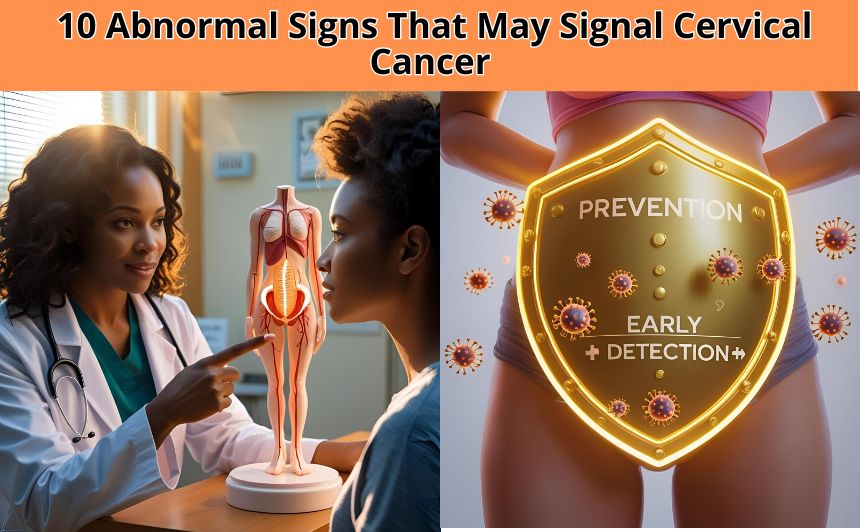
Cervical cancer often develops silently, but your body sends warning signals. Recognizing early cervical cancer signs could save your life—the 5-year survival rate jumps to 92% when caught early (American Cancer Society). Here are 10 abnormal symptoms that should prompt an immediate gynecologist visit, even if they seem mild.
10 Early Cervical Cancer Signs
1. Irregular Bleeding Between Periods
- Light spotting when not menstruating
- Post-menopausal bleeding (even a single drop)
- Why concerning: Tumor growth irritates cervical tissue
2. Unusual Discharge Changes
- Watery, pink, or foul-smelling discharge
- May contain streaks of blood
- Key detail: Different from normal cyclical changes
3. Pain During Intercourse
- Deep pelvic pain during/after sex
- Not related to lubrication issues
- Red flag: Especially if new or worsening
4. Persistent Pelvic/Back Pain
- Dull ache in pelvis, lower back, or hips
- Doesn’t improve with rest/massage
- Advanced sign: May indicate spreading
5. Urinary Symptoms
- Frequent UTIs without infection
- Blood in urine (microscopic or visible)
- Mechanism: Tumor pressure on bladder
6. Unexplained Weight Loss
- Losing >10 lbs without dieting
- Often with loss of appetite
- Cancer marker: Body fighting disease
7. Leg Pain/Swelling
- One swollen leg (usually left)
- Deep ache like a pulled muscle
- Critical clue: Lymph node involvement
8. Extreme Fatigue
- Exhaustion not relieved by sleep
- May accompany pale skin (anemia)
- Cause: Chronic blood loss
9. Bowel Changes
- Blood in stool (bright red)
- Painful defecation
- Late sign: Rectum involvement
10. Foul-Smelling Bleeding
- Metallic or rotting odor
- Heavy periods with clots
- Emergency sign: Possible necrosis
What to Do Next
- Don’t panic – These signs can have benign causes
- Track symptoms – Note frequency/duration for your doctor
- Demand a Pap/HPV test – Even if you had a recent normal test
Prevention Tips
✔ Get HPV vaccinated (effective even up to age 45)
✔ Use condoms to reduce HPV exposure
✔ Quit smoking – Doubles cervical cancer risk
✔ Eat cruciferous vegetables (broccoli, kale)
When to See a Doctor
◉ Any bleeding after menopause
◉ Symptoms lasting >2 weeks
◉ Family history of cervical/uterine cancer
Conclusion
Your body speaks through symptoms. While these early cervical cancer signs don’t guarantee a diagnosis, they’re your cue to get checked. Share this with every woman you care about—it might save her life.