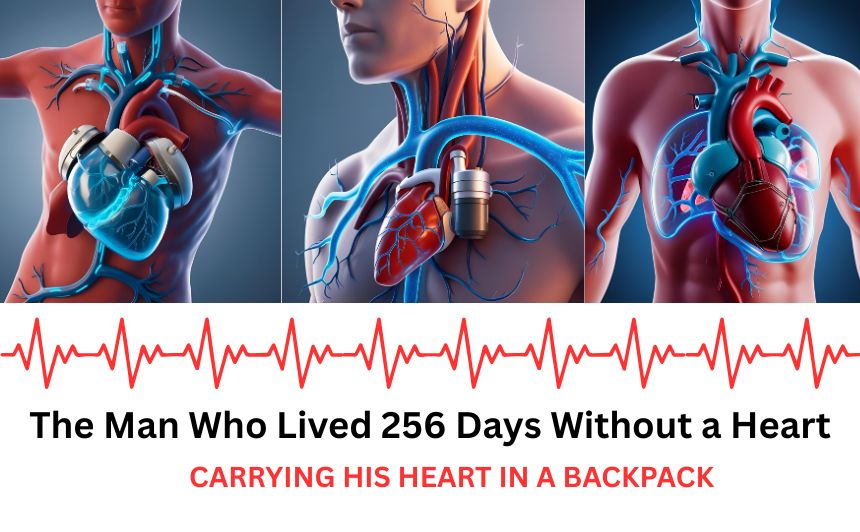
In an astonishing feat of modern medicine, one man defied all odds by living as a man without a heart for 256 days before receiving a successful transplant. This unbelievable journey showcases the power of medical innovation and human resilience. How did he survive without this vital organ? What kept him alive? Let’s dive into this extraordinary story that continues to inspire millions.
Who Was the Man Without a Heart?
The man at the center of this medical miracle is Stan Larkin, a Michigan native who suffered from familial cardiomyopathy, a condition that weakens the heart muscle. By 2014, his heart was failing, and doctors knew a transplant was his only hope. However, with no immediate donor available, they turned to an experimental solution—a portable artificial heart.
How Did He Survive Without a Heart?
Unlike traditional heart transplants or ventricular assist devices (VADs), Larkin’s case was unique. Surgeons completely removed his failing heart and replaced it with a SynCardia Freedom Portable Driver—a 13.5-pound external device that functioned as an artificial heart. This machine circulated blood throughout his body, keeping him alive while he waited for a donor.
Life as a Man Without a Heart
- Carrying His Heart in a Backpack: The artificial heart was connected to his body via tubes, and the power unit was carried in a backpack.
- Playing Basketball (!): Despite the life-supporting machinery, Larkin remained active—even playing basketball while waiting for his transplant.
- 256 Days of Waiting: He spent over eight months without a biological heart before finally receiving a transplant in 2015.
The Groundbreaking Transplant
On May 9, 2015, Larkin underwent a successful heart transplant at the University of Michigan Frankel Cardiovascular Center. His recovery was remarkable, proving that artificial heart technology could sustain life long-term.
What This Means for Medical Science
Larkin’s case opened new doors in cardiac medicine, showing that:
✔ Patients can survive without a biological heart for extended periods.
✔ Portable artificial hearts could be a bridge to transplant for others.
✔ Future advancements may reduce dependency on donor organs.
Conclusion: A Story of Hope and Innovation
The tale of the man without a heart is more than just a medical wonder—it’s a testament to human endurance and technological progress. Stan Larkin’s survival has given hope to countless others awaiting transplants, proving that even the impossible can become possible.
Could artificial hearts be the future of cardiac care? Only time will tell, but Larkin’s journey remains one of the most inspiring medical breakthroughs of our time.